Introduction
Eureka became one of the most important mining towns in Utah's Tintic Mining District. Established during the nineteenth-century mining boom, it grew from a settlement associated with nearby mineral deposits into a substantial commercial and transportation center.
Its historic buildings preserve an unusually rich record of western mining-town development.
The Tintic Discovery
Mining activity in the Tintic region expanded dramatically during the 1860s and 1870s.
Prospectors identified deposits containing valuable combinations of silver, lead, gold, copper, and other minerals.
Eureka emerged as one of the district's principal settlements.
A Mining City
Eureka was larger and more institutionally developed than many temporary mining camps.
It contained commercial buildings, hotels, banks, newspapers, schools, churches, saloons, and residences.
The town therefore became an urban center serving a broad mining region.
The Role of the Railroad
Rail transportation dramatically changed Eureka's economic position.
Mining towns were often constrained by the cost of transporting ore.
Railroads allowed heavy mineral products to reach processing facilities and markets more efficiently.
They also made imported machinery and supplies more affordable.
Eureka's growth therefore cannot be understood without considering transportation.
Mining Technology
The mines around Eureka contained extensive underground workings.
Miners used shafts, tunnels, explosives, hoisting equipment, pumps, and ventilation systems.
As mines became deeper, engineering demands increased.
Mining companies employed engineers and managers to organize increasingly complex operations.
The Commercial Economy
Mining generated demand for almost everything.
Workers needed food, clothing, tools, housing, entertainment, and transportation.
This created opportunities for merchants and entrepreneurs.
Banks provided financial services.
Newspapers reported mining developments.
Hotels accommodated visitors and traveling businessmen.
The town's economy thus multiplied the effects of mineral production.
Social Diversity
Eureka attracted workers and entrepreneurs from diverse backgrounds.
Mining communities frequently included immigrants and migrants with different languages, religions, and cultural traditions.
Mutual-aid organizations and ethnic associations could provide social security in an uncertain environment.
The resulting communities were socially complex.
Labor
Mining also produced labor relations shaped by the dangers and economics of industrial work.
Workers negotiated wages and conditions.
Mining companies sought productivity and profitability.
Safety became increasingly important as mines expanded.
The history of Eureka therefore belongs within the larger history of American industrial labor.
Decline and Transformation
As mineral production changed, Eureka's role evolved.
Some mines declined.
Others remained productive.
The town survived beyond the initial boom, demonstrating that not every mining community became a complete ghost town.
Its continued existence makes Eureka particularly valuable for historical study.
Preservation
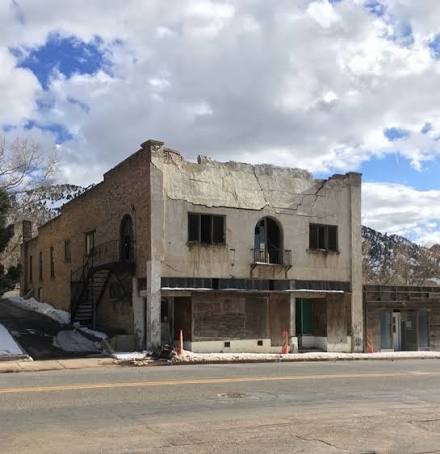
Historic Eureka preserves a remarkable collection of buildings and streetscapes.
The town allows researchers to examine how western mining settlements developed into permanent communities.
Preservation also provides opportunities to interpret the relationship between mining and urban life.
Conclusion
Eureka represents the urban side of Utah's mining boom.
Its significance lies not only in its mines but in the institutions and communities that grew around them.
The town provides a detailed example of how mineral extraction could create a permanent commercial center connected to railroads, national markets, and industrial capitalism.