Introduction
Keystone represents the transient character of many nineteenth-century western mining settlements.
Mining camps could emerge quickly following a mineral discovery, attract workers and investors, develop businesses and infrastructure, and then decline when expectations were not fulfilled.
The history of Keystone belongs to this larger pattern of boom-and-bust development.
The 1870s Mining Environment
The 1870s were a period of rapid mineral exploration throughout Utah.
Prospectors investigated mountain ranges searching for deposits of silver, gold, lead, copper, and other valuable minerals.
Mining camps formed around promising discoveries.
What Made a Mining Camp?
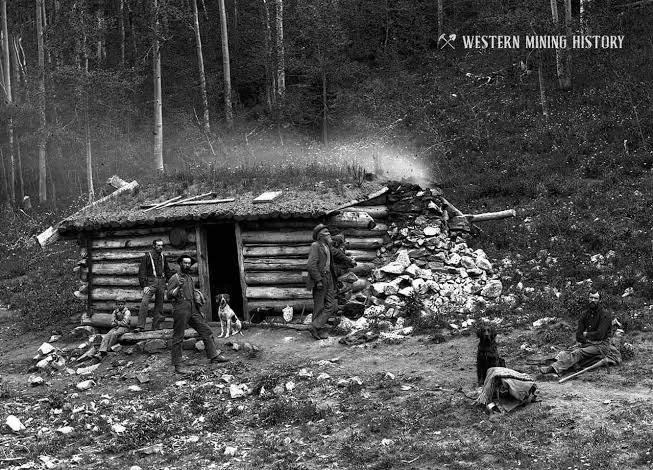
A mining camp generally began with claims and temporary shelters.
If the deposits appeared promising, more permanent structures followed.
These could include:
cabins;
boardinghouses;
stores;
blacksmith shops;
assay offices;
saloons;
warehouses;
mine structures.
The settlement expanded according to the fortunes of the mine.
The Assay Office
One particularly important institution in mining districts was the assay office.
Assayers analyzed ore samples to estimate their metal content.
Their work influenced investment decisions.
An apparently worthless rock could become valuable if analysis revealed significant metal content.
Conversely, disappointing assay results could cause investors to withdraw.
Mining and Speculation
Mining camps existed within speculative economies.
Investors frequently purchased claims or shares based on expectations of future production.
Promotional literature could exaggerate the potential of discoveries.
This created a volatile financial environment.
Transportation
Even rich ore could be economically useless if transportation costs were excessive.
Roads and trails connected camps with larger communities.
As railroads expanded, some mining districts became far more competitive.
Keystone's history must therefore be considered within this wider transportation system.
Everyday Life
Life in mining camps could be difficult.
Housing was often temporary.
Water and sanitation could be inadequate.
Food had to be transported into remote districts.
Winter conditions could isolate communities.
Yet mining camps could also develop surprisingly sophisticated social structures.
Decline
When mining expectations failed, residents moved.
Buildings were abandoned.
Some structures were relocated.
Others collapsed.
Eventually vegetation, erosion, and weather could obscure much of the settlement.
This process explains why many mining camps survive only as archaeological sites.
Archaeological Importance
Even a small camp can contain valuable evidence.
Artifacts can reveal what people ate, drank, purchased, wore, and used.
Building foundations reveal settlement organization.
Mine features reveal extraction techniques.
Together, these materials reconstruct everyday life in communities that may have left little written documentation.
Conclusion
Keystone represents the experimental and speculative character of Utah's nineteenth-century mining frontier.
Its importance lies not necessarily in its long-term size but in what it reveals about the mechanisms of boomtown development.
Mining camps were temporary experiments in geology, economics, technology, and human migration.