Introduction
Beekeeping has a long history, connecting human communities with the production of honey, beeswax, and other valuable materials. Honey provided a concentrated source of sweetness before refined sugar became widely available, while beeswax was useful in lighting, sealing, craft production, and religious activities.
One traditional form of beekeeping involved the use of bee skeps. These are basket-like structures designed to provide shelter for honeybee colonies.
Although skeps are especially associated with later European beekeeping traditions, the broader history of managed beehives extends much further into antiquity. Archaeological evidence from different regions demonstrates that people developed various methods for keeping bees and harvesting their products.
Studying ancient bee skeps and related hive technologies provides insight into the development of apiary economies and the relationship between humans, insects, agriculture, and trade.
What Is a Bee Skep?
A bee skep is traditionally a dome-shaped basket used as a hive.
It is often made from straw, grass, or other flexible plant materials woven into a compact structure.
The shape provides a sheltered space in which bees can establish a colony and construct their honeycomb.
Unlike many modern hives, traditional skeps generally lack removable frames. This can make harvesting honey more difficult because the comb is attached directly to the interior of the structure.
The use of skeps varied across regions and historical periods. They should not be treated as the universal form of ancient beekeeping.
The Early History of Beekeeping
Humans collected wild honey long before the development of managed apiaries.
Rock art, archaeological remains, and historical accounts provide evidence for the importance of honey gathering in different societies.
The transition from collecting wild honey to managing colonies was gradual and varied by region.
People could encourage bees to occupy suitable cavities, provide artificial shelters, or maintain colonies near settlements.
These practices allowed households to obtain honey more predictably than through occasional wild harvesting.
Beekeeping in the Ancient Mediterranean
Honey was widely valued in ancient Mediterranean societies.
It served as a food, sweetener, ingredient in preparations, and component of certain ceremonial practices.
Beeswax also had practical uses.
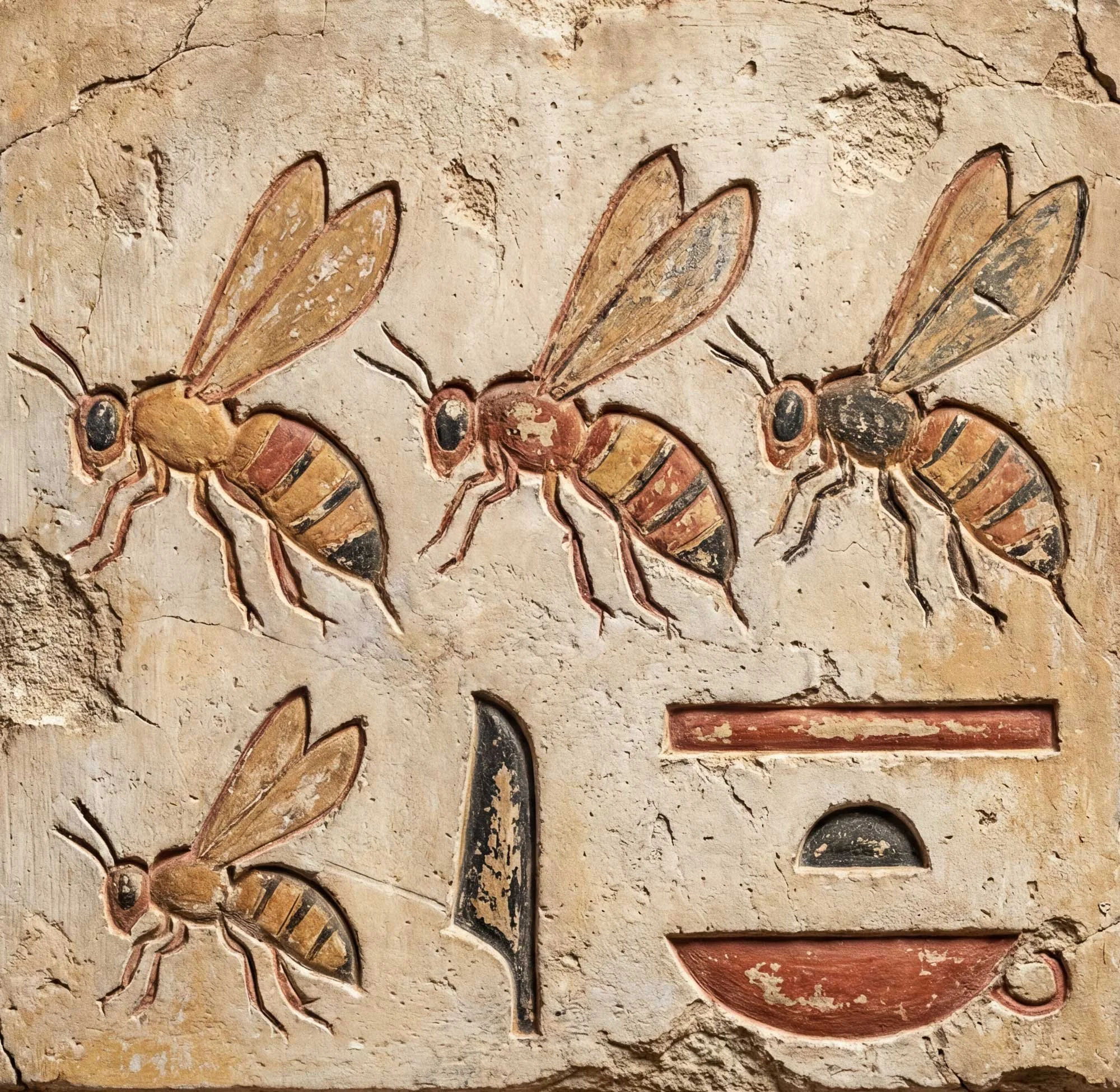
Archaeological and historical evidence from ancient Egypt, Greece, and other Mediterranean societies demonstrates that people understood the value of bees and developed methods of managing colonies.
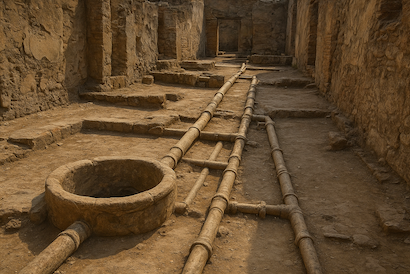
Some ancient hives were made from clay or other durable materials rather than woven plant fibers.
This distinction is important because a discussion of ancient beekeeping should include multiple hive designs, not only the later European skep.
The Construction of Traditional Skeps
A skep requires materials that are flexible enough to be woven but strong enough to retain their shape.
Straw and other plant fibers can be arranged in coils or bundles and secured using additional binding materials.
The resulting structure creates an enclosed space with an entrance through which bees can move.
The design must balance protection and ventilation.
A hive that becomes excessively hot or damp may be unsuitable for a colony, while an entrance that is too exposed can increase vulnerability to predators or environmental conditions.
Traditional beekeepers developed practical knowledge about placement, shade, and seasonal maintenance.
Honey and Beeswax Production
Honey is produced by bees from collected nectar, which they process and store within their combs.
The colony uses honey as a food reserve.
Humans harvest a portion of this stored resource, although harvesting methods vary.
Beeswax is produced by worker bees and used to construct honeycomb.
It can be collected during honey extraction and processed for different purposes.
The relative importance of honey and wax varied between societies. In some economies, beeswax became a particularly valuable commodity because it could be used in lighting, writing materials, crafts, and religious objects.
The Development of Apiary Economies
An apiary is a location where multiple beehives are maintained.
The development of apiary economies involved more than the possession of individual hives.
It required knowledge of bee behavior, seasonal flowering, hive maintenance, harvesting, storage, and the movement of products to consumers.
Small household apiaries could supply family needs and local exchange.
Larger operations might produce enough honey and wax to supply markets, religious institutions, workshops, or merchants.
The scale and organization of production depended on environmental conditions and demand.
Bees and Agricultural Landscapes
Bees depend on flowering plants for nectar and pollen.
Their availability therefore changes according to vegetation, climate, and seasonal cycles.
Beekeepers need to understand the flowering periods of local plants and the availability of suitable forage.
The relationship between bees and agriculture is complex. Bees can contribute to pollination, although the importance of pollination varies among crops and plant species.
The presence of managed hives near agricultural settlements may indicate an understanding of the relationship between vegetation, seasonal resources, and honey production.
Archaeological Evidence of Ancient Apiaries
Identifying ancient beekeeping sites can be difficult.
Clay hives may survive, while woven skeps made from organic materials usually decay.
Archaeologists may find hive fragments, honey residues, beeswax, specialized structures, or concentrations of artifacts associated with honey processing.
Chemical analysis can identify certain organic compounds associated with beeswax.
However, beeswax may have been used in crafts or other activities unrelated to beekeeping at the site.
The archaeological interpretation must therefore consider the context in which residues are found.
Honey and Long-Distance Trade
Honey and beeswax could be transported beyond the communities where they were produced.
Honey required suitable containers to prevent leakage and contamination.
Beeswax was often easier to store and transport because it could be solidified into manageable pieces.
Trade in these products connected rural producers with towns, religious centers, and specialized craft industries.
The distribution of containers, wax residues, and written references can help researchers investigate the economic importance of bee products.
Environmental Knowledge and Conservation
Beekeeping requires detailed knowledge of local ecology.
A beekeeper must recognize suitable flowering plants, understand seasonal weather, and identify conditions that threaten colonies.
Traditional beekeeping systems often developed through generations of observation.
Today, historical research into these practices can contribute to broader discussions about biodiversity and sustainable resource management.
However, ancient beekeeping should not automatically be described as environmentally sustainable. Its impact depended on the scale of production and the condition of local ecosystems.
Conclusion
Ancient bee skeps and related hive technologies reveal the long relationship between human communities and honeybees.
Beekeeping supported food production, craft industries, trade, and household economies. Honey and beeswax were valuable products whose importance extended far beyond their immediate use.
Although organic skeps rarely survive archaeologically, evidence from clay hives, residues, historical texts, and environmental records can help reconstruct the development of apiary systems.
The rise of beekeeping demonstrates how communities transformed their understanding of local ecosystems into a productive economic activity, turning the behavior of a small insect into an important part of human history.