• MAIN PAGE
  • LATEST NEWS
    • Lost Cities
    • Archaeology's Greatest Finds
    • Underwater Discoveries
    • Greatest Inventions
    • Studies
    • Blog
  • PHILOSOPHY
  • HISTORY
  • RELIGIONS
    • Africa
    • Anatolia
    • Arabian Peninsula
    • Balkan Region
    • China - East Asia
    • Europe
    • Eurasian Steppe
    • Levant
    • Mesopotamia
    • Oceania - SE Asia
    • Pre-Columbian Civilizations of America
    • Iranian Plateau - Central Asia
    • Indus Valley - South Asia
    • Japan
    • The Archaeologist Editor Group
    • Scientific Studies
    • Aegean Prehistory
    • Historical Period
    • Byzantine Middle Ages
    • Predynastic Period
    • Dynastic Period
    • Greco-Roman Egypt
  • Rome
  • PALEONTOLOGY
  • About us
Menu

The Archaeologist

  • MAIN PAGE
  • LATEST NEWS
  • DISCOVERIES
    • Lost Cities
    • Archaeology's Greatest Finds
    • Underwater Discoveries
    • Greatest Inventions
    • Studies
    • Blog
  • PHILOSOPHY
  • HISTORY
  • RELIGIONS
  • World Civilizations
    • Africa
    • Anatolia
    • Arabian Peninsula
    • Balkan Region
    • China - East Asia
    • Europe
    • Eurasian Steppe
    • Levant
    • Mesopotamia
    • Oceania - SE Asia
    • Pre-Columbian Civilizations of America
    • Iranian Plateau - Central Asia
    • Indus Valley - South Asia
    • Japan
    • The Archaeologist Editor Group
    • Scientific Studies
  • GREECE
    • Aegean Prehistory
    • Historical Period
    • Byzantine Middle Ages
  • Egypt
    • Predynastic Period
    • Dynastic Period
    • Greco-Roman Egypt
  • Rome
  • PALEONTOLOGY
  • About us

Ancient Cyber-Archaeology: Preserving War-Torn History with Laser Scanning

April 21, 2026

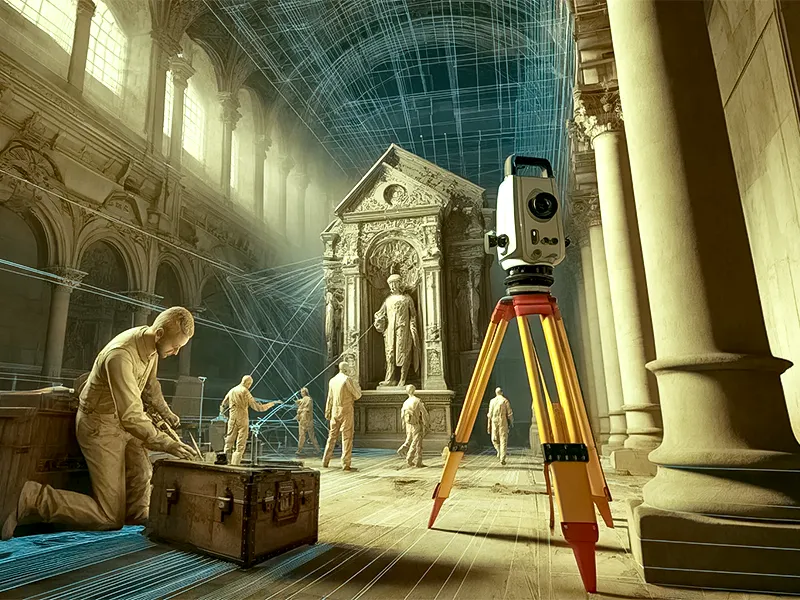
In recent years, a new field known as cyber-archaeology has emerged, combining traditional archaeology with advanced digital technology. This approach is especially valuable in preserving cultural heritage sites damaged or destroyed by war, natural disasters, or neglect.

Cyber-archaeology uses tools such as 3D laser scanning, photogrammetry, and virtual reality to document and reconstruct historical sites. One of the most important technologies is LiDAR (Light Detection and Ranging), which uses laser pulses to create highly detailed 3D models of structures and landscapes.

This technology has been crucial in preserving sites in regions affected by conflict, such as Syria and Iraq. Many ancient cities, including Palmyra, suffered significant destruction during recent conflicts. Using laser scanning, archaeologists have been able to digitally reconstruct these sites, preserving their appearance and structure for future generations.

Organizations like UNESCO play a key role in these efforts. They collaborate with researchers and governments to document endangered heritage sites and create digital archives. These archives can be used for research, education, and even reconstruction.

One major advantage of cyber-archaeology is its ability to capture precise details quickly. Traditional methods can take years to document a site, but laser scanning can produce accurate models in a fraction of the time. This is especially important in areas where access is limited or dangerous.

Another benefit is the creation of virtual experiences. Through virtual reality, people can explore ancient sites from anywhere in the world. This not only increases public awareness but also helps preserve cultural identity, especially for communities displaced by conflict.

Cyber-archaeology also supports restoration efforts. By using digital models, experts can analyze damage and plan reconstruction projects with greater accuracy. In some cases, 3D printing technology has been used to recreate damaged artifacts and architectural elements.

However, the field also faces challenges. High costs, technical expertise, and data storage requirements can limit access to these technologies. Additionally, digital preservation cannot fully replace the physical presence and cultural significance of original sites.

Despite these challenges, cyber-archaeology represents a powerful tool for safeguarding human history. As conflicts and environmental threats continue to endanger cultural heritage, digital preservation offers a way to protect and share the past.

In the future, continued advancements in technology may further enhance these efforts, allowing for even more detailed reconstructions and broader access. Cyber-archaeology not only preserves history but also ensures that it remains accessible and meaningful in a rapidly changing world.

← The Lost Legions of Varus: Finding the Site of the Teutoburg Forest DisasterThe Hanging Gardens of Babylon: Did They Exist, and Where Were They? →
Featured
Apr 21, 2026
Prehistoric Surgery: Evidence of Amputation and Healing 30,000 Years Ago
Apr 21, 2026
Read More →
Apr 21, 2026
image_2026-04-22_001057743.png
Apr 21, 2026
The Lost Legions of Varus: Finding the Site of the Teutoburg Forest Disaster
Apr 21, 2026
Read More →
Apr 21, 2026
image_2026-04-22_000948404.png
Apr 21, 2026
Ancient Cyber-Archaeology: Preserving War-Torn History with Laser Scanning
Apr 21, 2026
Read More →
Apr 21, 2026
image_2026-04-21_235424737.png
Apr 21, 2026
The Hanging Gardens of Babylon: Did They Exist, and Where Were They?
Apr 21, 2026
Read More →
Apr 21, 2026
image_2026-04-21_232635722.png
Apr 21, 2026
Roman Dodecahedrons: The Enigmatic Objects That Still Baffle Historians
Apr 21, 2026
Read More →
Apr 21, 2026
image_2026-04-21_230035737.png
Apr 21, 2026
With a weapon and a bundle of banknotes, the former weightlifter accused of the death of Myrto posed on social media, see photos
Apr 21, 2026
Read More →
Apr 21, 2026
read more

Powered by The archaeologist