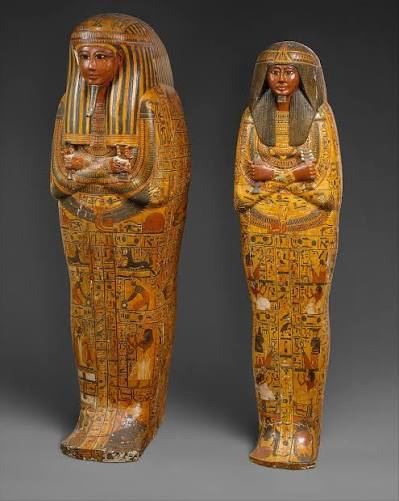
During the New Kingdom (c. 1550–1069 BCE)—an era characterized by unmatched imperial expansion, immense wealth, and the reigns of iconic rulers like Hatshepsut, Akhenaten, and Ramesses II—ancient Egyptian sculpture reached its artistic zenith.
Operating within a highly organized, state-sponsored system, New Kingdom artisans moved away from the rigid, strictly traditional forms of earlier dynasties. They embraced fluid lines, psychological depth, and technological innovations in metallurgy and stone carving, transforming raw granite, quartz, and bronze into enduring symbols of cosmic and earthly power.
1. The Sculptor's Workshop: A Cooperative Art
In ancient Egypt, the concept of the solo, celebrity artist did not exist. Sculptors were viewed as highly skilled elite craftsmen rather than independent creative geniuses. Working in the wabet (the pure workshop) attached to royal palaces or massive temple complexes like Karnak, artisans operated as a cooperative assembly line.
The Master Sculptor: Designed the initial composition, oversaw the geometric grid system, and executed the finest final facial details.
The Apprentices and Specialists: Blocked out the raw stone using diorite pounding balls, hammered away excess material with bronze chisels, and painstakingly polished the final surface using abrasive quartz sand slurries.
Sculptors held a vital spiritual title: "He who keeps alive." Their creations were never intended for pure aesthetic appreciation in a gallery; they were functional, religious engines. A statue served as a physical repository (ka-statue) for the soul of a god, king, or noble. If a person's physical mummy rotted away, the soul could safely inhabit the flawless stone substitute to ensure eternal life.
2. Breaking the Grid: The Evolution of Style
For centuries, Egyptian sculpture was governed by a strict mathematical Canon of Proportions. Human figures were drawn onto a stone block using a grid of 18 squares from the soles of the feet to the hairline, ensuring an unchanging, idealized uniformity.
During the New Kingdom, artisans dramatically broke away from this rigidity in two distinct phases:
The Eighteenth Dynasty Elegance
Under monarchs like Queen Hatshepsut and Amenhotep III, sculptors infused their works with unprecedented sensuality and refinement. Statues featured soft, rounded facial contours, elongated almond-shaped eyes, subtle smiles, and highly detailed renderings of pleated linen garments, heavy wigs, and elaborate jewelry.
The Amarna Revolution (The Akhenaten Crisis)
Around 1351 BCE, Pharaoh Akhenaten enacted a radical religious revolution, sweeping away the traditional gods to worship a single solar disk, the Aten. To match this theological rupture, Akhenaten's master sculptors, most famously Thutmose, completely shattered the traditional artistic canon.
The resulting Amarna Style abandoned the timeless, youthful ideal in favor of a striking, hyper-stylized naturalism:
Elongated Anatomy: Figures were rendered with long, slender necks, drooping jaws, heavily hooded eyes, distended bellies, and wide hips.
The Nefertiti Masterpiece: Discovered in the workshop ruins of the sculptor Thutmose at Amarna, the iconic Bust of Nefertiti demonstrates the ultimate achievement of this era. Sculpted in limestone and coated in layers of painted stucco, it captures a perfect, fluid harmony of bone structure, muscle, and regal grace that remains one of the most recognizable portraits in human history.
3. The Colossal Scale: Power in Megaliths
As the New Kingdom expanded its empire into the Levant and Nubia, the pharaohs required an architectural language that communicated absolute, terrifying authority to foreign emissaries and local subjects alike. Sculptors achieved this by executing art on an unprecedented, colossal scale.
The master of this monumental propaganda was Ramesses II (the Great). He dispatched armies of royal sculptors to the remote cliffs of Nubia to carve the Great Temple of Abu Simbel directly out of the living sandstone mountain.
The facade features four gargantuan, 65-foot-tall seated statues of Ramesses II. To achieve this feat, master designers had to scale up the traditional grid system exponentially, ensuring that even at a massive scale, the facial features maintained perfect symmetry and proportion. The statues acted as physical borders in stone, warning travelers they were entering the territory of a living god.
4. Materials and Technological Mastery
New Kingdom artisans were master geologists, selecting specific stones not just for their durability, but for their deep theological symbolism:
Granite and Granodiorite: Sourced from the quarries of Aswan, these ultra-hard volcanic rocks were exceptionally difficult to carve but took a brilliant, mirror-like polish, symbolizing the eternal, unchanging nature of the pharaoh.
Quartzite: A highly prized, glittering golden-red stone that was explicitly linked to the sun god Ra.
Painted Limestone: Used extensively for interior tomb reliefs and busts, allowing artisans to utilize a vivid palette of mineral-based pigments to bring the stone to life.
The Lost-Wax Bronze Breakthrough
The New Kingdom also saw a massive leap forward in metallurgy through the perfection of hollow lost-wax casting. Rather than hammering solid bronze sheets, artisans sculpted a highly detailed model over a clay core, coated it in wax, and encased it in an outer clay mold.
When fired, the wax melted out, leaving a thin, microscopic gap that was filled with molten bronze. This technique allowed sculptors to create lightweight, dynamically posed bronze statuettes of gods and priestesses with intricate surface details that were impossible to replicate in heavy stone.
Through this dynamic fusion of religious devotion, geometric precision, and material innovation, New Kingdom artisans successfully shifted the direction of Egyptian art. They proved that stone could be manipulated to convey not just the rigid majesty of the cosmos, but the subtle grace, movement, and psychological reality of human life on the banks of the Nile.