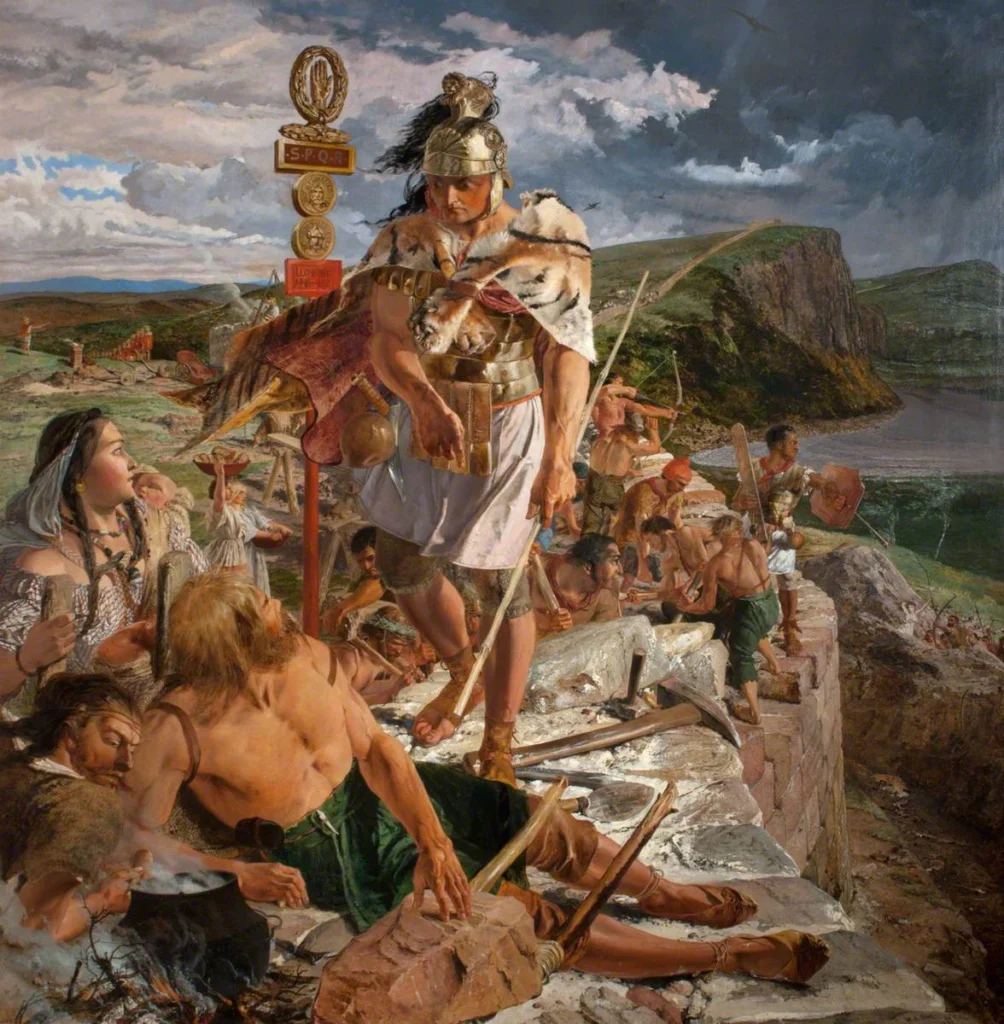
Deep along the northernmost frontier of the Roman Empire, just south of what would become Hadrian’s Wall in northern England, stood the fort of Vindolanda. In the waterlogged, oxygen-free layers of the fort’s ancient rubbish pits, modern archaeologists stumbled upon an unprecedented historical goldmine: hundreds of thin, wooden leaves covered in cursive Latin ink handwriting.
Known as the Vindolanda Tablets, these fragile documents are the oldest surviving handwritten documents in Britain. Unlike the grand, idealized histories written by elite Roman senators in Rome, the tablets offer an unvarnished, highly intimate look at the daily anxieties, domestic realities, and personal relationships of the soldiers, officers, and families stationed on the edge of the known world.
1. The Technology of the Tablets
Before the discovery of the Vindolanda Tablets, historians assumed that frontier garrisons relied primarily on heavy, expensive papyrus imported from Egypt or wax writing tablets (tabulae) that required scratching letters into iron-rimmed frames.
The soldiers at Vindolanda, however, utilized brilliant local resourcefulness. They created leaf tablets.
Using razor-sharp planes, woodworkers sliced local birch, alder, or oak into paper-thin sheets, roughly the size of a modern postcard. Scribes then used a reed pen (calamus) dipped in a homemade ink concoction of carbon, gum, and water to write directly onto the wood in Roman cursive—a rapid, everyday handwriting style that looks vastly different from the rigid capital letters carved into monumental stone arches. Once written, the sheets could be folded in half like a diptych, addressed on the outside, and sealed for transport via the military postal network.
2. The Birthday Invitation: Women on the Frontier
The Roman military was officially a bachelor organization; low-ranking soldiers were legally barred from marrying until the late 2nd century CE. However, officers were permitted to bring their families.
The most famous document in the entire Vindolanda collection (Tablet 291) is a personal letter written by Claudia Severa, the wife of a nearby fort commander, to her sister, Sulpicia Lepidina, who was married to Flavius Cerialis, the prefect of Vindolanda.
The letter is a warm, enthusiastic invitation to a birthday celebration:
"Claudia Severa to her Lepidina, greetings. On 11 September, sister, for the day of the celebration of my birthday, I give you a warm invitation to make sure that you come to us, to make the day more enjoyable for me by your arrival..."
What makes this tablet an absolute masterpiece of paleography is the handwriting at the bottom. After a professional military scribe drafted the formal body of the letter, Claudia Severa personally grabbed the pen to add her own intimate postscript: "I shall expect you, sister. Farewell, sister, my dearest soul, as I hope to prosper, and hail." This brief postscript stands as the earliest authenticated piece of handwriting by a woman in British history, revealing that elite women on the frontier maintained vibrant, independent literacy and social networks.
3. Socks, Underpants, and Beer: Daily Soldier Life
For the ordinary auxiliary soldiers—non-citizens recruited from Gaul, Germany, and the Netherlands to guard the freezing British landscape—life was dominated by a relentless battle against the brutal northern elements. The tablets reveal a constant logistical scramble for home comforts and winter gear.
Tablet 346: The Care Package
One unnamed soldier received a letter from a relative back home detailing an upcoming care package designed to survive the damp British climate:
"...I have sent you... pairs of socks from Sattua, two pairs of sandals, and two pairs of underpants..."
This brief line completely humanized the Roman legionary, confirming that the mighty conquerors of the ancient world were reliant on their families mailing them warm underwear (subligaria) and thick wool socks (udones) to prevent trench foot in the muddy trenches of Northumbria.
The Desperate Request for Beer
Water on the frontier was frequently contaminated or unsafe, making low-alcohol beer (cervesa) and sour wine (acetum) staple components of the military diet. In Tablet 182, a desperate logistics officer writes directly to his superior, pleading for a fresh supply run:
"...my fellow-soldiers have no beer. Please order some to be sent."
4. The Intelligence Reports: Cultural Attitudes toward the Locals
The tablets do not just record domestic pleasantries; they serve as active military intelligence logs. Vindolanda was surrounded by the Brittones—the local Celtic tribes who routinely launched guerrilla skirmishes against the Roman occupiers.
In Tablet 294, an unknown Roman officer compiles a brief tactical assessment of the native British fighting style and characteristics, utilizing a highly derogatory racial slur:
"The Britons are unprotected by armor. There are very many cavalry. The cavalry do not use swords, nor do the wretched Britons (Brittunculi) take up fixed positions in order to throw javelins."
The term Brittunculi translates literally to "little Britons" or "wretched little Britons." This single word exposes the deep-seated imperial arrogance, cultural superiority, and frustration felt by the professional, heavily armored Roman garrison when forced to deal with the unpredictable, asymmetric hit-and-run tactics of the local insurgency.
5. Summary of Frontier Concerns
High-Level Concerns (Officers): Focused on elite social standing, hunting excursions, hosting formal dinners, ordering vintage wines, and securing political promotions back in Rome.
Low-Level Concerns (Garrison): Focused on calculating grain rations, requesting leather for boots, complaining about missing money, tracking sick leaves, and procuring basic clothing layers.
The Vindolanda Tablets fundamentally altered our understanding of the Roman Empire. They proved that literacy was not restricted to the wealthy elite of Italy, but was a widespread, utilitarian tool utilized by soldiers, merchants, and women along the absolute fringes of civilization. By preserving the raw, unedited voices of individuals asking for beer, inviting sisters to birthdays, and complaining about the weather, these wooden fragments bridge a two-thousand-year gap—proving that the history of the Roman war machine is ultimately a deeply human story.