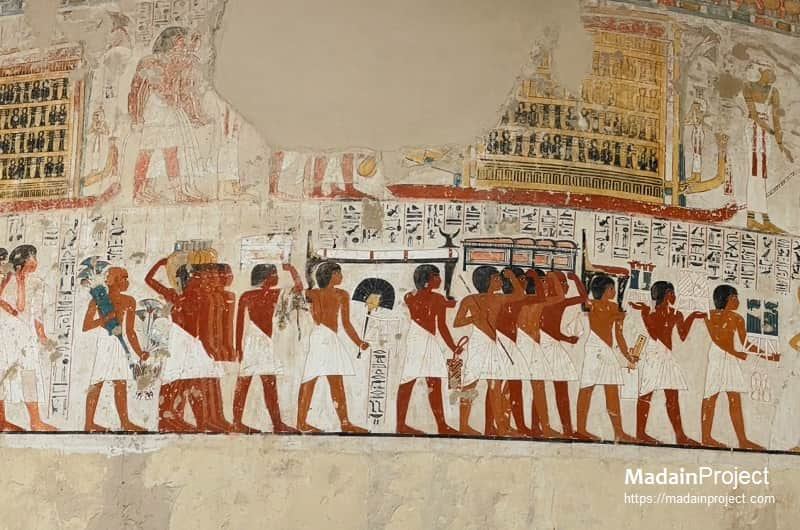
Ancient Egyptian Artisans: The Tomb of the Vizier Ramose
Introduction
The Tomb of Ramose is one of the most important examples of New Kingdom Egyptian tomb art. It belonged to Ramose, a high-ranking official who served as vizier—one of the most powerful positions under the pharaoh. The tomb, located in the necropolis of Thebes, showcases a turning point in Egyptian artistic style during the late 18th Dynasty.
Who Was Ramose?
Ramose was a vizier under two major pharaohs:
Amenhotep III
Akhenaten
As vizier, he was responsible for:
Administration of the state
Justice and legal matters
Oversight of construction projects
Acting as the pharaoh’s chief advisor
His position placed him among the most elite officials in Egypt.
Location and Structure
The tomb is located in the necropolis of Thebes, specifically in the area known as the Valley of the Nobles.
Layout
A forecourt open to the sky
A decorated entrance corridor
A burial chamber (unfinished in parts)
Wall reliefs and painted scenes
Unlike royal tombs in the Valley of the Kings, Ramose’s tomb reflects elite but non-royal status.
Artistic Significance
The Tomb of Ramose is famous for showing two contrasting artistic styles:
Traditional Style
Symmetrical, formal depictions of figures
Idealized proportions
Standard Old Kingdom artistic conventions
Amarna Influence
More naturalistic and fluid figures
Softer body forms and movement
Early elements of the radical style introduced under Akhenaten
This combination makes the tomb a key source for understanding the transition to the Amarna Period.
Wall Scenes and Decoration
The tomb contains scenes depicting:
Ramose receiving honors from the pharaoh
Funeral and offering rituals
Processions of servants and officials
Scenes of daily administrative life
These images emphasize both Ramose’s authority and his loyalty to the state.
Historical Importance
The tomb is important because it:
Shows the power of high-ranking non-royal officials in Egypt
Documents artistic change during a politically unstable period
Reflects the transition between traditional and Amarna art
Provides insight into New Kingdom administration
The Amarna Connection
The shift in artistic style is linked to the religious reforms of Akhenaten, who promoted worship of the sun disk Aten.
This period led to:
Changes in artistic representation
More realistic human proportions
Reduced emphasis on traditional gods
Ramose’s tomb captures this transition in progress.
Preservation and Legacy
Today, the tomb remains one of the most studied non-royal tombs in Egypt. Its partially unfinished decoration gives scholars a rare glimpse into:
Artistic workshops at work
Changing royal ideologies
The lives of elite officials
Conclusion
The Tomb of Ramose stands as a powerful testament to Ancient Egyptian artistry and political structure. As the resting place of a high-ranking vizier, it reflects both traditional Egyptian values and the artistic transformation of the Amarna period. It remains a crucial source for understanding the evolution of Egyptian art and governance during the New Kingdom.