The Viking Age Paganism: The Temple at Uppsala
Introduction
The religious life of the Viking Age was deeply rooted in Norse pagan beliefs centered on gods, rituals, and sacred places. One of the most famous religious sites described in medieval sources is the Temple at Uppsala, a major center of worship in pre-Christian Scandinavia.
Although its exact archaeological form is debated, it is strongly associated with large-scale ritual activity dedicated to the Norse gods.
Norse Pagan Beliefs
The Vikings practiced a polytheistic religion that included many deities and spirits.
Major Gods
Odin – god of wisdom, war, and death
Thor – protector of humanity
Freyr – associated with harvest and peace
Religion was closely tied to nature, fate, and honor.
The Temple at Uppsala
According to medieval accounts, especially the writings of Adam of Bremen, the Temple at Uppsala was a major religious center in what is now Sweden.
Description of the Site
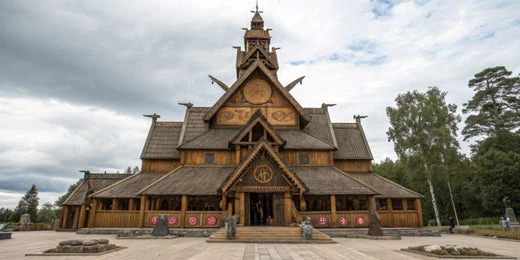
A large wooden temple structure
Three central statues of Odin, Thor, and Freyr
Surrounding sacred grove of trees
Ritual halls and gathering spaces
The temple was believed to be a focal point for worship across Scandinavia.
Ritual Practices
Sacrifices (Blót)
One of the most important religious practices was blót, a sacrificial ritual that could include:
Animals such as horses, pigs, or cattle
Offerings of food, weapons, or valuables
In rare accounts, human sacrifice during major ceremonies
These rituals were performed to gain favor from the gods.
The Great Festivals
Large seasonal gatherings were held at sacred sites like Uppsala.
These included:
Winter festivals for survival and protection
Spring rituals for fertility and planting
Summer gatherings for war blessings and voyages
Feasting, storytelling, and oath-making were central parts of these events.
Political and Religious Power
The temple at Uppsala was not only religious but also political.
Kings and chieftains reinforced authority through rituals
Religious leaders (priests or chieftains) controlled ceremonies
The site functioned as a regional assembly center
Religion and governance were deeply connected in Viking society.
Archaeological Debate
Unlike Roman or Egyptian temples, no confirmed structure matching the legendary Temple at Uppsala has been definitively excavated.
Scholars debate whether:
It was a large wooden temple complex
It was more symbolic than architectural
It consisted of multiple ritual sites rather than one building
Despite this uncertainty, its importance in written sources is significant.
Christianization and Decline
By the 11th–12th centuries, Scandinavia began converting to Christianity.
This led to:
Gradual abandonment of pagan rituals
Destruction or repurposing of sacred sites
Replacement of old beliefs with churches and Christian practices
The Temple at Uppsala symbolized the last major center of organized Norse pagan worship.
Legacy
Even after its decline, the Temple at Uppsala remains a powerful symbol of Viking religion.
Its legacy includes:
Inspiration for Norse mythology studies
Cultural identity in Scandinavian history
Modern reconstructions of Viking religion and rituals
Conclusion
The Temple at Uppsala represents the heart of Viking Age paganism, where gods like Odin, Thor, and Freyr were worshipped through ritual sacrifice and seasonal festivals. Whether fully historical or partly legendary, it reflects the spiritual world of the Vikings and their deep connection between religion, nature, and power.