• MAIN PAGE
  • LATEST NEWS
    • Lost Cities
    • Archaeology's Greatest Finds
    • Underwater Discoveries
    • Greatest Inventions
    • Studies
    • Blog
  • PHILOSOPHY
  • HISTORY
  • RELIGIONS
    • Africa
    • Anatolia
    • Arabian Peninsula
    • Balkan Region
    • China - East Asia
    • Europe
    • Eurasian Steppe
    • Levant
    • Mesopotamia
    • Oceania - SE Asia
    • Pre-Columbian Civilizations of America
    • Iranian Plateau - Central Asia
    • Indus Valley - South Asia
    • Japan
    • The Archaeologist Editor Group
    • Scientific Studies
    • Aegean Prehistory
    • Historical Period
    • Byzantine Middle Ages
    • Predynastic Period
    • Dynastic Period
    • Greco-Roman Egypt
  • Rome
  • PALEONTOLOGY
  • About us
Menu

The Archaeologist

  • MAIN PAGE
  • LATEST NEWS
  • DISCOVERIES
    • Lost Cities
    • Archaeology's Greatest Finds
    • Underwater Discoveries
    • Greatest Inventions
    • Studies
    • Blog
  • PHILOSOPHY
  • HISTORY
  • RELIGIONS
  • World Civilizations
    • Africa
    • Anatolia
    • Arabian Peninsula
    • Balkan Region
    • China - East Asia
    • Europe
    • Eurasian Steppe
    • Levant
    • Mesopotamia
    • Oceania - SE Asia
    • Pre-Columbian Civilizations of America
    • Iranian Plateau - Central Asia
    • Indus Valley - South Asia
    • Japan
    • The Archaeologist Editor Group
    • Scientific Studies
  • GREECE
    • Aegean Prehistory
    • Historical Period
    • Byzantine Middle Ages
  • Egypt
    • Predynastic Period
    • Dynastic Period
    • Greco-Roman Egypt
  • Rome
  • PALEONTOLOGY
  • About us
No results found

The Roman Arch of Septimius Severus: A Landmark of the Forum

June 6, 2026

Introduction

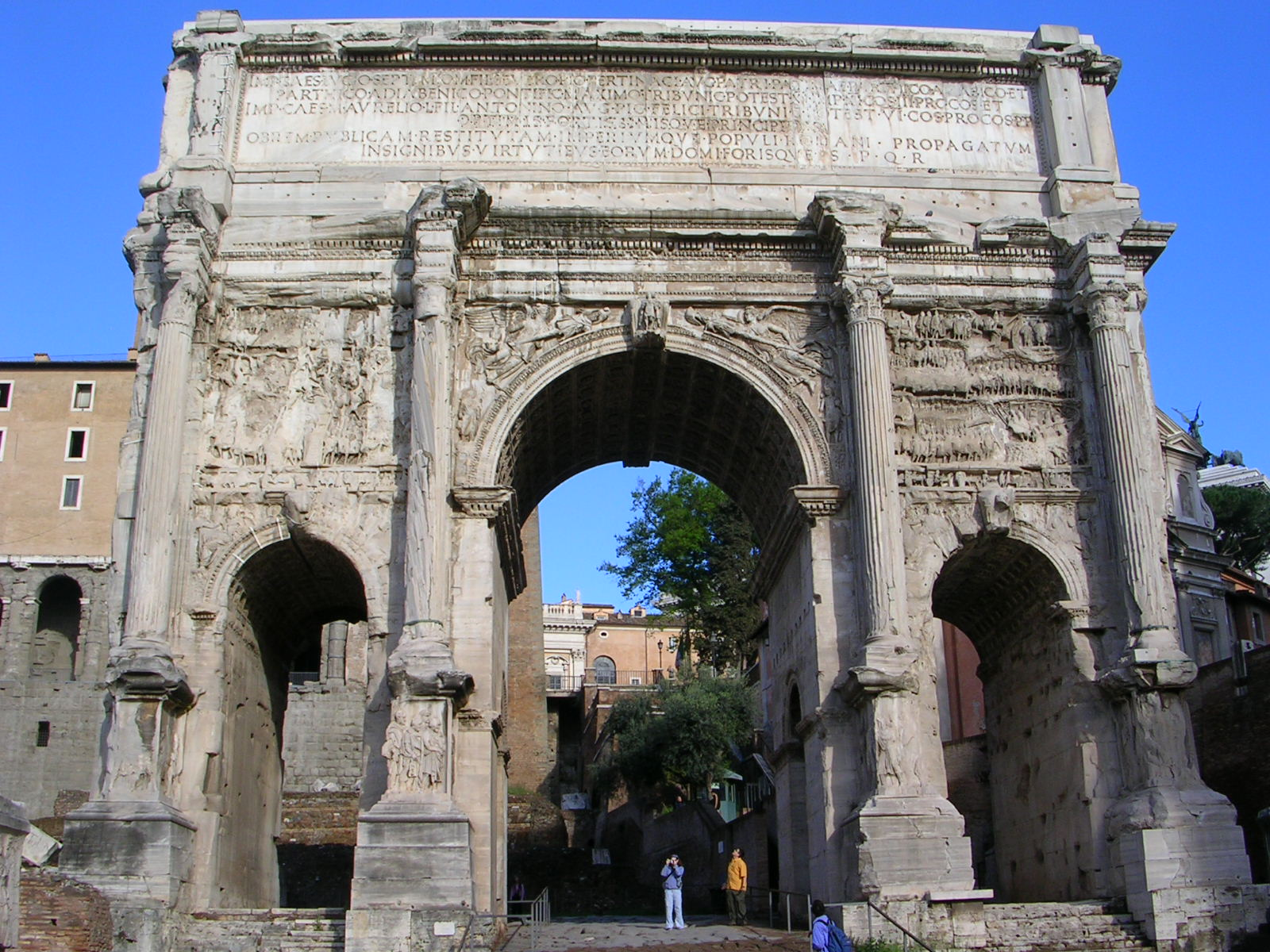
The Arch of Septimius Severus is one of the best-preserved triumphal arches in ancient Rome. Built in 203 CE, it commemorates the military victories of Emperor Septimius Severus and his sons Caracalla and Geta in the Parthian Wars. Standing prominently in the Roman Forum, it symbolized imperial power and military success.

Historical Background

Septimius Severus rose to power after a period of civil war known as the Year of the Five Emperors (193 CE). Once he secured control of the empire, he launched campaigns in the East against the Parthian Empire.

Key events:

  • Campaigns in Mesopotamia (late 190s CE)

  • Capture of key cities such as Ctesiphon

  • Expansion of Roman influence in the East

To celebrate these victories, the Senate dedicated a monumental arch in his honor.

Design and Structure

The Arch of Septimius Severus is a large, white marble structure featuring three passageways:

Main Features

  • A central large arch flanked by two smaller side arches

  • High relief sculptural panels depicting military scenes

  • Corinthian columns attached to the structure

  • An inscription dedicating the monument to the emperor and his sons

Reliefs and Decoration

The arch is richly decorated with detailed reliefs showing:

  • Scenes from the Parthian campaigns

  • Roman soldiers in battle formations

  • Sieges and military victories

  • The emperor addressing troops

These carvings serve as visual propaganda, emphasizing Roman strength and divine favor.

Political Symbolism

The arch was not only a celebration of military victory but also a political statement.

Key Messages:

  • The Severan dynasty’s legitimacy and authority

  • Unity between the emperor and his sons

  • Rome’s dominance over eastern enemies

  • The stability restored after civil war

Interestingly, after Geta was assassinated by his brother Caracalla, his images were erased from many monuments in a practice known as damnatio memoriae.

Role in the Roman Forum

As part of the Roman Forum, the arch stood in one of the most important civic spaces in Rome.

The Forum was used for:

  • Political speeches

  • Religious ceremonies

  • Public gatherings

  • Legal and economic activity

The arch’s placement ensured maximum visibility to citizens and officials.

Artistic and Engineering Significance

The arch reflects Roman mastery in:

  • Stone construction and stability

  • Relief sculpture techniques

  • Urban monument design

  • Integration of architecture and propaganda

Its survival in relatively good condition makes it an important example of Roman imperial art.

Conclusion

The Arch of Septimius Severus stands as a powerful symbol of Roman military achievement and imperial propaganda. Located in the heart of the Roman Forum, it commemorates victory, reinforces political legitimacy, and showcases the artistic and engineering skill of the Roman Empire.
← Ancient Egyptian Artisans: The Tomb of the Vizier RamoseAncient Greek Pottery: The Proto-Geometric and Geometric Styles →
Featured
image_2026-06-06_173339440.png
June 6, 2026
The Viking Age Runestones: The Jelling Stones and the Christianization of Denmark
June 6, 2026
Read more →
June 6, 2026
image_2026-06-06_172957786.png
June 6, 2026
Ancient Egyptian Funerary Art: The Fayum Mummy Portraits
June 6, 2026
Read more →
June 6, 2026
image_2026-06-06_172922034.png
June 6, 2026
The Roman Theater of Aspendos: The Best Preserved Roman Stage
June 6, 2026
Read more →
June 6, 2026
image_2026-06-06_172834793.png
June 6, 2026
Ancient Greek Sanctuaries: The Oracle of the Dead at Ephyra
June 6, 2026
Read more →
June 6, 2026
image_2026-06-06_172801052.png
June 6, 2026
The Minoan Civilization: The Social Status of Women in Crete
June 6, 2026
Read more →
June 6, 2026
image_2026-06-06_172641628.png
June 6, 2026
Roman Military Strategy: The Use of the Testudo Formation
June 6, 2026
Read more →
June 6, 2026
read more

Powered by The archaeologist