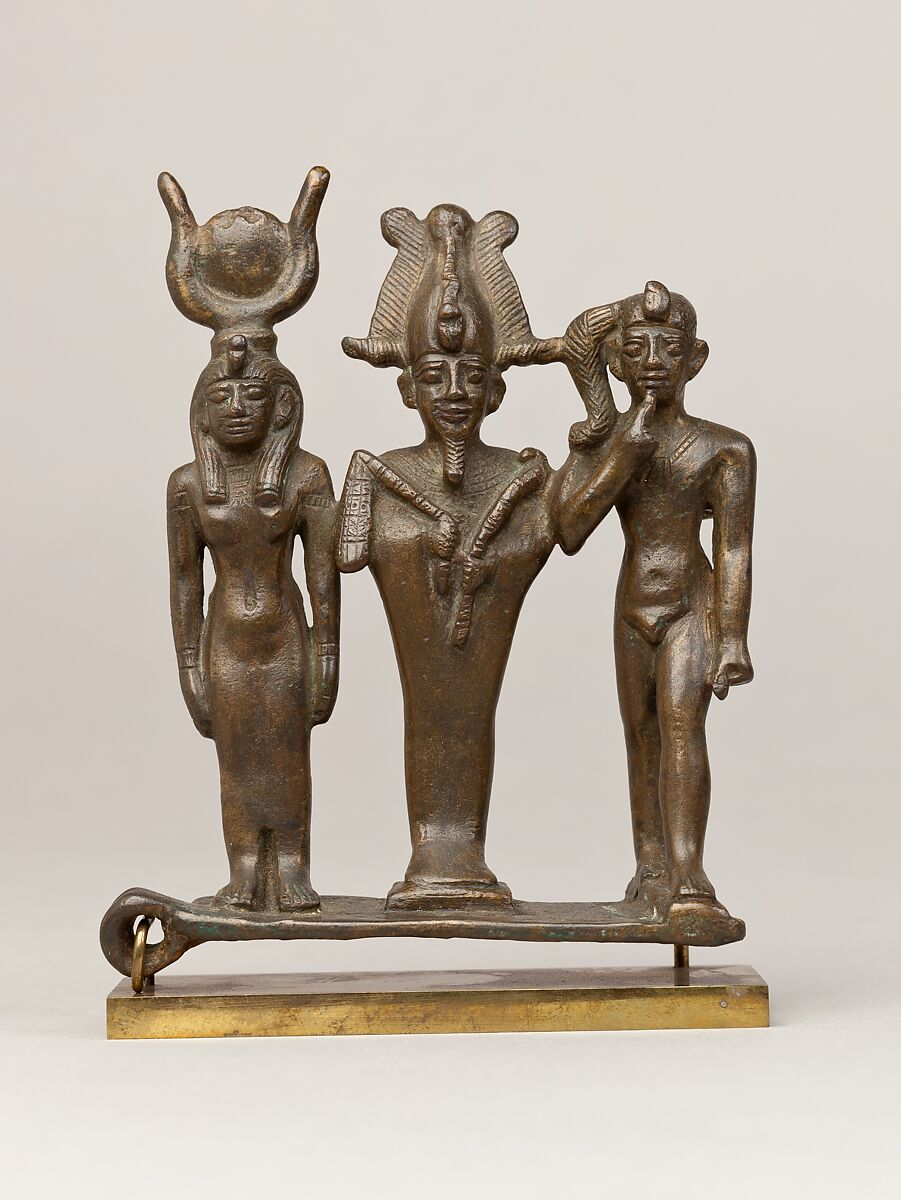
The myth of Osiris, Isis, and Horus is the foundational narrative of ancient Egyptian religion. It is a sweeping saga of family betrayal, magical resurrection, divine motherhood, and ultimate justice that explained the mysteries of life, death, the annual flooding of the Nile, and the cosmic legitimacy of the Pharaohs.
1. The Primordial Kingdom: Osiris and Set
In the mythic Golden Age, the earth was ruled directly by the gods. Osiris sat upon the throne as the first King of Egypt, ruling alongside his sister-wife, Isis. Osiris was a benevolent, enlightened monarch who taught humanity agriculture, law, and religious worship, transforming Egypt into a prosperous paradise.
This golden reign sparked a fierce, burning jealousy in their brother, Set (Seth), the god of chaos, deserts, and storms. Set coveted the throne and hatched a meticulous, deadly plot to assassinate the king:
The Golden Chest: Set constructed a magnificent wooden chest custom-made to the exact physical dimensions of Osiris's body.
The Trap: At a grand divine banquet, Set mockingly announced that he would gift the luxurious chest to anyone who fit inside it perfectly. One by one, the guests lay down, but they were all too tall or too short.
The Betrayal: When Osiris stepped inside and lay down, Set's conspirators slammed the lid shut, nailed it sealed, poured molten lead over the seams, and threw the chest into the Nile River, where it drifted out into the Mediterranean Sea.
2. The Quest of Isis and the Dismemberment
Grief-stricken, Isis donned mourning robes and traversed the ancient world to find her husband's body. Her magical intuition led her to the Phoenician city of Byblos, where the chest had washed ashore and become encased inside the trunk of a rapidly growing cedar tree. Isis successfully retrieved the chest and brought Osiris’s corpse back to the hidden marshes of the Nile Delta.
However, Set discovered the hidden body while hunting by moonlight. Furious that his brother might be buried with proper royal honors, Set hacked Osiris's corpse into fourteen separate pieces and scattered them across the entire length of the Nile Valley.
3. The First Mummy and Divine Conception
Undeterred, Isis teamed up with her sister, Nephthys, and the jackal-headed god of embalming, Anubis. Together, they searched the banks of the Nile, successfully recovering thirteen of the fourteen body parts. The only missing piece was Osiris's phallus, which had been eaten by a Nile catfish.
Using her formidable raw magic (Heka), Isis fashioned a replacement part out of gold or clay. Anubis tightly bound the reassembled limbs together with linen bandages, performing the world's very first ritual of mummification.
               [ Scattered Body Pieces ]
                          │
            (Gathered by Isis & Nephthys)
                          │
          [ Reassembled & Wrapped by Anubis ]
                          │
               (The First Mummy Created)
                          │
           ┌──────────────┴──────────────┐
           ▼                             ▼
   [ Osiris Awakens ]            [ Isis Transforms ]
  Lord of the Underworld        Conceives Prince Horus
Through this ritual, Osiris was temporarily reanimated—not to return to the land of the living, but to transition into the afterlife. Before Osiris descended into the Duat (the underworld) to become the green-skinned Lord of the Dead and Judge of Souls, Isis transformed herself into a kite (a bird of prey). Hovering over her husband's revived body, she magically conceived a son: Horus.
4. The Contendings of Horus and Set
Isis fled deep into the dangerous, papyrus thickets of the Delta to raise Horus in absolute secrecy, protecting him from Set's assassins. As Horus grew into a fierce, hawk-headed warrior god, he stepped forward to challenge his uncle Set before the Divine Tribunal of the gods, demanding the return of his father's stolen throne.
This legal and physical war, known as The Contendings of Horus and Set, raged brutally for eighty years. It was a clash between the rightful, orderly heir (Horus) and the chaotic, usurping tyrant (Set).
The battles were intensely violent and deeply symbolic:
The Lost Eye: During one ferocious duel, Set ripped out Horus's left eye and tore it into pieces. The ibis-headed god of wisdom, Thoth, gathered the fragments and magically healed the eye, creating the Wedjat or Eye of Horus—the ultimate Egyptian symbol of healing, wholeness, and royal protection.
The Defeat of Chaos: In return, Horus castrated Set, stripping the god of storms of his reproductive power. Ultimately, Horus defeated Set in a final battle, pinning him down and securing the unanimous verdict of the divine court.
5. The Cosmic Legacy: The Living and Dead Pharaoh
The triumph of Horus restored cosmic balance (Ma'at) to Egypt. This myth served as the absolute psychological foundation for the institution of the Pharaonic monarchy, establishing a divine cycle of succession:
The Living King: Every active, ruling Egyptian Pharaoh was viewed as the earthly manifestation of Horus. The king ruled with the authority of the sky god, maintaining order, defending borders, and keeping chaos at bay.
The Dead King: When a Pharaoh died, they underwent the same mummification rituals as Osiris. In death, the king shed their identity as Horus and transformed completely into Osiris, ascending to rule eternally in the underworld, while their physical son took up the mantle of Horus on earth.
By tying the survival of the human soul to the landscape of the Nile, this legend ensured that every season of agricultural rebirth was seen as a personal gift from Osiris, guarded by the vigilant wings of Isis, and ruled by the rightful spear of Horus.