Crafting Beauty From Metal
Gold has fascinated humans for thousands of years. Its shine, rarity, and resistance to corrosion made it one of the most valued materials in the ancient world.
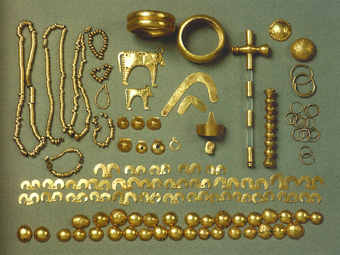
Early goldsmiths transformed this precious metal into intricate jewelry that reflected both artistic skill and cultural meaning.
Techniques of Ancient Artisans
Creating detailed gold items required advanced techniques.
Goldsmiths used methods such as hammering, casting, and engraving to shape the metal. Because gold is soft and malleable, it could be worked into delicate forms.
Some artisans also developed techniques for combining gold with other materials, creating complex designs.
Tools and Skill
Despite lacking modern equipment, ancient goldsmiths achieved remarkable precision.
They used simple tools—such as stone molds, small hammers, and chisels—but relied heavily on skill and experience.
Their work demonstrates a deep understanding of materials and craftsmanship.
Jewelry as Symbol
Jewelry was not just decorative.
It often represented wealth, status, and identity. In many cultures, gold items were worn by leaders, priests, or elites to display power and authority.
Some pieces also had religious significance, serving as offerings or symbols of divine protection.
Cultural Meaning
Designs in ancient jewelry often included symbolic motifs.
Animals, geometric patterns, and mythological figures reflected the beliefs and values of the society that created them.
Each piece told a story about its wearer and their culture.
Timeless Craftsmanship
The work of ancient goldsmiths continues to inspire admiration today.
Their ability to create beauty with limited tools highlights the creativity and innovation of early artisans.