Ancient Greek Sanctuaries: The Oracle of the Dead at Ephyra
Introduction
In ancient Greece, sanctuaries were not only places of worship but also sites where people sought guidance from the divine. One of the most mysterious of these was the Necromanteion of Ephyra, known as the “Oracle of the Dead.” Unlike other oracles that communicated with gods like Apollo, this sanctuary was believed to allow contact with the spirits of the dead.
Location and Setting
The sanctuary was located near ancient Ephyra in northwestern Greece, close to the confluence of the Acheron, Cocytus, and Pyriphlegethon rivers—names strongly associated with the underworld in Greek mythology.
These rivers were believed to form a gateway to Hades, the realm of the dead.
The dramatic landscape reinforced the idea that the site was a portal between the living world and the underworld.
Purpose of the Necromanteion
The Necromanteion was used for rituals of necromancy, meaning communication with the dead.
Visitors came to:
Seek guidance from deceased relatives
Ask questions about the future
Receive prophecies from spirits
Perform purification rituals before entering
It functioned similarly to other Greek oracles but focused on the underworld rather than the Olympian gods.
Ritual Process
Preparation
Before entering, pilgrims often:
Fasted for several days
Underwent purification rituals
Made offerings to chthonic (underworld) deities
Descent into the Sanctuary
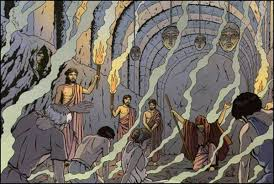
The architecture was designed to resemble a descent into the underworld:
Narrow corridors
Dark chambers
Labyrinth-like passages
Communication with Spirits
Priests may have used:
Hallucination-inducing substances
Acoustics and lighting effects
Mechanical devices or staged rituals
These techniques created the impression of communicating with the dead.
Religious Context
The Necromanteion was closely linked to chthonic religion, which focused on gods and spirits of the underworld.
Key associations include:
Offerings to the dead
Fear and respect for ancestral spirits
Belief in prophecy from beyond death
This contrasts with more common oracles like Apollo, such as the Oracle of Delphi.
Archaeological Debate
Modern archaeology has raised questions about the site’s exact function.
Some scholars argue:
It was truly a necromantic oracle center
Others suggest:It may have been a fortified farmhouse or storage complex later reinterpreted as sacred
Despite debate, its mythological association remains strong.
Cultural Significance
The idea of communicating with the dead reflects important Greek beliefs:
The dead could influence the living
The underworld was structured and accessible
Fate and prophecy were central to decision-making
The Necromanteion shows how mythology and ritual shaped ancient religious experience.
Decline of the Site
The sanctuary likely fell out of use during the Hellenistic or Roman periods as:
Religious practices changed
Rational philosophy became more influential
Traditional oracle sites declined in importance
Conclusion
The Necromanteion of Ephyra stands as one of the most enigmatic religious sites in ancient Greece. Whether viewed as a true oracle of the dead or a symbolic ritual space, it reflects the deep Greek fascination with the afterlife, fate, and communication with the unseen world.