Ancient Greek Warfare: The Peltast and the Change in Military Tactics
Introduction
For much of Greek history, warfare was dominated by heavily armed hoplites fighting in dense phalanx formations. However, during the 5th and 4th centuries BCE, a new type of soldier—the peltast—began to transform Greek military tactics. Their speed, flexibility, and effectiveness in rough terrain challenged the traditional dominance of the hoplite and contributed to major changes in how wars were fought.
Who Were the Peltasts?
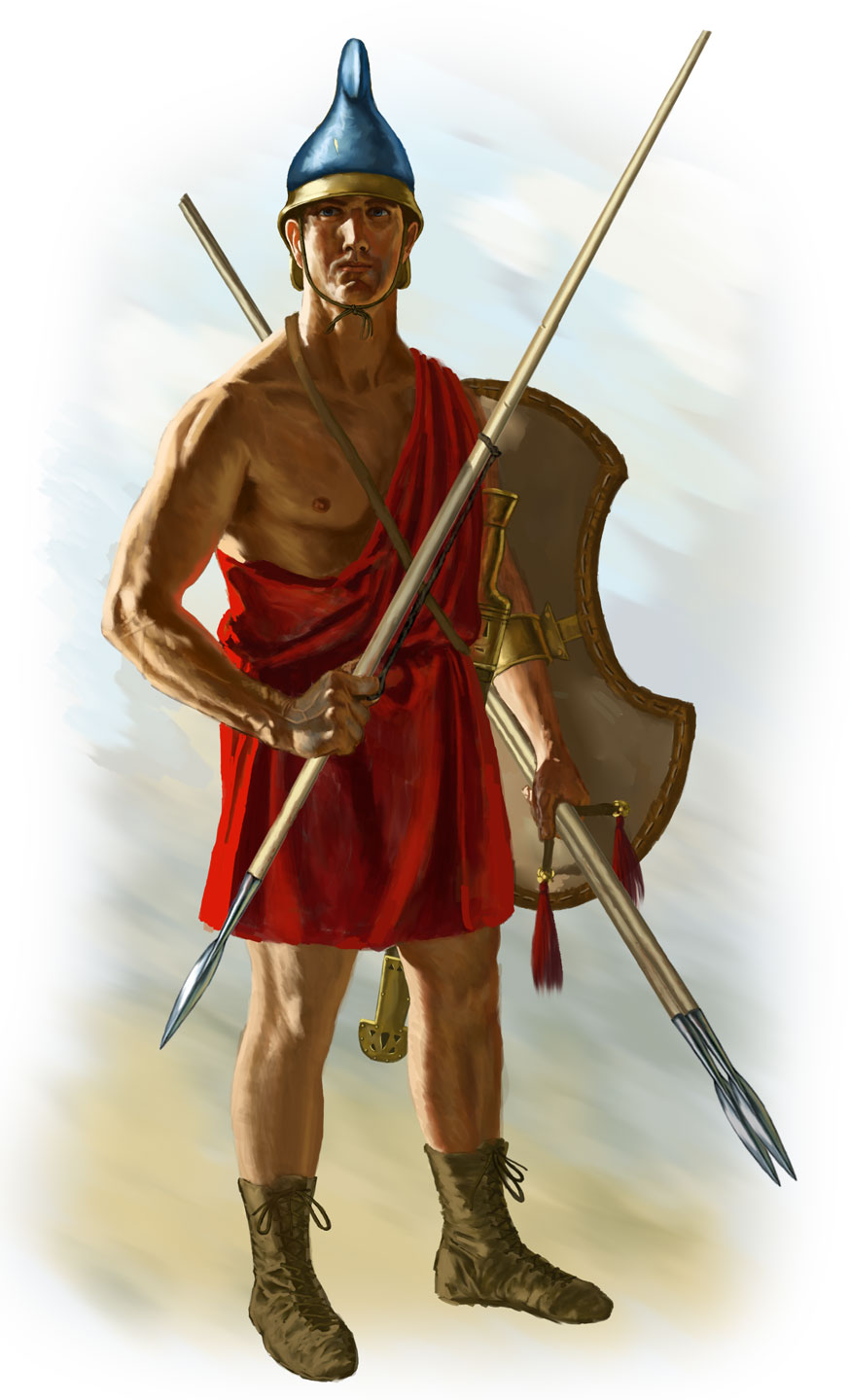
A peltast was a light infantry soldier named after the pelte, a small crescent-shaped or round shield that he carried.
Typical equipment included:
A light shield (pelte)
Several javelins for throwing
A short sword or dagger as a secondary weapon
Light clothing or minimal armor
Unlike hoplites, peltasts prioritized mobility over protection.
Origins of the Peltast
Peltast warfare was strongly influenced by the peoples of Thrace, whose warriors were known for their skill with javelins and light infantry tactics.
Greek armies gradually adopted these methods after witnessing their effectiveness.
How Peltasts Fought
Hit-and-Run Tactics
Peltasts rarely engaged in direct hand-to-hand combat with hoplites.
Instead, they:
Threw javelins from a distance
Harassed enemy formations
Retreated before heavy infantry could catch them
Repeated attacks to wear down opponents
Their mobility made them difficult targets.
Fighting in Difficult Terrain
Unlike hoplites, who performed best on flat open ground, peltasts excelled in:
Hills
Forests
Rocky landscapes
Narrow passes
This allowed commanders greater tactical flexibility.
The Weakness of the Traditional Phalanx
The hoplite phalanx was powerful but had limitations:
Strengths
Strong frontal defense
Discipline and cohesion
Effective in open-field battles
Weaknesses
Slow movement
Difficulty maneuvering
Vulnerability to harassment by light troops
Peltasts exploited these weaknesses effectively.
The Battle of Lechaeum
One of the most famous demonstrations of peltast effectiveness occurred at the Battle of Lechaeum.
What Happened?
A Spartan hoplite force was attacked by Athenian peltasts.
The peltasts repeatedly threw javelins and withdrew.
The heavily armored Spartans could not catch them.
Continuous attacks exhausted and weakened the Spartans.
The result was a surprising defeat for one of Greece's most respected hoplite armies.
The Reforms of Iphicrates
A key figure in the development of peltast warfare was Iphicrates.
His innovations included:
Improved training for light infantry
Longer spears and lighter equipment
Greater emphasis on mobility
Integration of different troop types
These reforms influenced later Greek and Macedonian armies.
Combined-Arms Warfare
As peltasts became more important, Greek armies increasingly combined:
Hoplites
Peltasts
Archers
Slingers
Cavalry
This created more flexible and adaptable military forces.
Influence on Macedonian Warfare
The tactical changes introduced by peltasts helped pave the way for the military reforms of Philip II of Macedon.
His armies combined:
The Macedonian phalanx
Light infantry
Cavalry
Specialized troops
This balanced approach was later perfected by Alexander the Great.
Historical Significance
The rise of the peltast demonstrated that:
Mobility could overcome heavy armor
Flexibility was as important as strength
Different troop types worked best together
Warfare was evolving beyond the traditional hoplite battle
These lessons reshaped military strategy throughout the Greek world.
Conclusion
The peltast was one of the most important military innovations in ancient Greek warfare. By introducing speed, flexibility, and new tactical possibilities, peltasts challenged the dominance of the hoplite phalanx and transformed the battlefield. Their success encouraged more sophisticated military systems and helped lay the foundations for the powerful armies of Macedon and the Hellenistic world.