The Mycenaean Palaces: The Megaron as the Center of Government
Introduction
The Mycenaean civilization flourished in mainland Greece from approximately 1600 to 1100 BCE and is best known for its fortified palaces, warrior culture, and extensive trade networks. At the heart of every major Mycenaean palace was the megaron, a large ceremonial hall that served as the political, administrative, and symbolic center of government.
The Mycenaean Palace System
Mycenaean civilization was organized around powerful palace centers that controlled surrounding territories.
Major palace sites included:
Mycenae
Pylos
Tiryns
Thebes
These palaces functioned as centers of administration, storage, religion, and political authority.
What Was the Megaron?
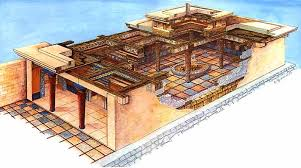
The megaron was the principal hall within a Mycenaean palace complex.
Its typical layout included:
An entrance porch
A vestibule (anteroom)
A large central hall
The central hall usually contained:
A circular hearth in the middle
Four columns supporting the roof
A throne positioned against a wall
This design became one of the most influential architectural forms in Greek history.
Architectural Features
Central Hearth
The large hearth served several purposes:
Heating the hall
Providing light
Hosting ceremonial activities
Acting as a symbolic center of authority
The hearth often featured elaborate decorative designs.
Throne Room
The ruler's throne was typically placed in a prominent position.
This area was used for:
Receiving visitors
Conducting official business
Diplomatic meetings
Ceremonial events
The throne emphasized the ruler's status and power.
Decorative Elements
Many megarons contained:
Painted wall frescoes
Decorative plasterwork
Religious symbols
Scenes of warfare, hunting, and ritual activities
These artworks reinforced political and cultural authority.
Government and Administration
The megaron was the administrative heart of the palace.
Officials working under the ruler managed:
Tax collection
Agricultural production
Trade and commerce
Distribution of resources
Military organization
Evidence from Linear B tablets shows that palace administrators carefully recorded economic activities.
The Wanax and Political Authority
The ruler of a Mycenaean kingdom was known as the wanax.
The wanax:
Controlled the palace administration
Directed military operations
Oversaw religious ceremonies
Managed economic resources
The megaron served as the physical location where this authority was exercised.
Religious Functions
The megaron was not solely a government building.
Religious activities included:
Ritual feasts
Offerings to deities
Ceremonial gatherings
Sacred observances linked to kingship
Political and religious authority were closely connected in Mycenaean society.
Influence on Later Greek Architecture
The megaron's design had a lasting impact on Greek architecture.
Many scholars believe it influenced:
Early Greek temple layouts
Monumental public buildings
Concepts of ceremonial space
The rectangular hall with a columned entrance can be seen as a precursor to later Greek temple design.
Decline of the Palace System
Around 1200–1100 BCE, the Mycenaean palace system collapsed.
Possible causes include:
Internal conflict
Economic disruption
Natural disasters
External invasions
As the palaces fell, the administrative role of the megaron disappeared, although its architectural influence endured.
Conclusion
The megaron was the political and ceremonial heart of the Mycenaean palace system. Serving as the residence of the wanax, the center of administration, and a place of religious activity, it embodied the authority of Mycenaean government. Its importance extended beyond the Bronze Age, influencing the architecture and political culture of later Greek civilization.