Across the wide range of recent archaeological discoveries you’ve shared, a clear pattern starts to emerge: ancient societies were far more interconnected, technologically adaptable, and culturally complex than older historical narratives often suggested. From Neolithic ritual practices in Europe to Byzantine coin hoards, from Maya trade networks to Japanese–Korean military exchange, archaeology is steadily replacing isolated “civilization stories” with a much more networked and human picture of the past.
What’s striking is not just the discoveries themselves, but the kinds of questions they are forcing researchers to reconsider.
Rethinking ancient economies: markets, trade, and everyday exchange
One of the strongest themes is the growing evidence for organized economic systems far earlier—and more widely—than previously assumed.
In the Maya Lowlands, archaeologist Ivan Šprajc’s identification of “nested constructions” suggests that entire landscapes may have been structured around purpose-built marketplaces rather than purely ceremonial plazas. These concentric arrangements of low platforms, detected largely through LiDAR scanning, imply regularized exchange hubs embedded within cities and regional networks. The possible presence of shrines, ballcourts, and administrative structures nearby further suggests that trade was not separate from ritual life, but deeply integrated into it.
This challenges older models of Maya society that emphasized elite-controlled redistribution. Instead, the evidence points toward a hybrid system: part market economy, part ceremonial governance, where exchange itself may have held symbolic or sacred meaning.
A similar pattern appears in the Ruyaulcourt excavation in northern France, where over 800 archaeological features reveal long-term rural continuity from the Iron Age through the Roman period. Here, economic life is visible in silos repurposed as refuse pits, loom weights indicating textile production, millstones for agricultural processing, and metallurgical slag showing sustained craft activity. Rather than isolated farmsteads, we see a dynamic rural economy embedded in wider trade networks, even into the declining centuries of the Roman Empire.
Even earlier, in Neolithic Poland, ritual drinking vessels containing low-lactose dairy residues suggest that food production and consumption were deeply embedded in social and possibly ritual structures. Dairy processing was not simply nutritional—it was symbolic, potentially tied to funerary rites and group identity.
Across these cases, “economy” is no longer just production and exchange. It becomes social memory, ritual performance, and landscape organization.
Ritual, belief, and symbolic thinking in deep time
Another strong thread running through the discoveries is the growing recognition of symbolic and cognitive complexity in ancient populations.
At the Sakhnin Valley Paleolithic sites in northern Israel, hundreds of handaxes attributed to Homo erectus show deliberate selection of stone materials containing fossils and unusual geological features. Some tools were shaped specifically to highlight these natural inclusions, even when doing so reduced functional efficiency. This suggests that early humans were not only toolmakers but also observers of natural form, capable of aesthetic or conceptual intention far earlier than once believed.
Similarly, Iberian ceramics from Corral del Castell in Spain show animal symbolism—in this case a wolf—associated with strength, protection, and social identity. Even in fragmentary form, the imagery reflects a belief system in which animals were not just environmental resources but cultural and spiritual symbols.
In Neolithic Poland, the possibility of women-centered ritual groups and structured funerary drinking practices further complicates assumptions about prehistoric social organization. Whether or not “secret societies” existed in the modern sense, the burial associations and restricted contexts suggest that ritual activity may have been more socially structured—and potentially more gendered—than traditionally thought.
Even Neanderthals, long portrayed as cognitively limited, appear in a different light at Abri Suard in France, where bone “retouchers” and “soft hammers” made from diverse animal remains—including rhino bone and even a tooth—show adaptive creativity and technological sophistication. These were not crude tools, but carefully selected instruments tailored to lithic production.
Across these sites, a consistent message appears: symbolic thinking, experimentation, and cultural meaning-making are deeply rooted in human evolution, not late inventions of “civilization.”
Power, authority, and the materialization of control
Several discoveries also highlight how authority and power were expressed through material culture.
The Byzantine Sivas Hoard demonstrates how gold coinage functioned as both economic instrument and political messaging system. Emperors were not merely issuing currency—they were projecting legitimacy. The evolution of imagery from individualized portraits under Phocas to dynastic symbolism under Heraclius reflects a state adapting to crisis through visual ideology.
Likewise, the fortified monastic site at El Monastil in Spain shows the blending of religious authority and military presence during the early medieval transition from Roman to post-Roman rule. Armor fragments, tax weights, and Christian ritual objects all coexisted within a single complex, illustrating how governance, religion, and defense were tightly interwoven.
Even the Pelusium temple in Egypt reveals how sacred architecture embodied political and cultural hybridity. Its circular basin and hydraulic system combine Egyptian religious tradition with Hellenistic and Roman architectural influence, turning water itself into a ritual medium of authority and meaning.
Cross-cultural exchange: a connected ancient world
Perhaps the most globally revealing set of discoveries comes from evidence of long-distance cultural transmission.
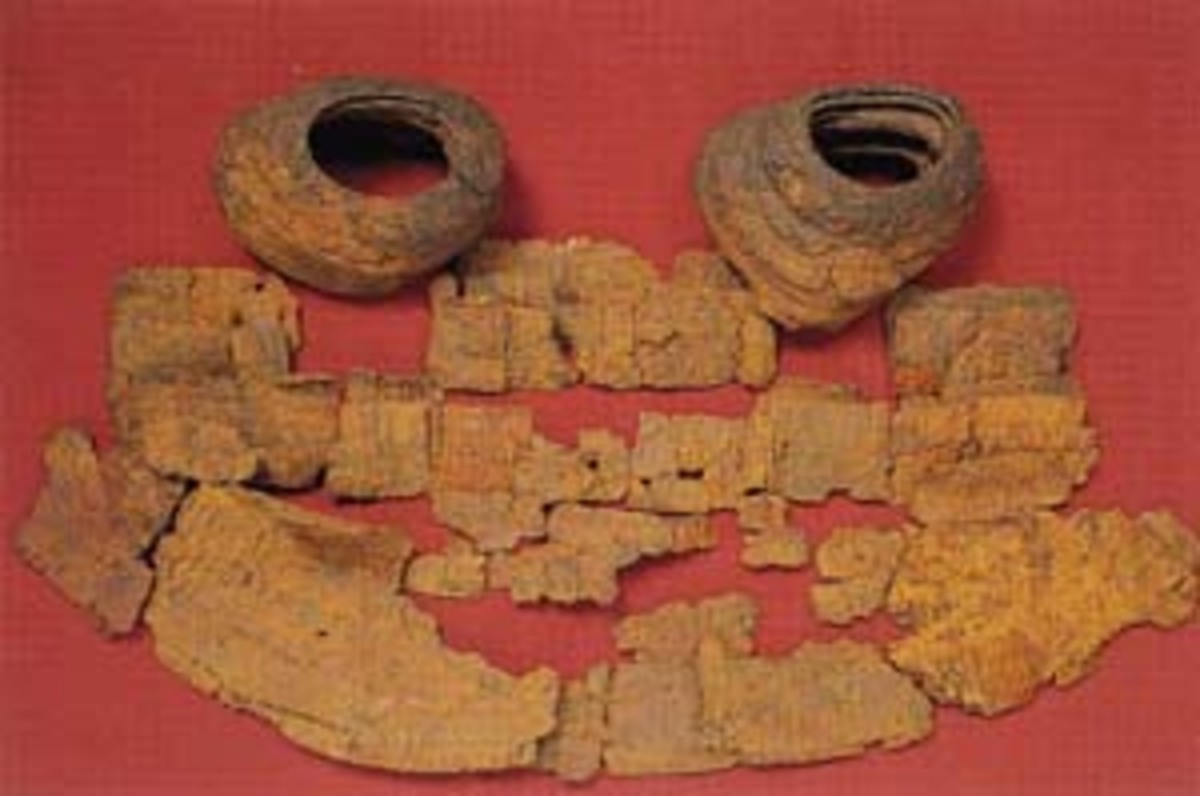
In Japan, armor fragments from Asukadera Temple show strong structural parallels with Baekje Kingdom military equipment from the Korean Peninsula. Lamellar construction techniques—iron plates bound into flexible protective systems—appear across both regions, supported by textual references in the Nihon Shoki describing artisans and monks traveling from Baekje to early Japan.
This is not a story of isolated invention, but of technological transfer, diplomacy, and shared craftsmanship across political boundaries.
Similarly, the possible origins of the Book of Kells in a Scottish monastic workshop at Portmahomack highlights the movement of skilled labor, materials, and artistic traditions across the early medieval North Atlantic world. Even parchment production techniques—potentially using seaweed-derived lye—suggest localized innovation within broader Christian manuscript culture.
In both cases, what appears “national” or “regional” in hindsight was in reality part of fluid, interconnected cultural zones.
Myth, memory, and modern reinterpretation
Some discoveries sit at the boundary between archaeology and cultural storytelling.
The supposed “Sivas Hoard” or Viking Loki Stone debates show how interpretation evolves over time, with symbols being reassigned as new analytical frameworks emerge. Likewise, the alleged underwater “lost city” off Louisiana reflects how modern imagination often projects grand narratives onto ambiguous geological formations.
Even the story of the Atari landfill excavation illustrates how archaeology is now used not only to study ancient civilizations but also to investigate modern cultural memory—turning consumer waste into historical evidence.
These cases remind us that archaeology is not just about the past itself, but about how each generation reconstructs it.
A shifting picture of human history
Taken together, these discoveries point toward several broader conclusions:
Ancient economies were often more organized and networked than previously assumed
Ritual and daily life were deeply intertwined rather than separate domains
Symbolic thinking and aesthetic awareness have very deep evolutionary roots
Technological and cultural exchange across regions was widespread and continuous
Even “modern” behaviors—markets, propaganda, identity symbolism—have long prehistoric trajectories
What is changing is not just the data, but the framework. Archaeology is moving away from viewing civilizations as isolated peaks of development, and toward understanding them as overlapping systems of interaction, adaptation, and shared human creativity.
If there is a unifying idea across all these discoveries, it is this: the past was not static or fragmented. It was active, connected, and constantly evolving—much more like the present than we once imagined.