• MAIN PAGE
  • LATEST NEWS
    • Lost Cities
    • Archaeology's Greatest Finds
    • Underwater Discoveries
    • Greatest Inventions
    • Studies
    • Blog
  • PHILOSOPHY
  • HISTORY
  • RELIGIONS
    • Africa
    • Anatolia
    • Arabian Peninsula
    • Balkan Region
    • China - East Asia
    • Europe
    • Eurasian Steppe
    • Levant
    • Mesopotamia
    • Oceania - SE Asia
    • Pre-Columbian Civilizations of America
    • Iranian Plateau - Central Asia
    • Indus Valley - South Asia
    • Japan
    • The Archaeologist Editor Group
    • Scientific Studies
    • Aegean Prehistory
    • Historical Period
    • Byzantine Middle Ages
    • Predynastic Period
    • Dynastic Period
    • Greco-Roman Egypt
  • Rome
  • PALEONTOLOGY
  • About us
Menu

The Archaeologist

  • MAIN PAGE
  • LATEST NEWS
  • DISCOVERIES
    • Lost Cities
    • Archaeology's Greatest Finds
    • Underwater Discoveries
    • Greatest Inventions
    • Studies
    • Blog
  • PHILOSOPHY
  • HISTORY
  • RELIGIONS
  • World Civilizations
    • Africa
    • Anatolia
    • Arabian Peninsula
    • Balkan Region
    • China - East Asia
    • Europe
    • Eurasian Steppe
    • Levant
    • Mesopotamia
    • Oceania - SE Asia
    • Pre-Columbian Civilizations of America
    • Iranian Plateau - Central Asia
    • Indus Valley - South Asia
    • Japan
    • The Archaeologist Editor Group
    • Scientific Studies
  • GREECE
    • Aegean Prehistory
    • Historical Period
    • Byzantine Middle Ages
  • Egypt
    • Predynastic Period
    • Dynastic Period
    • Greco-Roman Egypt
  • Rome
  • PALEONTOLOGY
  • About us

Characteristics of 7th-Century Japanese Armor and Weapons

April 11, 2026

What 7th-century Japanese warfare likely looked like

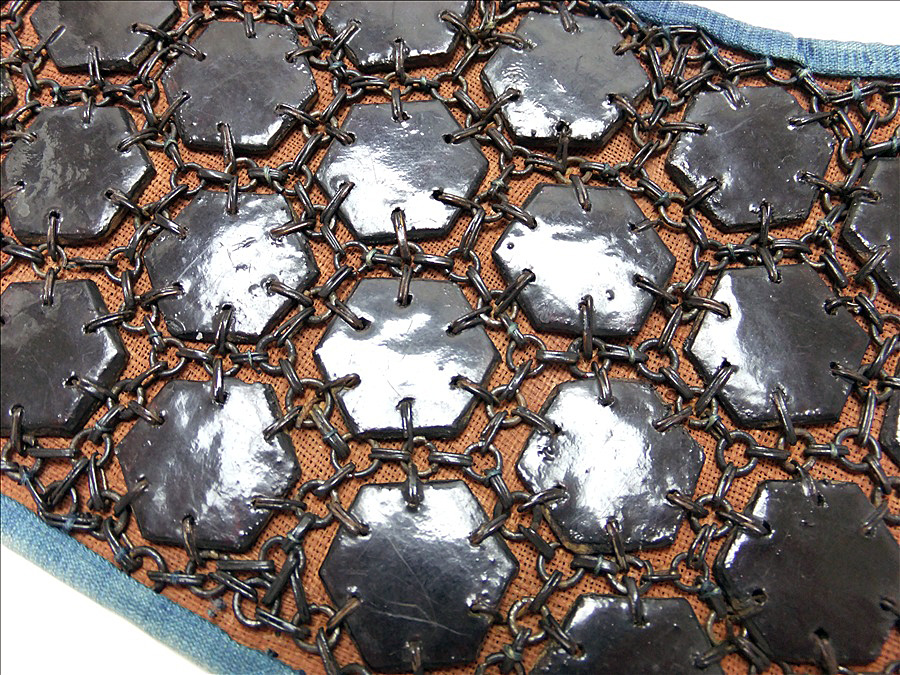
keiko armor (lamellar armor made of small iron plates) represents the dominant elite protection system of the period. It was:

  • flexible compared to earlier rigid armors

  • made by lacing iron scales together in rows

  • primarily used by high-status warriors

Alongside it, there were simpler cuirass-like forms that later evolved toward styles such as domaru, but these were still relatively rare in the 7th century.

The key point archaeologists emphasize is inequality of equipment:
iron armor was not standard issue, but an elite resource.

Most ordinary fighters likely relied on:

  • padded cloth armor reinforced with small metal pieces

  • improvised or locally made protection

  • minimal defensive coverage compared to elites

This creates a layered military society rather than a uniform army.

⚔️ Weapons and battlefield kit

The standard arsenal gives a clearer picture of combat style:

Japanese straight sword (7th century)

  • ~60–70 cm in length

  • straight blade, not yet curved like later katanas

  • often lacquered for preservation and grip stability

Japanese longbow (7th century)

  • ~2 meters long

  • made from hardwoods like catalpa or zelkova

  • primary ranged weapon of elite and semi-professional warriors

bamboo arrows (7th century Japan)

  • ~85 cm shafts

  • stored in quivers (often up to ~50 arrows)

  • designed for mass volley use in organized engagements

Spears and shields also existed, but the overall pattern is important:
archery was central, melee combat secondary, and logistics increasingly standardized.

🧠 What this means historically (the deeper significance)

This is where your text connects directly to the Asukadera/Baekje argument:

1. Military organization was becoming systematized

Later legal codes show that soldiers were expected to carry standardized kits (tools, food storage, sharpening stones). That implies:

  • early state logistics

  • regulated provisioning

  • structured military identity forming in the 7th century

2. Technology was socially stratified

The difference between elite keiko armor and common padded protection shows:

  • warfare was tied to class structure

  • military power was concentrated in aristocratic networks

  • equipment reflected political hierarchy, not just battlefield needs

3. East Asia was a shared technological sphere

The Asukadera findings matter because they don’t just describe Japan in isolation—they align with broader regional exchange:

  • Baekje ↔ Japan armor design transfer

  • shared lamellar construction techniques

  • movement of craftsmen, monks, and military knowledge across the Korea–Japan maritime corridor

So instead of “Japanese armor evolving alone,” the evidence increasingly supports a connected East Asian military culture during the 6th–7th centuries.
← Milk Beverage Residues Detected on Neolithic Pottery in PolandAncient Japanese Armor Reveals Strong Links to Korea’s Baekje Kingdom →
Featured
image_2026-04-10_225402492.png
Apr 11, 2026
Milk Beverage Residues Detected on Neolithic Pottery in Poland
Apr 11, 2026
Read More →
Apr 11, 2026
image_2026-04-10_225253038.png
Apr 11, 2026
Characteristics of 7th-Century Japanese Armor and Weapons
Apr 11, 2026
Read More →
Apr 11, 2026
image_2026-04-10_225216246.png
Apr 11, 2026
Ancient Japanese Armor Reveals Strong Links to Korea’s Baekje Kingdom
Apr 11, 2026
Read More →
Apr 11, 2026
image_2026-04-10_225051789.png
Apr 11, 2026
Temple complex dedicated to local deity unearthed in Northern Sinai
Apr 11, 2026
Read More →
Apr 11, 2026
image_2026-04-10_224952351.png
Apr 11, 2026
Byzantine Fortified Monastery Identified in Spain
Apr 11, 2026
Read More →
Apr 11, 2026
image_2026-04-10_224840601.png
Apr 11, 2026
Hidden Byzantine Treasure Uncovered: 7th-Century Gold Coin Hoard Reveals Secrets of a Turbulent Empire
Apr 11, 2026
Read More →
Apr 11, 2026
read more

Powered by The archaeologist