Newly Discovered Temple in Pelusium Reveals a Sacred Water Cult in Ancient Egypt
Archaeologists working at Tell el-Farama have uncovered the remains of a previously unknown temple dedicated to a local deity, offering new insight into the religious and cultural life of the ancient city of Pelusium.
After six years of excavation, the discovery is being described as a major breakthrough that may reshape understanding of Pelusium’s role as a key religious and cultural crossroads in antiquity.
A Major Religious Complex Unearthed
The site revealed a large and unusual sacred structure, including:
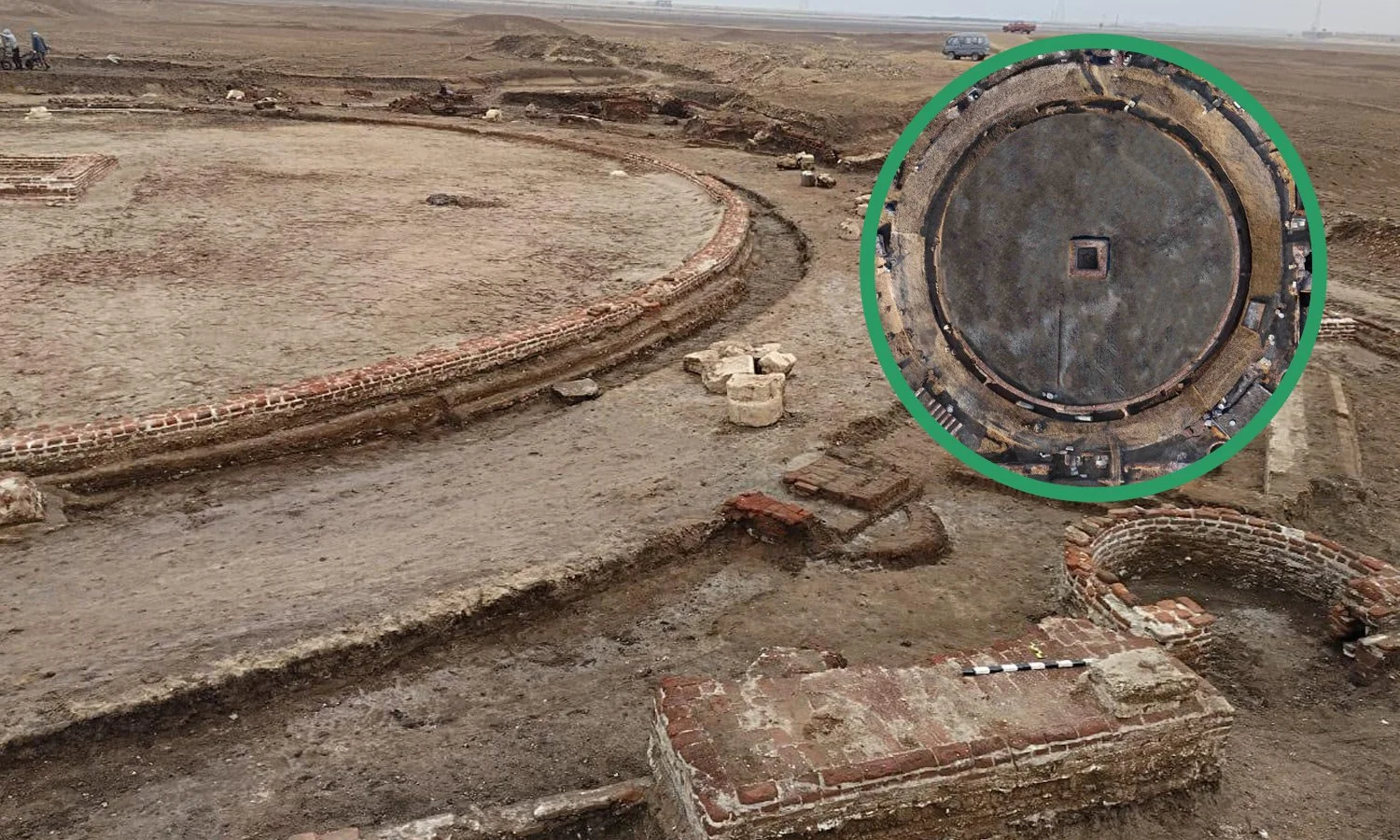
A circular basin about 35 metres wide
A system of connected water channels
A central square base, likely supporting a cult statue
Researchers believe the complex functioned as a ritual installation where water—possibly linked to the Nile’s fertile symbolism—played a central role in religious ceremonies.
A Temple Dedicated to a Local Deity
Experts suggest the temple may have been dedicated to a local god possibly known as Blozius, whose name is thought to derive from a Greek term connected to clay.
The design of the structure strongly emphasizes water, suggesting the deity may have been linked to fertility, creation, or the life-giving properties of Nile sediment.
From Misinterpretation to Sacred Function
When the structure was first partially uncovered in 2019, it was thought to be a civic building—possibly even a senate or administrative hall.
However, further excavation changed that interpretation completely.
Researchers now conclude that it was:
A religious water installation
A site used for ritual purification or offerings
A long-term sacred space in continuous use
The complex was active from the 2nd century BC to the 6th century AD, showing remarkable continuity of worship across changing political eras.
A Blend of Egyptian, Greek, and Roman Influences
Architectural and cultural features at the site reveal a strong mix of traditions:
Ancient Egyptian religious symbolism
Hellenistic design influences
Roman-era architectural modifications
This fusion reflects Pelusium’s position as a frontier city where cultures, religions, and trade networks intersected across centuries.
Pelusium as a Cultural Crossroads
The discovery reinforces the importance of Pelusium as more than just a military or trading hub. Instead, it appears to have been a major center for:
Religious exchange
Cultural blending
Maritime and Nile-based rituals
Long-term spiritual continuity
Scholars note that the city’s location near the Pelusiac branch of the Nile made it especially significant for water-based symbolism and religious practice.
A Site That Changes Its Story Over Time
According to excavation leaders, the reinterpretation of the structure highlights how archaeological understanding can evolve dramatically with continued research.
What once seemed like a political or civic building is now recognized as a carefully engineered sacred landscape centered on water ritual.
Why the Discovery Matters
The temple at Tell el-Farama is significant because it:
Reveals a previously unknown religious tradition
Demonstrates long-term ritual continuity (nearly 800 years of use)
Shows cultural blending across Egyptian, Greek, and Roman worlds
Expands knowledge of how water was used in ancient religious life
A New Window Into Ancient Spiritual Life
As research continues, archaeologists believe the site may reveal even more about how ancient communities in Pelusium understood water, divinity, and the natural world.
This discovery stands as a powerful reminder that even well-studied ancient cities can still hold hidden layers of religious and cultural history waiting to be uncovered.