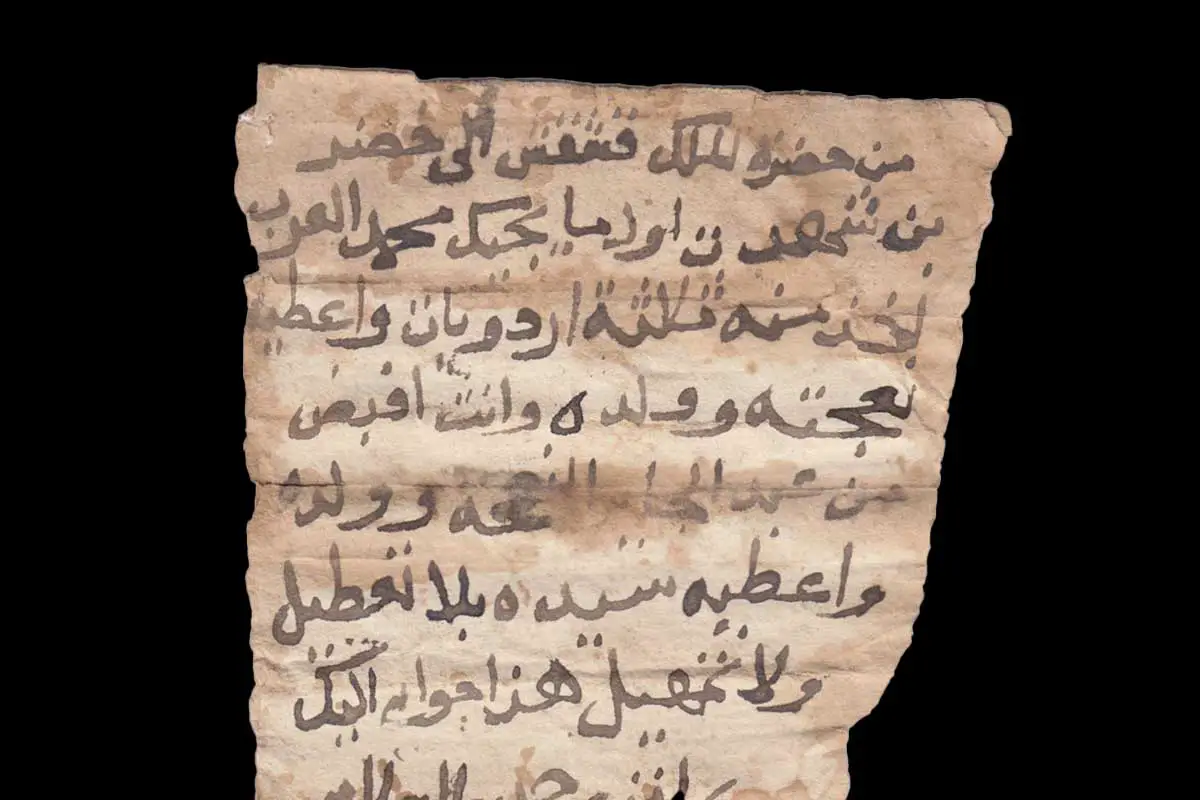
Manuscript Discovery Confirms the Historical Existence of King Qasqash
Archaeologists working in northern Sudan have uncovered rare documentary evidence confirming the historical existence of King Qasqash, a ruler of the former Christian Kingdom of Makuria who had previously been known only from later legend. The discovery was made at Old Dongola, the medieval capital of the kingdom, where excavations continue to reveal important details about the region’s past.
The findings were reported by researchers from the Polish Centre of Mediterranean Archaeology, who have been excavating the site and examining a collection of Arabic manuscripts recovered there. Among these documents is a written administrative order issued in the name of King Qasqash.
This document provides the first direct historical confirmation that the ruler was indeed a real historical figure.
From Legend to History
Until the discovery of this manuscript, Qasqash was known only from brief references in later literary sources. These mentions appeared in a religious narrative that preserved the memory of the ruler, but historians had long debated whether the figure was historical or simply legendary.
According to researcher Tomasz Barański, the newly discovered order resolves this long-standing uncertainty.
The document clearly states that the order was issued in the name of King Qasqash, providing direct evidence that he was not merely a legendary figure preserved in later storytelling traditions. Instead, he appears to have been a real ruler involved in the administration of the Makurian state.
Insights into Royal Authority
Although the manuscript concerns administrative matters, it offers valuable insight into how royal authority functioned in medieval Dongola.
Researchers believe that rulers like Qasqash governed through systems of patronage, distributing goods, privileges, and honors to loyal supporters. Such systems helped maintain political stability and reinforced the king’s authority over the kingdom’s elites and communities.
The document therefore sheds light not only on an individual ruler but also on the broader political structure of Makuria during a transitional period in the Middle Nile Valley.
Language and Cultural Change
The manuscript is written in Arabic, revealing an important cultural shift taking place in the region during the late medieval period. By this time, Arabic was increasingly used for administration and written communication.
However, scholars caution that this does not necessarily mean Arabic had already become the everyday spoken language of the royal court or the wider population. Many communities outside the political center likely continued speaking local Nubian languages in daily life.
The handwriting itself provides clues about this linguistic transition. Analysis shows that the scribe’s command of Arabic was imperfect, containing non-standard grammatical forms and relatively simple calligraphy. This suggests that Arabic was still a developing administrative language in the region rather than a fully native one.
A Remarkably Preserved Manuscript
The document has survived in unusually good condition. Many other manuscripts found at Old Dongola have been preserved only in small fragments, but the order issued in Qasqash’s name remains largely intact.
Written on an irregularly shaped sheet of paper, the text appears to be a draft rather than a final version of the order. This interpretation is supported by its informal layout and the unfinished appearance of the document.
The “King’s House”
Archaeologists discovered the manuscript in a large residential complex believed to have belonged to members of Dongola’s elite. Excavations at the site uncovered luxury goods including cotton, linen, and silk textiles, as well as items crafted from ivory and rhinoceros horn.
More than twenty Arabic documents have been recovered from the area, many found in refuse layers. These discoveries suggest that the complex was once an important administrative or elite residence connected with the governing class of the city.
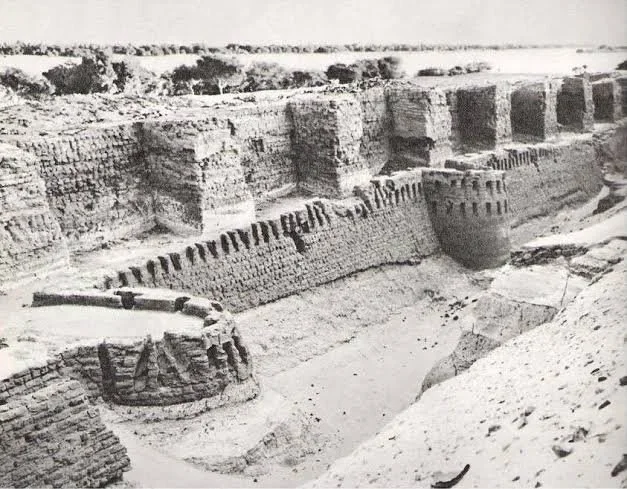
Local residents have long referred to the ruins as the “King’s House.” Interestingly, this long-standing local tradition now appears to align with the archaeological evidence uncovered by researchers.
Oral Tradition Meets Archaeology
The discovery highlights how oral traditions preserved by local communities can sometimes retain genuine historical memories for centuries. Stories about rulers such as King Qasqash appear to have survived in regional memory long after the kingdom itself disappeared.
By combining archaeological research with written evidence and local traditions, scholars are gradually reconstructing the history of Makuria and the once-powerful kingdom that flourished along the Middle Nile.
The newly discovered manuscript therefore represents far more than a single document—it offers a rare and valuable window into the political, linguistic, and cultural transformations that shaped medieval Sudan.