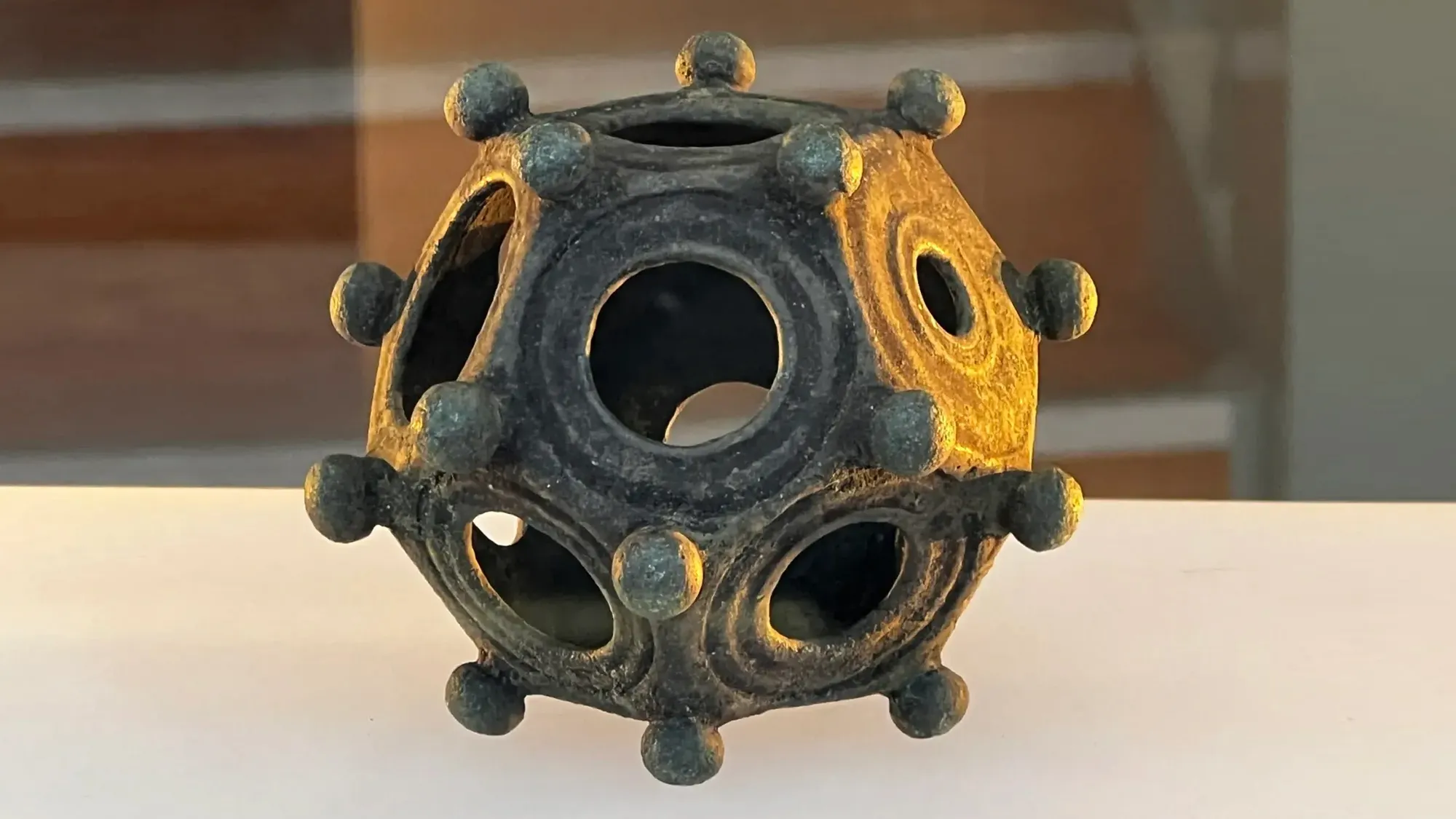
Archaeologists occasionally uncover metal artifacts that defy explanation. Made of bronze or copper, these objects are carefully crafted yet do not resemble tools, weapons, or jewelry.
They challenge classification—and invite imagination.
The Puzzle of Form
Some mysterious objects have intricate geometric shapes, rings attached at odd angles, or hollow chambers without obvious openings. Others appear too delicate for practical use.
Without written descriptions, researchers must rely on context. Where was the object found? Was it buried in a grave, stored in a workshop, or deposited in a temple?
Ritual or Symbolic Use?
Many unidentified metal artifacts may have served ceremonial purposes. Bronze objects discovered in ritual hoards sometimes show little wear, suggesting symbolic rather than practical function.
In parts of ancient Europe, intricate bronze pieces found in wetlands may have been offerings rather than tools.
Experimental Technology
It is also possible that some objects represent experimental designs—early attempts at mechanical devices or specialized instruments.
Ancient metalworkers possessed impressive skill. Cultures in regions such as Anatolia developed advanced smelting techniques, producing complex alloys.
The Limits of Interpretation
Modern categories—tool, weapon, ornament—may not always apply. Ancient societies may have created multifunctional or symbolic objects that do not fit neatly into our definitions.
Every unidentified artifact reminds us that the past was inventive and diverse.
Mystery as Motivation
The unknown purpose of certain metal objects is not a failure of archaeology. It is an invitation. Each discovery encourages further study, new theories, and open-minded thinking.
Ancient metal artifacts prove that even in a well-studied material like bronze, mysteries still endure—waiting patiently beneath the soil.