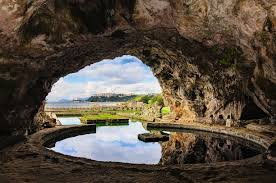
The Grotto of Sperlonga (the Spelunca), located midway between Rome and Naples, is one of the most remarkable archaeological sites in Italy. It served as a lavish, imperial banquet hall integrated directly into a natural sea cave, famously associated with the Emperor Tiberius. This site is a supreme example of Roman "landscape architecture," where the boundaries between the natural world and the opulent, engineered environment of the Roman elite were intentionally blurred.
I. The Imperial Retreat: Tiberius and the Grotto
Tiberius, who ruled from 14 to 37 CE, favored the Sperlonga estate as a respite from the political machinations and demands of Rome. The site was not merely a villa but a sophisticated theatrical space for dining and entertainment.
Engineering the Landscape: The grotto was an immense, naturally occurring cavern that Tiberius’s engineers transformed into an artificial paradise. They incorporated pools of water directly into the cavern floor, connecting them to the sea through channels that allowed the tides to ebb and flow within the dining space.
The Triclinium: The primary feature was a raised dining platform (the triclinium) placed at the center of the main pool. During banquets, guests would recline on couches surrounded by water, creating a surreal, immersive experience of luxury. The sound of the sea, the flickering of torches reflected on the cave walls, and the coolness of the cavern provided a stark contrast to the stifling heat of the Roman summer.
II. The Odyssey Sculptures: Hellenistic Grandeur
The grotto is most famous for its colossal marble sculptural groups, which depict scenes from the Odyssey of Homer. These sculptures were not merely decorative; they were carefully positioned to create a dramatic narrative that greeted visitors as they entered the cave.
The Scylla Group: The most spectacular piece depicts the monster Scylla attacking the ship of Odysseus. The dynamic, violent movement of the figures is a hallmark of the Hellenistic "baroque" style, showcasing an intense focus on pain, exertion, and terror.
The Blinding of Polyphemus: Another major set of sculptures captured the moment Odysseus and his men drove a burning stake into the eye of the Cyclops.
The "Signatures": A fascinating aspect of these sculptures is the discovery of an inscription naming three artists: Hagesander, Athenodoros, and Polydorus. These are the same names identified by Pliny the Elder as the creators of the famous Laocoön group. This link confirms that Tiberius was commissioning works from the absolute pinnacle of the artistic world, deliberately choosing imagery that associated his own reign and life with the epic grandeur of the Homeric heroes.
III. Political Symbolism and the "Fall" of the Grotto
The grotto also holds a grim, historical association with Tiberius’s reign. According to the Roman historian Tacitus, a massive rockfall occurred while Tiberius was dining in the grotto, nearly killing him.
Sejanus’s Heroism: Tacitus records that the Praetorian Prefect Sejanus—the man effectively running the Empire behind the scenes—threw his body over the Emperor to protect him from the falling rock. This event was a major turning point in Tiberius’s life, cementing his deep, and perhaps paranoid, reliance on Sejanus.
The Abandonment: Following the discovery of Sejanus’s subsequent conspiracy to seize the throne, Tiberius grew increasingly isolated and eventually abandoned the Sperlonga villa entirely, retiring to the island of Capri. The grotto was later vandalized—likely during the period of "damnatio memoriae" following the fall of the Julio-Claudian dynasty—with the sculptures being smashed and dumped into the pools of the grotto, where they remained until their discovery in 1957 during the construction of a coastal road.
IV. The Archaeology of Illusion
The Sperlonga Grotto is a masterclass in Roman sensory engineering. By using water, architecture, and world-class sculpture to re-create scenes from the Odyssey, Tiberius was not just "relaxing." He was curating a space that functioned as a living stage set for his own myth-making.
The grotto allowed him to become an actor in his own private Homeric epic, surrounded by the physical evidence of his taste, his power, and his proximity to the gods. Even in its ruined state, the site reveals the extreme lengths to which the Roman emperors went to control their environment and curate their public—and private—personas.