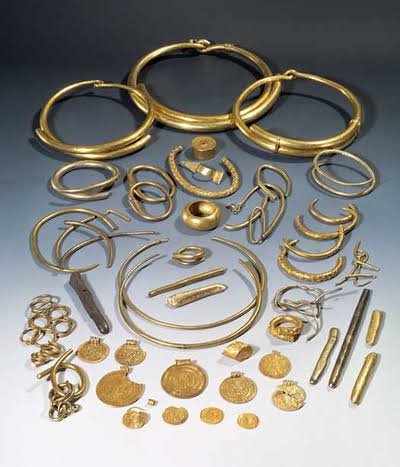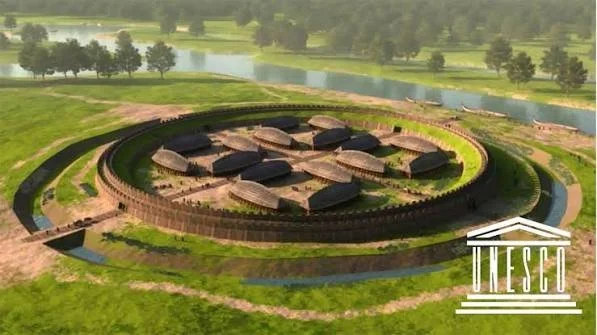
The Varna Necropolis (c. 4600–4200 BCE) in modern-day Bulgaria represents a pivotal moment in human history. It is the site of the world's oldest processed gold, proving that a sophisticated "Golden Civilization" existed in Europe long before the first dynasties of Egypt or Mesopotamia.
The artisans of the Varna culture weren't just lucky foragers; they were master metallurgists who understood the chemical and physical properties of precious metals.
1. The Source: Native Gold and Purity
The Varna people primarily worked with native gold—gold found in its metallic state in nature, often in riverbeds.
Purity Levels: Chemical analysis of the artifacts shows a purity level of about 23 to 23.5 karats. This suggests they were highly selective with their raw materials, choosing high-quality nuggets that were soft enough to be worked without extensive smelting.
Trace Elements: Small amounts of silver and copper are present in the artifacts, which acted as natural alloys, slightly increasing the durability of the finished pieces.
2. Cold-Hammering and Annealing
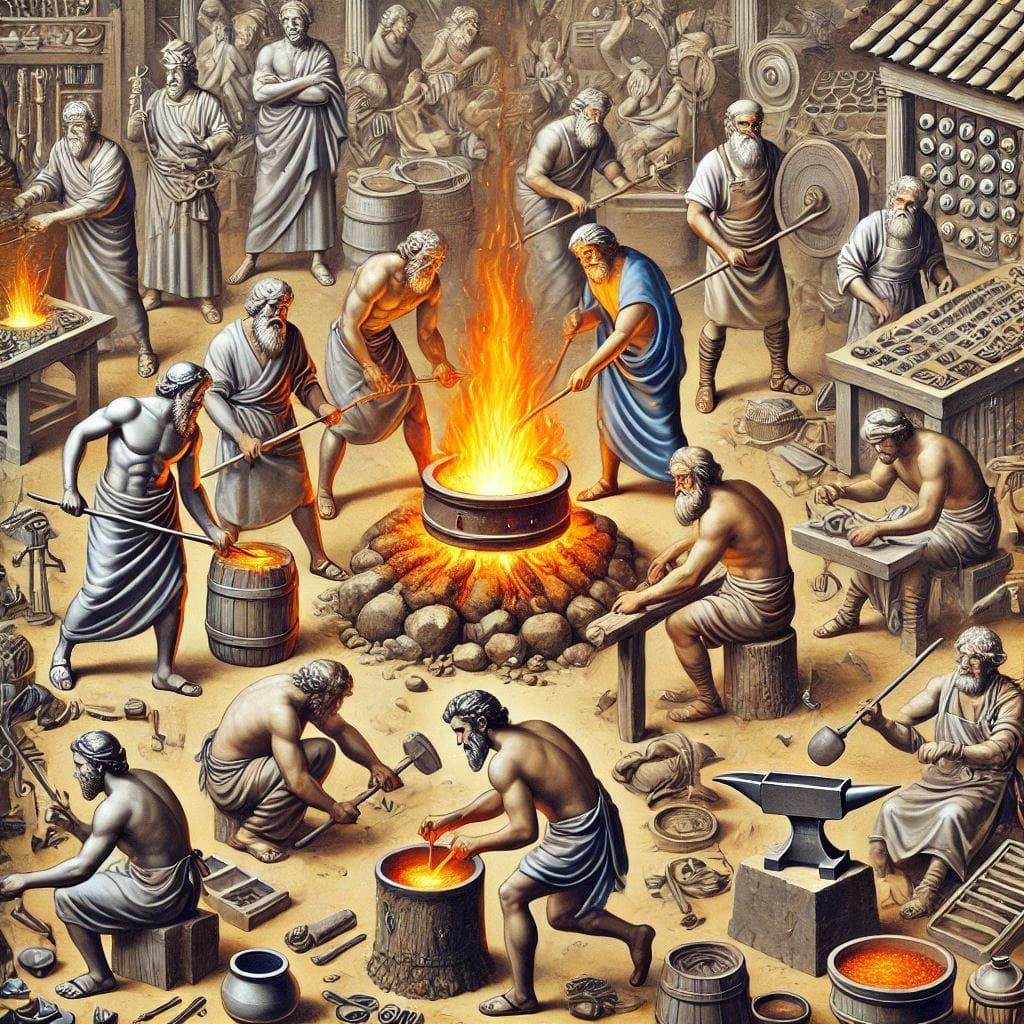
The most common technique used by Varna goldsmiths was cold-hammering. However, hammering gold repeatedly makes it brittle and prone to cracking—a process called "work hardening."
The Annealing Process: To overcome this, the Varna smiths used annealing. They would heat the gold to a specific temperature (below its melting point) to "relax" the crystalline structure of the metal, making it malleable again.
Thin-Film Mastery: This cycle of hammering and annealing allowed them to create incredibly thin gold foils, which were then wrapped around wood, bone, or stone cores to create the illusion of solid gold objects, such as scepters.
3. Lost-Wax Casting (Early Evidence)
While much of the Varna gold was hammered, there is evidence that they were experimenting with casting.
Smelting: To cast gold, the smiths had to reach temperatures of 1064°C. They achieved this using charcoal fires and blowpipes (tuyères) to increase oxygen flow.
The Technique: They likely used simple open molds or two-part molds made of stone or clay. This allowed for the creation of heavy, solid objects like the massive bracelets and "elbow" rings found in high-status graves.
4. The "Golden" Social Hierarchy: Grave 43
The most famous discovery at Varna is Grave 43, belonging to a high-status male (likely a king or priest). This single grave contained more gold than has been found in the rest of the entire world from that same period.
Insignia of Power: The artifacts included a gold-covered scepter, solid gold bracelets weighing hundreds of grams, and even a gold phallus sheath.
Standardization: The presence of nearly identical gold beads and appliques suggests that the Varna culture had "mass production" workshops where artisans followed specific templates to produce jewelry for the elite.
5. Decorative Finishing: Polishing and Perforation
The Varna smiths had an eye for aesthetics that rivaled modern jewelers.
Polishing: They used fine abrasives—likely silt or very fine sand—to give their gold a mirror-like luster that has survived for over 6,000 years.
Precision Drilling: Many gold appliques feature tiny, uniform holes. These were likely drilled using flint or bone points, allowing the gold to be sewn directly onto garments, shimmering as the wearer moved.
The technical sophistication of the Varna culture suggests that metallurgy was not a hobby but a highly specialized profession, likely guarded by a secretive class of smiths.