Introduction
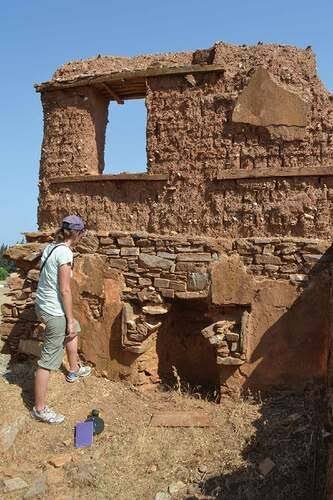
Mudbrick was one of the most widely used construction materials in ancient urban societies. Made primarily from earth, water, and sometimes straw or other plant fibers, mudbrick was relatively inexpensive, locally available, and suitable for building houses, walls, storage facilities, and monumental structures.
Unlike stone, mudbrick can deteriorate rapidly when exposed to water and weather. Buildings therefore required regular maintenance, and damaged structures often became sources of construction material for later generations.
Ancient communities did not necessarily discard every brick when a building was demolished. They could recover usable bricks, crush deteriorated material, and incorporate old construction debris into new buildings. These practices reveal how urban populations managed resources, maintained infrastructure, and adapted their settlements over long periods.
Mudbrick Production in Ancient Cities
Mudbrick production generally involved mixing soil with water and shaping the mixture into rectangular blocks. Plant fibers, including straw and chaff, could be added to improve the material's handling and performance.
Bricks were commonly dried in the sun, although production methods varied according to local conditions and architectural requirements.
The quality of mudbrick depended on soil composition, moisture, preparation, and drying. Some bricks were relatively fragile, while others could remain useful for many years when protected by foundations, plaster, roofs, and regular maintenance.
Because the raw materials were widely available, mudbrick construction was particularly practical in lowland regions where suitable stone was scarce or expensive to transport.
Why Ancient Builders Recycled Mudbrick
Recycling offered several practical advantages.
Recovering bricks reduced the need to collect and prepare new raw materials. It also reduced construction time, particularly when usable bricks were already available near a building site.
Urban settlements frequently experienced cycles of construction, abandonment, repair, and rebuilding. A damaged house might be dismantled to make room for a new structure, while its remaining materials could be incorporated into another building.
Recycling also helped manage demolition waste. Instead of allowing large quantities of broken brick to accumulate, builders could reuse the material in foundations, platforms, floor preparations, and other parts of new structures.
Reusing Whole Bricks
The simplest form of mudbrick recycling involved recovering bricks that remained sufficiently intact.
Builders could remove usable bricks from collapsed walls or dismantled buildings and incorporate them into new construction.
However, reused bricks might differ in size, shape, and quality from newly manufactured ones. This could create irregularities in walls and require additional mortar or adjustments during construction.
Archaeologists may identify reused bricks through differences in dimensions, surface wear, weathering, and construction techniques.
A wall containing bricks from different production episodes may indicate several phases of building and repair.
Crushing and Reprocessing Damaged Bricks
Not every brick could be reused intact.
Broken or weakened mudbrick could be crushed and mixed with fresh earth to produce new construction material.
Fragments might also be incorporated into floors, foundations, courtyards, or raised platforms.
This practice is particularly interesting because recycled material may become difficult to recognize once it is mixed into a new building mixture.
Microscopic examination can sometimes identify fragments of older bricks, plant fibers, and other inclusions within construction layers.
Urban Mounds and Repeated Rebuilding
Many ancient lowland cities developed through repeated occupation.
When buildings deteriorated, later residents sometimes constructed new structures over earlier remains. Over centuries, these successive building episodes could create substantial settlement mounds.
Such mounds may contain layers of mudbrick debris, compacted floors, abandoned walls, and rebuilt structures.
The accumulation of these materials reflects more than simple destruction. It can reveal deliberate decisions about which structures to preserve, dismantle, repair, or cover.
In some cases, older walls became foundations for later buildings, while other remains were leveled to create new surfaces.
Recycling and Urban Resource Management
Mudbrick recycling can be understood as part of a broader system of resource management.
Ancient urban populations needed construction materials for homes, defensive walls, temples, administrative buildings, and storage facilities.
The availability of materials could change over time because of population growth, environmental conditions, labor demands, or political instability.
Recycling allowed communities to extend the usefulness of existing resources.
It also reduced the effort required to transport fresh materials across crowded settlements.
Archaeological Evidence
Identifying mudbrick recycling requires careful examination of building remains.
Researchers study the composition of bricks, the arrangement of walls, the presence of reused fragments, and the relationship between construction layers.
Micromorphology can help identify how building materials were deposited and compacted. Soil chemistry and microscopic analysis may distinguish natural sediment from deliberately prepared construction mixtures.
Archaeologists also compare brick dimensions and manufacturing characteristics across different buildings to identify possible reuse.
However, the presence of broken bricks in a construction layer does not automatically prove deliberate recycling. Some fragments may have entered the deposit through collapse or later disturbance.
Environmental and Preservation Challenges
Mudbrick is vulnerable to moisture, flooding, and erosion.
Lowland cities located near rivers or seasonal floodplains may have required frequent repairs to buildings and defensive structures.
Flooding could damage walls and create large quantities of reusable debris.
At the same time, waterlogged or buried conditions may preserve certain mudbrick structures by limiting exposure to weathering.
Modern excavation can expose fragile mudbrick remains to rapid deterioration. Archaeological conservation therefore requires careful protection from rainfall, drying, and changes in humidity.
Conclusion
Ancient mudbrick recycling was an important part of urban construction and resource management. Builders could recover intact bricks, crush damaged material, and incorporate older construction debris into new structures.
These practices demonstrate that ancient cities were not built entirely from newly produced materials. They were continually maintained, dismantled, repaired, and reconstructed using resources already present within the urban landscape.
By examining reused bricks and construction debris, archaeologists can better understand how ancient populations managed building materials and adapted their cities to changing environmental and social conditions.