Introduction
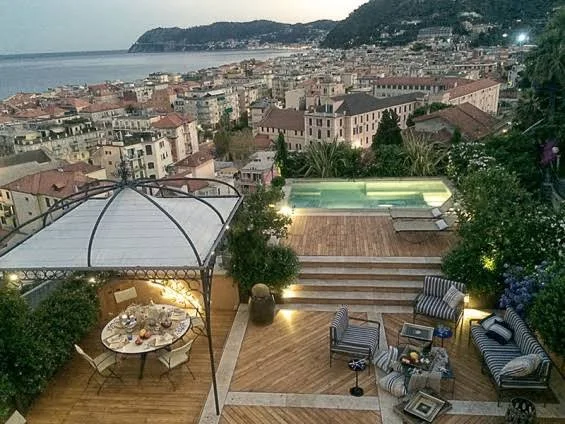
The Mediterranean region has a long history of adapting domestic architecture to warm climates, limited urban space, and seasonal changes in temperature. Among the architectural features associated with this environment are flat roofs and terraces that could support a variety of household activities.
In some settings, roof surfaces may have been used for growing plants, cultivating small quantities of food, keeping herbs, or creating shaded domestic spaces. These practices are particularly interesting in densely built settlements where ground-level gardens were difficult to maintain.
The study of roof-garden terraces offers an opportunity to investigate how medieval households used architectural space beyond the walls of their homes. However, not every flat roof should be interpreted as a garden. Evidence of cultivation must be distinguished from ordinary roof use, storage, drying, and other domestic activities.
Mediterranean Domestic Architecture
Medieval Mediterranean houses varied according to local materials, climate, wealth, religion, and urban organization.
In many settlements, buildings were constructed close together, making courtyards and private gardens difficult to accommodate.
Flat or gently sloping roofs were practical in regions with limited rainfall and could provide additional usable space.
Roof construction depended on local building traditions. Timber beams, stone supports, earth layers, tiles, and waterproofing materials could all contribute to the structure.
The ability of a roof to support vegetation depended on its strength, drainage, and maintenance.
Why Households Used Roof Terraces
Roof terraces could serve several functions.
They provided space for drying food, storing household materials, performing domestic work, and spending time outdoors.
In some circumstances, they could also support small-scale cultivation.
Plants grown on roofs might include herbs, vegetables, flowers, or other species suited to containers and shallow soil.
A roof garden could provide convenient access to ingredients used in cooking or household remedies.
It might also offer shade and improve the immediate living environment.
Water Management and Irrigation
Water was essential for rooftop cultivation.
Rainwater could be collected in containers or directed toward storage facilities. In areas with limited rainfall, households may have carried water manually from wells, cisterns, or other sources.
Some roof surfaces could have been designed with drainage channels to prevent water from accumulating.
Excessive moisture could damage the building structure, particularly when roofs contained timber supports or vulnerable earthen layers.
A successful roof garden therefore required a balance between retaining enough moisture for plants and preventing water from penetrating the building.
Soil, Containers, and Planting Methods
Roof cultivation did not necessarily require a continuous layer of soil.
Plants could be grown in ceramic pots, wooden containers, baskets, or raised planting beds.
Containers offered several advantages. They could be moved, replaced, or protected during unfavorable weather.
They also reduced the amount of weight placed on a roof.
Where deeper planting beds were possible, households might have used soil mixed with organic material to improve moisture retention and plant growth.
Archaeological identification of these arrangements is difficult because organic containers rarely survive.
Social and Household Functions
A roof terrace could become an important extension of domestic life.
Family members might use it for resting, socializing, food preparation, or household work.
In closely packed settlements, rooftops could also provide views across surrounding buildings and streets.
Access arrangements were influenced by household organization and privacy customs.
Some terraces may have been shared by several households, while others were accessible only to members of a particular family.
The social meaning of rooftop space therefore varied according to local architecture and community practices.
Urban Agriculture and Food Security
Small-scale rooftop cultivation could supplement household food supplies.
Herbs and selected vegetables might be grown near the home, reducing the need to purchase every ingredient from markets.
However, rooftop gardens were unlikely to replace larger agricultural production.
Their contribution would depend on available space, water supply, sunlight, and the types of plants being cultivated.
In times of shortage, even limited household production could have practical value.
Archaeological Evidence
Direct evidence for medieval roof gardens is often difficult to recover.
Plant containers may have been made from perishable materials. Soil could have been removed when buildings were abandoned, while later construction may have destroyed earlier roof surfaces.
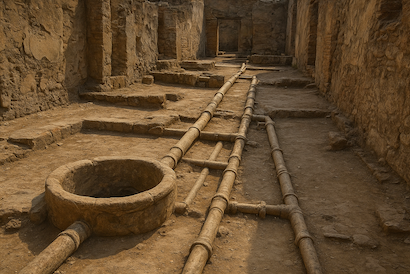
Researchers can investigate roof structures, drainage systems, waterproofing layers, and evidence of repeated repairs.
Plant remains may provide additional information. Seeds, pollen, phytoliths, and other botanical materials can sometimes reveal which plants were present in domestic contexts.
However, botanical remains found inside a building do not necessarily prove rooftop cultivation. They may have originated from food storage, cooking, trade, or waste disposal.
Architectural and Environmental Reconstruction
Reconstructing medieval roof gardens requires an understanding of the original building.
Archaeologists and architectural historians examine roof supports, terrace dimensions, access points, water channels, and the relationship between buildings.
Digital reconstruction can help researchers evaluate how much weight a roof could support and how sunlight reached different areas.
Environmental evidence can also identify which plants would have been suitable for cultivation in a particular region.
These methods allow researchers to distinguish plausible rooftop gardens from architectural spaces used for other purposes.
Regional Differences Across the Mediterranean
The Mediterranean was not a single architectural environment.
Buildings in southern Iberia, North Africa, the Italian peninsula, the Aegean, and the eastern Mediterranean developed according to different traditions.
Local rainfall, temperature, building materials, and household customs influenced how roof terraces were used.
Some communities may have made extensive use of rooftop spaces, while others preferred courtyards or ground-level gardens.
It is therefore important not to assume that every medieval Mediterranean settlement practiced rooftop cultivation in the same way.
Conclusion
Roof-garden terraces may have formed part of domestic life in some medieval Mediterranean communities. Flat roofs could provide valuable space for growing herbs, maintaining small plants, and carrying out everyday household activities.
Nevertheless, the archaeological identification of roof gardens requires more than evidence of a flat roof. Researchers must examine structural features, drainage systems, botanical remains, and the broader organization of domestic space.
Studying these terraces helps reveal how medieval households adapted their homes to crowded settlements and challenging climates, making use of architectural areas that might otherwise appear to have been secondary spaces.