Stories in Clay
Pottery is one of the most valuable tools for understanding ancient cultures. Unlike materials such as wood, cloth, or plant fibers—which easily decay over time—ceramic objects can survive for thousands of years. Because of this durability, pottery often becomes one of the most common and informative artifacts discovered at archaeological sites.
Each fragment of pottery, no matter how small, holds a story. From everyday cooking vessels to ceremonial pieces, these objects provide a direct connection to the lives, beliefs, and identities of the people who created them.
Styles and Materials
Different groups used distinct styles, shapes, and materials when creating pottery, and these variations serve as important clues for archaeologists.
The type of clay used, the method of shaping, and the firing process all reflect local resources and technological knowledge. Some societies preferred simple, functional designs, while others created highly refined and symmetrical forms.
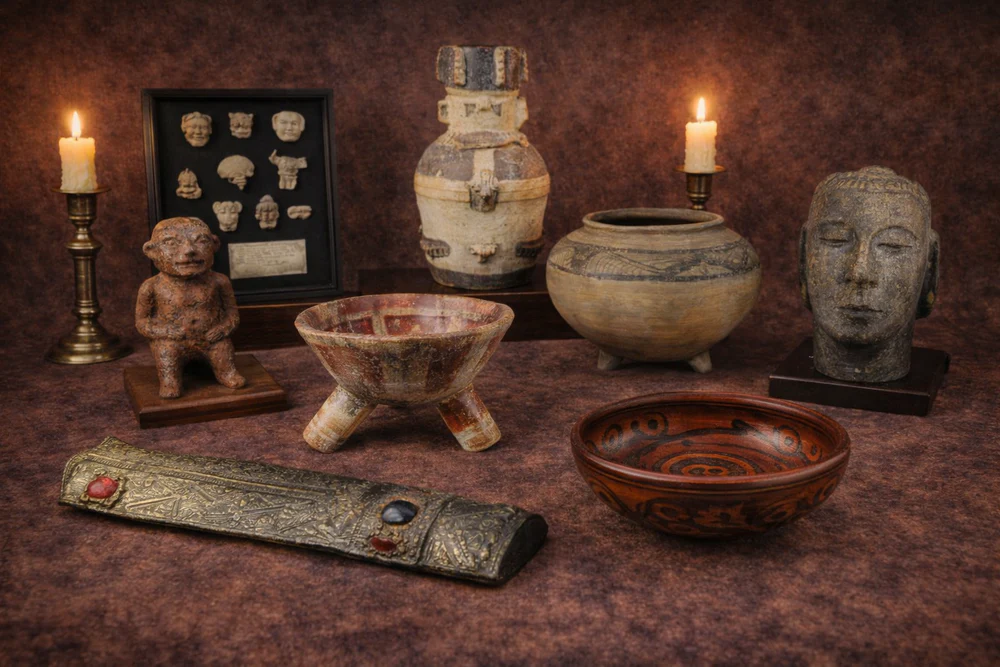
Shapes also varied depending on purpose. Large storage jars, cooking pots, drinking vessels, and ceremonial containers all had specific forms suited to their use.
Because these features are often unique to particular regions or time periods, archaeologists can identify cultural groups and trace their development over time by studying pottery styles.
Decoration and Meaning
Pottery was not only practical—it was also a form of artistic and symbolic expression.
Many ancient vessels were decorated with patterns, carvings, or painted designs. These decorations often held deeper meaning, representing beliefs, myths, or aspects of daily life.
Geometric patterns might symbolize order or balance, while images of animals or human figures could reflect cultural stories or spiritual ideas. In some cases, pottery designs even served as early forms of communication, conveying identity or status.
The level of detail in decoration also varied. Some pieces were simple and functional, while others were highly elaborate, suggesting they were used in rituals or reserved for important individuals.
Trade and Interaction
Pottery also provides evidence of trade and cultural interaction.
When similar pottery styles are found in distant regions, it suggests that goods, ideas, or people moved between communities. In some cases, pottery itself was traded; in others, techniques and designs were shared through contact.
These connections reveal that ancient societies were often more interconnected than they might first appear. Even without written records, pottery allows researchers to trace networks of exchange and influence across large areas.
Daily Life and Use
Beyond symbolism and trade, pottery offers insight into everyday life.
Cooking pots show what people ate and how they prepared food. Storage containers reveal how resources were managed. Drinking vessels hint at social habits and communal activities.
Wear marks, repairs, and residues found on pottery surfaces provide additional information about how these objects were used over time.
A Window Into the Past
Pottery acts as a window into ancient societies, preserving details that might otherwise be lost.
By studying these objects, archaeologists can reconstruct aspects of culture, economy, and daily life—even in the absence of written records.
In many ways, pottery is more than just an artifact—it is a lasting record of human creativity, adaptation, and expression across time.