Introduction
Rivers have always been important to human settlement, providing water for drinking, agriculture, transportation, fishing, and industry. However, rivers are dynamic environments. Their water levels fluctuate, currents change, and seasonal flooding can disrupt movement and damage settlements. Ancient communities therefore developed different methods to control water and make rivers more useful.
Among the most interesting possibilities in the history of water management are early river-control structures that may have performed functions similar to locks. Modern locks allow vessels to move between sections of waterways with different water levels by raising or lowering the water inside a chamber. Ancient societies developed many forms of canals, gates, dams, and navigation structures, although not all of them should be classified as true locks.
Investigating early river locks helps explain how communities adapted waterways for transportation and resource management before modern engineering.
Understanding River Locks
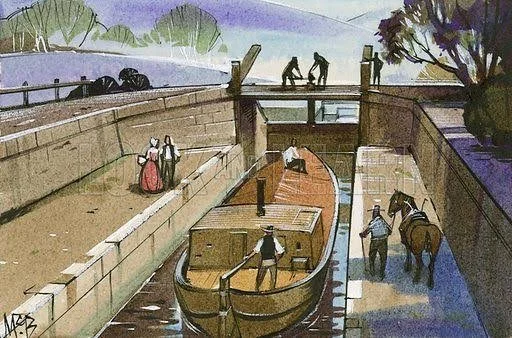
A river lock is a structure that allows boats to pass between sections of water at different elevations. It generally consists of a chamber with gates at both ends.
A vessel enters the chamber, after which one gate is closed. Water is then released into or drained from the chamber until its level matches the destination section of the river or canal. The opposite gate can then be opened, allowing the vessel to continue.
This system makes it possible to navigate waterways that would otherwise contain obstacles created by changes in elevation.
The principle is relatively simple, but constructing a reliable lock requires knowledge of water pressure, flow control, structural stability, and gate operation.
Ancient Water Management Before Locks
Ancient societies developed numerous methods for controlling water long before modern hydraulic engineering.
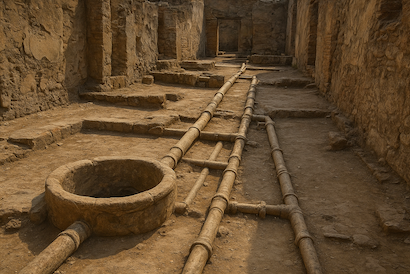
Dams could store water or redirect river flow. Canals transported water toward agricultural fields and settlements. Sluices allowed operators to regulate the movement of water through channels.
Weirs, which are low structures built across streams or rivers, could raise water levels or divert part of the flow. These structures were sometimes associated with irrigation, milling, or fishing.
Although these technologies were important precursors to more complex navigation systems, they were not necessarily locks. A structure that raises water or controls flow should not automatically be classified as a device for moving boats between different water levels.
The Development of Navigable Waterways
As trade expanded, communities increasingly needed reliable ways to transport heavy materials over long distances. Rivers provided natural transportation corridors, but waterfalls, rapids, shallow sections, and changes in elevation could interrupt navigation.
Engineers and builders responded by modifying waterways. They constructed canals, cleared channels, reinforced banks, and developed structures to regulate water levels.
Some navigation systems relied on simple methods such as dragging boats over obstacles or using separate channels around difficult sections. Others required more complex hydraulic arrangements.
The development of locks was part of a broader history of adapting natural waterways to human transportation needs.
Gates, Sluices, and Early Lock-Like Structures
A gate can control the movement of water through a channel. When combined with a contained basin or chamber, gates may contribute to a system capable of adjusting water levels.
However, identifying an ancient lock requires evidence of a deliberate arrangement that allowed vessels to pass between different water levels.
Researchers examine the dimensions of chambers, the placement of gates, the depth of channels, and the relationship between the structure and the surrounding waterway.
A pair of gates does not automatically indicate a lock. The structure may have been designed for irrigation, drainage, flood control, or water storage.
Archaeological interpretation must therefore consider the intended function rather than relying on architectural resemblance alone.
Materials and Construction Techniques
Ancient hydraulic structures were built using materials available in their surrounding environments.
Stone and masonry were useful for constructing durable walls and foundations. Timber could be used for gates, supports, and movable components. Clay and compacted earth might help seal gaps and reduce water leakage.
The choice of materials depended on the force of the water, the local geology, and the resources available to builders.
Wooden components are especially difficult to preserve in many archaeological settings. They may survive in waterlogged environments, but decay rapidly when exposed to oxygen and changing moisture conditions.
Stone foundations and channel walls may remain visible even when the movable parts of a hydraulic structure have disappeared.
Archaeological Identification of Ancient Locks
Archaeologists investigate possible locks through excavation, architectural recording, and hydraulic analysis.
They examine whether a structure contains a chamber large enough to accommodate a vessel, whether gates could have been installed at both ends, and whether the surrounding channels show evidence of navigation.
Wear patterns may provide additional clues. Repeated contact from boats, ropes, or movable gates could leave distinctive marks on stone or timber.
Sediment deposits can reveal changes in water levels and patterns of flow. Researchers may also examine nearby settlements, ports, warehouses, and transportation routes to determine whether the structure served commercial navigation.
The most convincing interpretation requires several forms of evidence to support one another.
Dating Hydraulic Structures
Dating river-control structures can be difficult because they were frequently repaired and modified.
Radiocarbon dating may be possible when wooden gates, supports, or other organic materials survive. Dendrochronology may provide more precise dates if suitable timber contains recognizable annual growth rings.
Ceramics, coins, and other artifacts recovered from construction or maintenance deposits can offer additional chronological information.
Stratigraphic relationships help establish whether a channel was built before or after nearby structures.
Researchers must distinguish the original construction date from later repairs. A river structure may have remained in use for centuries, with several generations of modifications.
Economic and Social Importance
River locks and related hydraulic systems could have supported regional trade by making difficult waterways more navigable.
Improved navigation could reduce the need for overland transport and make it easier to move heavy agricultural products, building materials, and commercial goods.
Such structures also required maintenance. Gates had to be repaired, channels cleared, and water levels monitored.
This work may have depended on local communities, specialized builders, or political authorities. The organization of hydraulic infrastructure can therefore provide information about administration and cooperation.
Control over a navigable waterway could also have economic and political importance, particularly when it influenced access to markets or strategic settlements.
Environmental Risks and Engineering Limitations
Ancient river engineering faced many of the same environmental challenges encountered by modern projects.
Floods could damage walls and gates. Sediment could accumulate in chambers and channels. Seasonal drought could reduce water availability, making navigation difficult.
Builders needed to understand the behavior of the river and adapt structures to changing conditions.
A lock that worked during one season might become unusable during another. Maintenance and local knowledge were therefore essential.
Conclusion
Ancient river locks represent an important possibility in the development of water-management and transportation technology. Although many early societies constructed dams, sluices, canals, and other hydraulic structures, not every water-control installation functioned as a true navigation lock. Establishing the presence of an ancient lock requires evidence of a chamber, controllable gates, and a system designed to move vessels between different water levels. Through archaeological excavation, hydraulic reconstruction, dating, and landscape analysis, researchers can investigate how early communities transformed rivers into more reliable transportation networks.