3,500-Year-Old Cemetery Unearthed in Egypt
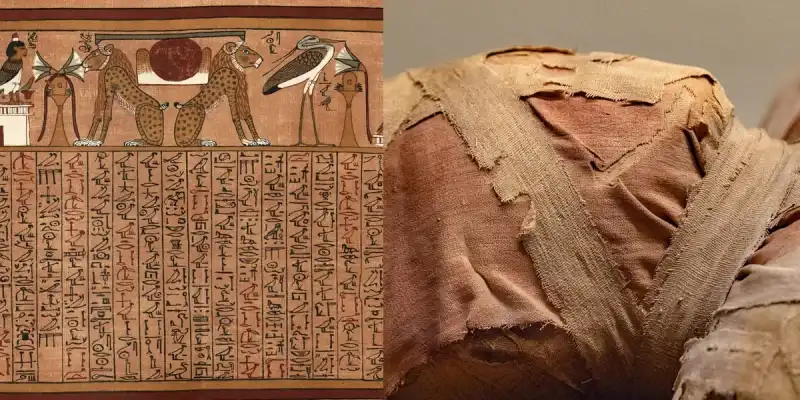
Archaeologists in Egypt have uncovered an extraordinary ancient burial site dating back around 3,500 years. The newly identified cemetery contains an impressive collection of artefacts, including mummies, statues, amulets—and a remarkably well-preserved 43-foot-long papyrus scroll featuring passages from what is widely known as the Book of the Dead.
The discovery offers fresh insight into the religious beliefs and burial customs of ancient Egypt during one of its most powerful eras.
A Rare Papyrus Scroll in Exceptional Condition
The lengthy scroll was found in 2023 in the Al-Ghuraifa area. According to Mostafa Waziry, who was serving as secretary general of the Egyptian Supreme Council of Antiquities at the time, the manuscript stands out for its excellent state of preservation.
Measuring about 43 feet (roughly 13 meters) long, the papyrus was created to guide the deceased through the afterlife. Such texts played a central role in Egyptian burial traditions, helping the soul overcome challenges in the underworld.
Although commonly referred to today as the Book of the Dead, this is a modern label. In ancient Egypt, the collection of funerary spells was known as the “Book of Coming Forth by Day.” Rather than being a single book, it consisted of selected texts placed in tombs to support the deceased’s journey beyond death.
A Glimpse Into the New Kingdom
The cemetery dates to the New Kingdom period (approximately 1550–1070 BCE), a time when Egypt reached significant political power, artistic achievement, and architectural development.
In addition to the papyrus scroll, excavators uncovered numerous burial objects. These included mummies, stone and wooden coffins, protective amulets, and many small figurines known as shabti (also spelled ushabti). According to a statement from the Egyptian Ministry of Tourism and Antiquities, these figurines were intended to act as servants for the deceased in the afterlife, performing labor on their behalf.
Canopic Jars and Stone Sarcophagi
The team also found several canopic jars—containers traditionally used to store preserved internal organs removed during mummification. Fragments of stone sarcophagi were uncovered as well, which once housed wooden coffins placed inside them for additional protection.
Experts say the length and preservation of the scroll make it especially noteworthy. Lara Weiss, CEO of Germany’s Roemer and Pelizaeus Museum and a specialist familiar with these ancient texts, described the find as both impressive and highly significant, particularly given its size and condition.
Why This Discovery Matters
This lost cemetery provides valuable evidence about burial practices, spiritual beliefs, and craftsmanship during the New Kingdom. From the intricately prepared mummies to the rare funerary manuscript, the site sheds light on how deeply ancient Egyptians prepared for life after death.
With each new excavation, Egypt continues to reveal layers of history—reminding us that thousands of years later, its ancient civilization still has powerful stories to tell.