• MAIN PAGE
  • LATEST NEWS
    • Lost Cities
    • Archaeology's Greatest Finds
    • Underwater Discoveries
    • Greatest Inventions
    • Studies
    • Blog
  • PHILOSOPHY
  • HISTORY
  • RELIGIONS
    • Africa
    • Anatolia
    • Arabian Peninsula
    • Balkan Region
    • China - East Asia
    • Europe
    • Eurasian Steppe
    • Levant
    • Mesopotamia
    • Oceania - SE Asia
    • Pre-Columbian Civilizations of America
    • Iranian Plateau - Central Asia
    • Indus Valley - South Asia
    • Japan
    • The Archaeologist Editor Group
    • Scientific Studies
    • Aegean Prehistory
    • Historical Period
    • Byzantine Middle Ages
    • Predynastic Period
    • Dynastic Period
    • Greco-Roman Egypt
  • Rome
  • PALEONTOLOGY
  • About us
Menu

The Archaeologist

  • MAIN PAGE
  • LATEST NEWS
  • DISCOVERIES
    • Lost Cities
    • Archaeology's Greatest Finds
    • Underwater Discoveries
    • Greatest Inventions
    • Studies
    • Blog
  • PHILOSOPHY
  • HISTORY
  • RELIGIONS
  • World Civilizations
    • Africa
    • Anatolia
    • Arabian Peninsula
    • Balkan Region
    • China - East Asia
    • Europe
    • Eurasian Steppe
    • Levant
    • Mesopotamia
    • Oceania - SE Asia
    • Pre-Columbian Civilizations of America
    • Iranian Plateau - Central Asia
    • Indus Valley - South Asia
    • Japan
    • The Archaeologist Editor Group
    • Scientific Studies
  • GREECE
    • Aegean Prehistory
    • Historical Period
    • Byzantine Middle Ages
  • Egypt
    • Predynastic Period
    • Dynastic Period
    • Greco-Roman Egypt
  • Rome
  • PALEONTOLOGY
  • About us

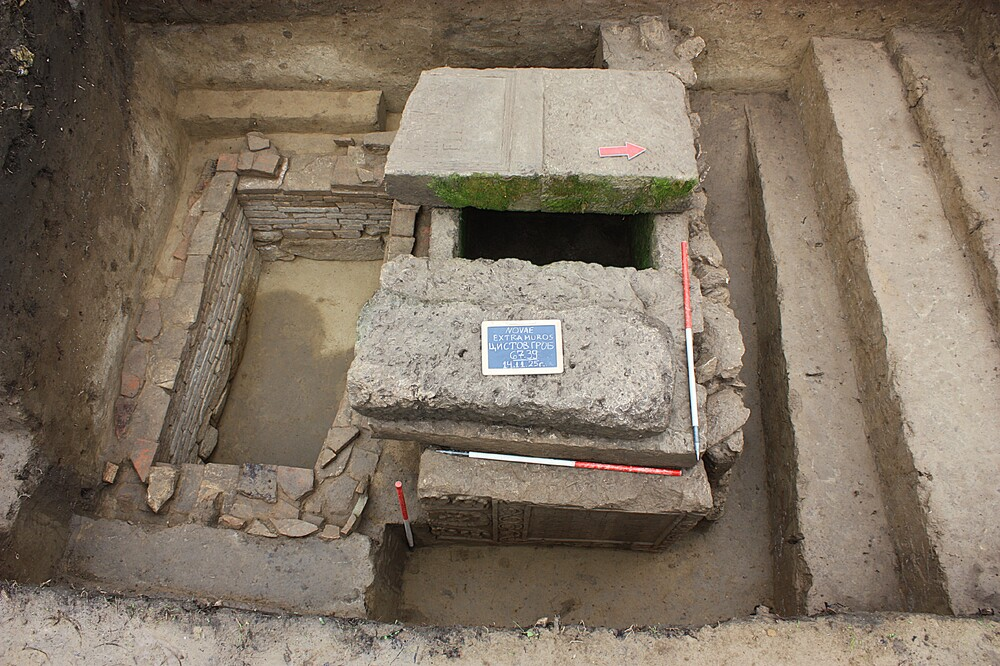
Excavations in the Roman city of Nove near Svishtov.

Archaeologists in Svishtov Discover Five Burial Structures, Fragment of Centurion's Tombstone

February 25, 2026

A fragment of a Roman centurion’s tombstone has been uncovered during rescue excavations in the Western Necropolis of the military camp of Novae near Svishtov, according to archaeologist Marin Marinov of the Svishtov Historical Museum.

The salvage dig began after a local resident discovered a tomb while uprooting a tree on his property. The excavation, targeting a 2nd–3rd century necropolis, is co-led by Dr. Kalin Chakarov of the Regional History Museum Veliko Tarnovo, with participation from Simeon Angelov of Veliko Tarnovo University.

Archaeologists identified five burial structures:

  • Two cist graves built from limestone slabs

  • One brick-and-stone-built grave

  • One simple burial pit

  • One stepped cremation pit

Four of the five burials were inhumations.

The most striking find is a partially preserved tombstone of centurion Gaius Valerius Verecundus of Legio I Italica, which had been reused as construction material in one of the cist graves. That same grave also incorporated other reused Latin-inscribed monuments, including the tombstone of veteran Marcus Marius Patroclus, originally from Iconium in Asia Minor.

In the second cist grave, the east wall was formed from the largely preserved tombstone of Gaius Alpinius Secundus, a native of Colonia Agrippina (modern-day Cologne, Germany). Another slab contains part of an epitaph for a veteran who served 25 years and died at age 60.

Three of the tombstones are decorated with wreaths, ivy leaves, and branches. The monument to Patroclus also depicts signa — Roman military standards — emphasizing the strong military character of Novae.

All five graves appear to have been looted, either in antiquity or in modern times. The few surviving artefacts include a bone needle, a spindle fragment, and two bronze fibulae.

The disturbed skeletal remains will be examined by anthropologist Nadezhda Atanasova, while Senior Assistant Professor Nikolay Sharankov of Sofia University is analyzing the Latin inscriptions.

It’s fascinating — and a little poetic — how these tombstones were dismantled and reused in later burials. Even in reuse, they carried fragments of identity: names, origins, years of service. A military frontier town quietly layered with stories from across the Roman Empire.
← Study Suggests the Maya Traded Dogs Over Long DistancesAncient tooth proteins reveal the history of mass violence at an Iron Age burial site →
Featured
image_2026-02-25_235113742.png
Feb 25, 2026
Rare Roman treasure found by metal detectorists
Feb 25, 2026
Read More →
Feb 25, 2026
image_2026-02-25_231102835.png
Feb 25, 2026
Iraqi Kurdistan discovers 1,400-year-old cemetery
Feb 25, 2026
Read More →
Feb 25, 2026
image_2026-02-25_225034080.png
Feb 25, 2026
Are 1 In 200 Men Descended From Genghis Khan? New DNA Evidence Says Maybe Not
Feb 25, 2026
Read More →
Feb 25, 2026
image_2026-02-25_223300237.png
Feb 25, 2026
Archeological site with over 100 skulls discovered in Erbil
Feb 25, 2026
Read More →
Feb 25, 2026
image_2026-02-25_221606695.png
Feb 25, 2026
1,000-Year-Old Chimú “Sacred Road” and Temple Complex Discovered in Northern Peru
Feb 25, 2026
Read More →
Feb 25, 2026
image_2026-02-25_220048869.png
Feb 25, 2026
Ancient tombs packed with pottery and jewelry unearthed from Egyptian necropolis
Feb 25, 2026
Read More →
Feb 25, 2026
read more

Powered by The archaeologist