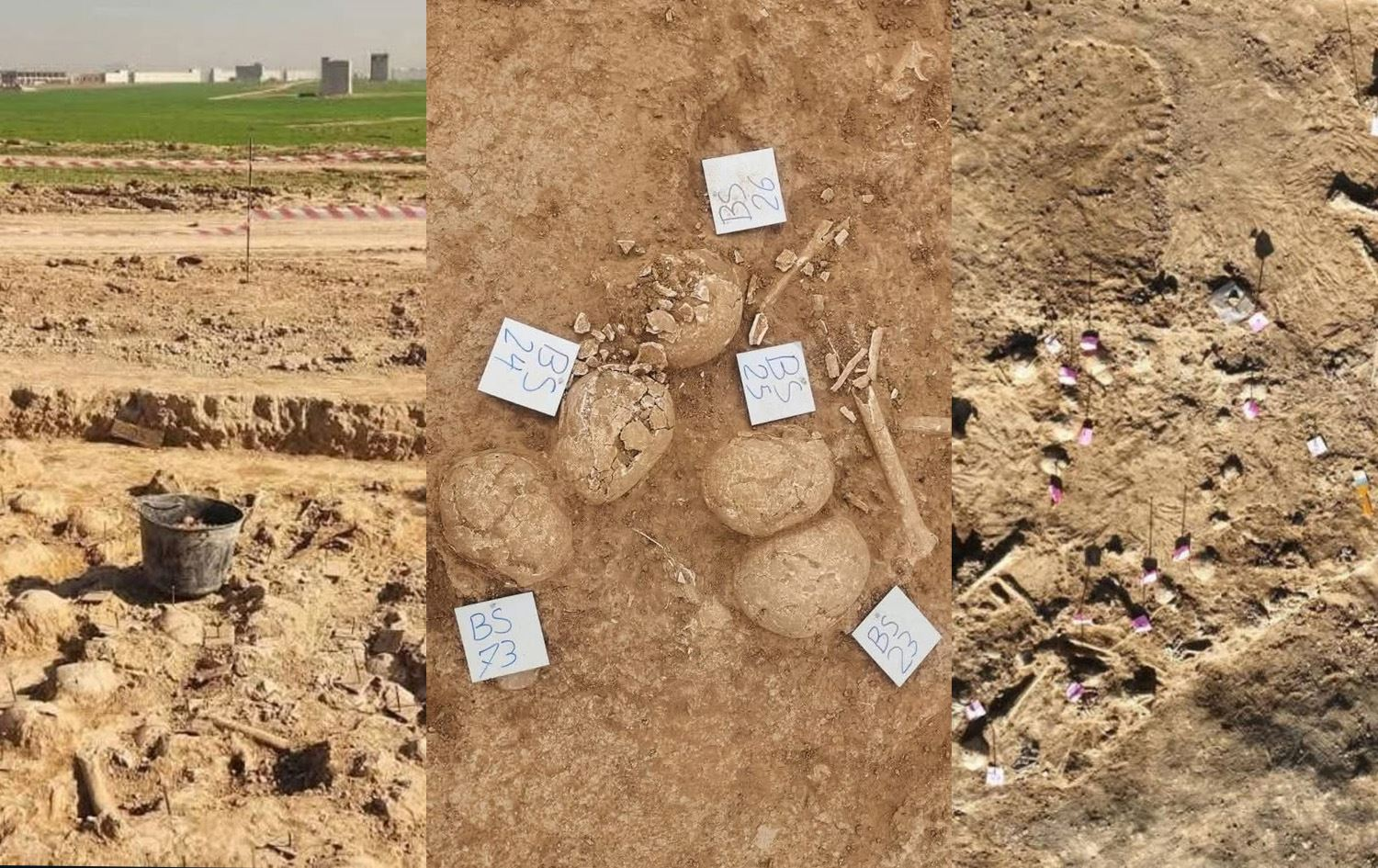
Mass Grave Discovery in Erbil, Kurdistan
A significant archaeological site has been uncovered in the Baghlumnara quarter of Erbil Governor Omed Xoshnaw confirmed that preliminary analysis dates the mass grave and associated items to over 1,400 years ago, placing them in the period of the Kingdom of Adiabene, which existed in the 4th–5th centuries AD.
Artifacts and Human Remains
Recovered items include old coins, two bronze bracelets, two pearl necklaces, an iron ring, and four pottery jars. A total of 103 skulls have been documented so far, although four were damaged by construction equipment before the site was identified.
Mohammed Lashkri, head of the Kurdistan Region Antiquities and Heritage Affairs, emphasized that no visible trauma indicative of violent deaths has been observed on the skulls. However, the presence of jars alongside the remains raises the possibility that poisoning or other causes may have contributed to the deaths.
Historical Context
The Kingdom of Adiabene, mentioned in local chronicles, converted to Judaism during this period. Lashkri noted several potential explanations for the mass grave, including:
Military conquest during the Sassanid period, when Zoroastrianism dominated the region
Religious persecution or genocide following the introduction of Judaism
Disease or illness affecting a large group simultaneously
Further investigations, including DNA analysis, are ongoing, with samples sent to the Interior Ministry for detailed examination.
Preservation Plans
Officials expressed hope that the Kurdistan Regional Government will preserve the site and possibly transform it into a monument celebrating Erbil’s rich archaeological heritage. The discovery highlights the city’s long and complex history, offering a rare glimpse into life—and death—during the early medieval period in northern Mesopotamia.