Few ancient stories have sparked as much debate as the legend of Atlantis. The story first appeared in the philosophical writings of Plato during the 4th century BCE.
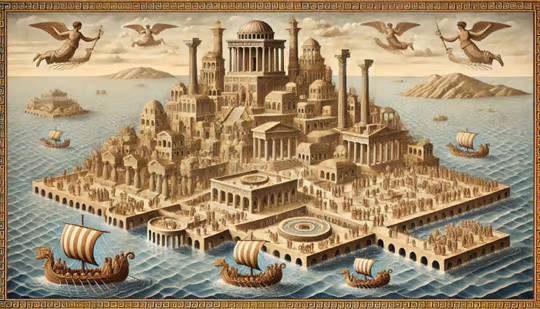
In Plato’s dialogues Timaeus and Critias, Atlantis is described as a powerful island civilization located beyond the Pillars of Heracles (often associated with the Strait of Gibraltar). According to the story, Atlantis possessed immense wealth, advanced engineering, and a formidable navy.
However, Plato also portrayed Atlantis as morally corrupt. In the narrative, the gods eventually punished the civilization for its arrogance, causing the island to sink beneath the sea in a single catastrophic event.
Many historians believe Plato created the story as a philosophical allegory about the dangers of imperial ambition. Yet others speculate that the legend might preserve memories of real natural disasters.
Some researchers have linked the story to the volcanic destruction of the island of Thera during the Bronze Age. This eruption devastated the powerful Minoan civilization and triggered massive tsunamis across the Mediterranean.
Others have suggested that the Atlantis story reflects broader memories of rising sea levels after the last Ice Age, when coastal settlements around the world were gradually submerged.
Whether myth or distant memory, Atlantis continues to capture the imagination as a symbol of lost civilizations and the fragility of human achievement.