Introduction
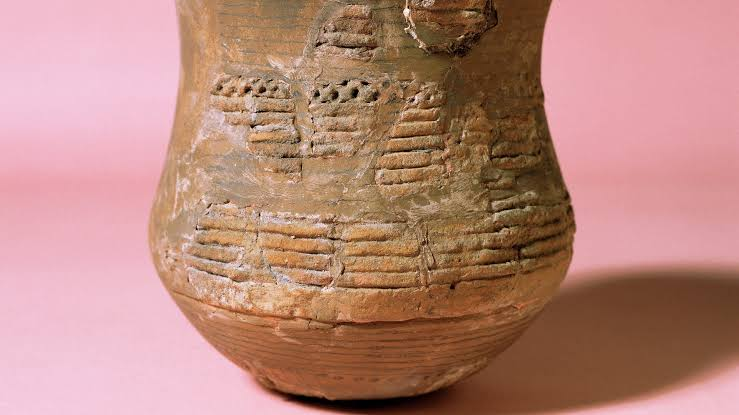
The Bell Beaker complex represents one of the most intriguing and widespread cultural horizons in European prehistory. Emerging around 2800 BCE, this distinct archaeological package swept across Western and Central Europe, stretching from the Iberian Peninsula all the way to the British Isles and Budapest. The culture is instantly recognizable by its signature material toolkit: exquisitely decorated, inverted-bell-shaped ceramic drinking cups, fine copper daggers, stone wrist-guards used by archers, and distinctive individual burial mounds.
For more than a century, archaeologists were deeply divided over what the "Bell Beaker phenomenon" actually represented. One school of thought argued that it was simply a popular prestige fashion network—a prehistoric "drinking cult" or technology package that local populations voluntarily adopted through maritime trade without any significant movement of people. The opposing view held that the widespread distribution of these unique vessels marked a massive, physical migration wave. This fundamental debate was finally answered when ancient DNA tracking revealed a dual narrative of cultural adoption and radical population replacement.
The Dual Genetic Horizon and the British Turnover
To untangle the Beaker mystery, an international paleogenomic consortium completed the largest ancient DNA study ever conducted, sequencing genome-wide data from hundreds of Bell Beaker skeletons collected across dozens of European sites. The genomic data revealed a complex reality: the Bell Beaker phenomenon was not a single, uniform population, but a complex historical process that unfolded in two entirely distinct geographic phases.
In continental southwestern Europe, particularly across the Iberian Peninsula, the adoption of Bell Beaker pottery was entirely driven by cultural diffusion. Skeletons buried with magnificent Beaker cups in Spain and Portugal showed absolute genetic continuity with the local Neolithic farming populations, carrying zero trace of incoming steppe ancestry. Here, the Bell Beaker package was a prestige fashion adopted by local elites through established maritime trade routes.
However, as the Beaker package moved into Central Europe and collided with populations carrying heavy Yamnaya steppe ancestry, it was adopted by a highly mobile, expansionist group of people. This steppe-admixed Beaker population then pushed aggressively into northwestern Europe, turning a peaceful fashion network into a massive demographic wave.
The most extreme example of this migration took place in the British Isles around 2500 BCE. When steppe-derived Bell Beaker migrants crossed the English Channel, they initiated a near-total population turnover. Ancient DNA extracted from British skeletons demonstrates that within a few centuries of the Beaker arrival, more than 90% of the local Neolithic gene pool was completely replaced.
The indigenous British farmers—the very people who had lived on the island for millennia and constructed monument complexes like Stonehenge—were genetically marginalized. Their paternal lineages were entirely supplanted by the Beaker haplogroup R1b-M269. This total demographic shift proves that the arrival of the Beaker culture in Britain was not a peaceful exchange of ideas, but an overwhelming migration wave that permanently altered the genetic foundation of the British population.
Conclusion
The scientific breakdown of the Bell Beaker complex changed how archaeologists interpret prehistoric migrations, proving that a single material culture can spread via completely different mechanisms depending on the region. While it began as an elite fashion trend in the Mediterranean, it transformed into a powerful demographic wave that completely reshaped the human geography of northwestern Europe.
As the Bell Beaker network stabilized, it laid down the deep paternal lineages and social foundations that defined the European Bronze Age. The individuals buried with these inverted clay cups were the primary architects of Western Europe's genetic landscape, leaving behind an indelible biological legacy that remains heavily stamped across the modern European continent today.