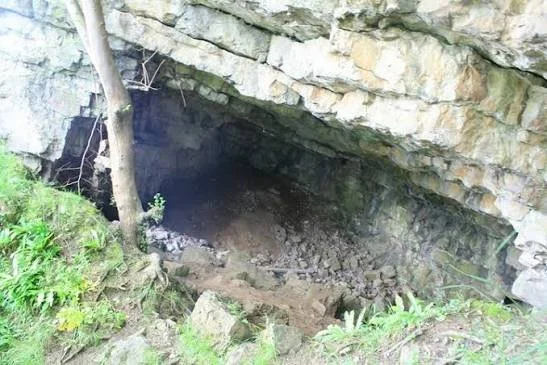
Kendrick's Cave in North Wales is an important archaeological site because it preserves evidence of prehistoric human activity in a region shaped by dramatic environmental change.
The cave is associated with material spanning important prehistoric transitions, and its archaeological record contributes to the study of hunter-gatherer communities in Wales.
The popular description of the site as simply a “Mesolithic shell midden” does not capture the full complexity of its archaeological significance.
Kendrick's Cave is better understood as part of a long prehistoric landscape repeatedly visited and used by human populations.
The Changing Landscape of North Wales
At the end of the last Ice Age, Britain underwent enormous environmental change.
Glaciers retreated.
Temperatures increased.
Forests expanded.
Sea levels rose.
Animals and human populations adapted.
The people living during the Mesolithic were hunter-gatherers, but they did not simply continue Paleolithic traditions unchanged.
They developed strategies suited to increasingly diverse environments.
What Is a Midden?
A midden is an accumulation of discarded material.
It may include:
Shells
Animal bones
Broken tools
Charcoal
Food remains
Other debris
A shell midden can reveal important information about diet and resource exploitation.
The presence of large quantities of shellfish demonstrates that prehistoric people understood how to exploit coastal or riverine environments.
Collecting shellfish could provide a relatively predictable food resource compared with the risks of hunting large mammals.
Hunter-Gatherer Diets Were Diverse
The stereotype of prehistoric people surviving exclusively by hunting large animals is inaccurate.
Hunter-gatherer communities used a wide variety of resources.
Depending on location and season, they could exploit:
Deer
Fish
Birds
Small mammals
Shellfish
Wild plants
Nuts
Fruits
This flexibility was essential.
A group capable of shifting between resources could better survive environmental changes.
Caves as Part of a Larger Territory
Kendrick's Cave was not an isolated home disconnected from the outside world.
Prehistoric people moved through landscapes.
They followed animals.
They collected resources.
They visited familiar locations.
A cave could function as:
Temporary shelter
Food-processing location
Seasonal camp
Hunting stop
Place for repeated gatherings
The archaeological debris left behind allows researchers to reconstruct fragments of these activities.
The Value of Ancient Waste
One of archaeology's most important lessons is that rubbish can be historically valuable.
A discarded shell reveals diet.
A broken tool reveals technology.
A burned bone may reveal cooking or fire use.
The accumulation of these materials can reconstruct daily behavior.
A midden is therefore a record of repeated decisions.
Someone collected the shell.
Someone ate the animal.
Someone discarded the remains.
Thousands of years later, that waste becomes evidence.
Organic Preservation
Caves can preserve materials that often disappear from open-air sites.
Bone and antler may survive in protected environments.
This provides evidence for technologies that would otherwise be poorly represented.
Organic artifacts can reveal:
Hunting methods
Craftsmanship
Decorative practices
Tool production
The Challenge of Older Excavations
Many famous cave sites were excavated before modern archaeological recording standards existed.
This creates problems.
If an object was removed without precise documentation, its relationship to surrounding material may be uncertain.
Modern archaeologists must therefore reconstruct context using surviving excavation records, museum collections, comparative studies, and renewed investigation.
Kendrick's Cave illustrates this broader challenge.
Archaeology does not simply study ancient objects.
It also studies the history of how those objects were discovered.
Why Kendrick's Cave Matters
The cave contributes to the wider story of prehistoric Wales.
It demonstrates that hunter-gatherers repeatedly used caves and rock shelters as part of larger economic and social landscapes.
The evidence helps researchers understand changing relationships between people and environment.
Kendrick's Cave may not contain a single artifact as famous as the Red Lady of Paviland.
Its importance lies in the accumulated traces of ordinary prehistoric activity.
And ordinary activity is often the key to understanding the past.
People ate.
They hunted.
They made tools.
They discarded waste.
They returned to familiar places.
Those small actions eventually became archaeology.