Introduction
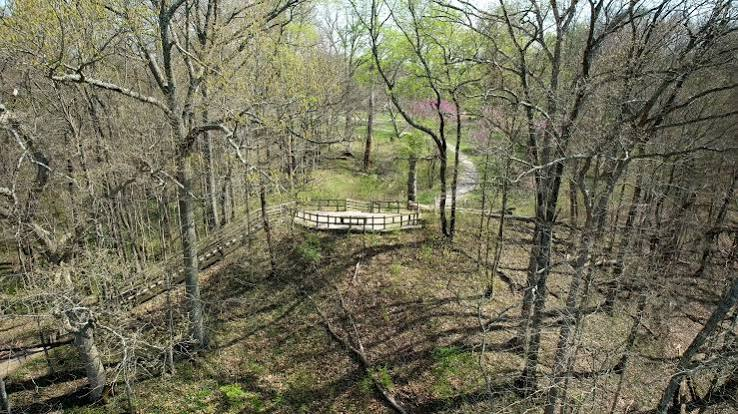
Situated high above the Little Miami River in southwestern Ohio, Fort Ancient is one of the largest prehistoric hilltop earthwork complexes in North America. Originally constructed by the Hopewell culture beginning around 100 BCE, the enclosure stretches across more than 100 acres (40 hectares) and follows the natural contours of a rugged ridge overlooking the surrounding valleys. Although early European settlers mistakenly believed the site served as a military fortress, archaeological research has demonstrated that Fort Ancient functioned primarily as a ceremonial and social center rather than a defensive fortification.
Construction and Layout
The earthworks extend for nearly 5 kilometers (approximately 3.5 miles), enclosing the hilltop with massive earthen walls interrupted by numerous gateways. Rather than forming a continuous defensive barrier, the walls follow the landscape's irregular shape, incorporating steep cliffs and natural ravines into the site's overall design.
Hopewell builders excavated nearby soil using wooden digging tools, stone hoes, and woven baskets before carefully compacting each layer to produce stable embankments. The enormous labor investment required coordinated efforts by large communities over many years, reflecting the strong social organization of Hopewell society.
Ceremonial Landscape
Within the enclosure, archaeologists have discovered evidence of ceremonial plazas, ritual activity, feasting, and craft production rather than permanent domestic neighborhoods. The site's elevated position provided sweeping views across the surrounding river valleys, reinforcing its importance as a sacred gathering place visible from great distances.
Numerous gateways may have guided ritual processions into different sections of the enclosure, while certain alignments correspond with solar events, suggesting that astronomical observations formed part of the site's ceremonial calendar.
Centuries later, the Fort Ancient culture (1000–1650 CE) occupied portions of the area, giving the site its modern name, although they were not the original builders of the monumental earthworks.
Archaeological Significance
Fort Ancient illustrates the Hopewell ability to combine natural topography with monumental architecture, creating sacred spaces that emphasized both landscape and geometry. Ongoing archaeological investigations continue to reveal new insights into Hopewell ceremonial life, social organization, and engineering techniques.
Conclusion
Fort Ancient remains one of prehistoric America's most impressive ceremonial landscapes. Its extensive hilltop earthworks, remarkable engineering, and spiritual significance demonstrate the creativity and organizational abilities of the Hopewell culture while preserving one of Ohio's greatest archaeological treasures.