Archaeologists from the University of Bradford will carry out cutting-edge work at Scotland’s biggest Roman complex after being selected as a pilot for a national funding scheme.
The University’s project, Romans at the Tweed: Returning to Trimontium to examine a crossing point at the northern limit of the Roman Empire, is one of five initiatives selected under the Research Infrastructure for Conservation and Heritage Science (RICHeS) Access Fund Catalyst Projects.
This spring, scientific surveys will be conducted at Trimontium, an important Roman frontier site, using advanced survey methods to deepen understanding of how the Roman Empire managed movement across the River Tweed at its northern edge. The work is being carried out in collaboration with the Trimontium Trust and AOC Archaeology.
Dr Kayt Armstrong, Facility Manager of the RICHeS-funded mobile laboratory From Land to Sea – a facility for prospection, landscapes and people at the University of Bradford, said: “I am pleased that our partnership with AOC Archaeology and the Trimontium Trust has been chosen as an Access Fund Catalyst Project, as it allows us to apply state-of-the-art geophysical equipment to explore key questions about the fortifications at Trimontium and the interactions between the Romans, local communities, and the River Tweed.”

More on Romans at the Tweed
In 2022, the Trimontium Trust and AOC Archaeology carried out ground-penetrating radar (GPR) surveys at the fort for the first time, training volunteers and relaunching fieldwork at the site.
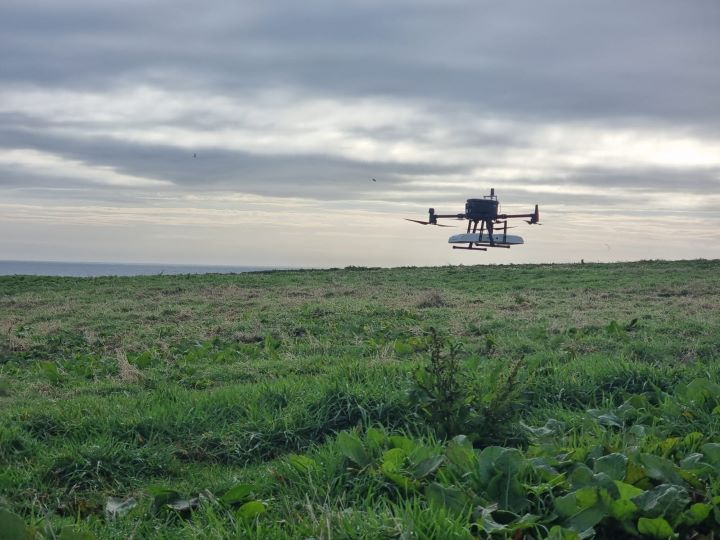
That work used a high-resolution Mala MIRA system—the first time such equipment had been deployed at a Roman fort in Scotland. However, the system is no longer available in the UK, leaving sections of the site unexplored. To move the research forward, the University of Bradford’s compact Mala MIRA unit, along with newly RICHeS-funded equipment such as drone-mounted GPR, will now be used to complete surveys of the fort and to investigate the location of a Roman crossing point on the River Tweed.
Conducted through the Uncovering the Tweed project, the research brings together technical experts, archaeologists, and volunteers. It places public participation at the centre of frontier studies while ensuring that newly gathered data is widely shared.
More on Trimontium
Situated in the Scottish Borders, Trimontium is the largest Roman fort and settlement in Scotland and one of the richest sites in the UK for Roman military-related finds.
Covering around 370 acres, the fort and its associated settlement include a combined military and civilian complex with a fort, a bridge over the River Tweed, roads, shrines, and a cemetery. The site also contains the northernmost amphitheatre in the Roman Empire.
Heritage Science Support
Five new projects have been awarded funding through the RICHeS Access Fund Catalyst scheme to explore how heritage science can support research, conservation, and public engagement across the UK.
These projects will test new ways of widening access to advanced facilities and specialist expertise, helping to safeguard nationally important heritage for the future.
Running until March 2026, the Catalyst Projects mark the first phase of activity for the RICHeS Access Fund. From 28 January 2026, the fund will provide researchers and other eligible users with access to specialist equipment, collections, and expert advice.
This project reflects the University of Bradford’s strategic focus on innovation, collaboration, and social impact. By combining advanced heritage science technologies with public engagement, the research supports the protection and understanding of a significant historical site.
Through partnerships with national organisations and local volunteers, the University demonstrates its commitment to producing knowledge that benefits communities and strengthens cultural heritage, in line with its goal of making a positive impact both regionally and globally.