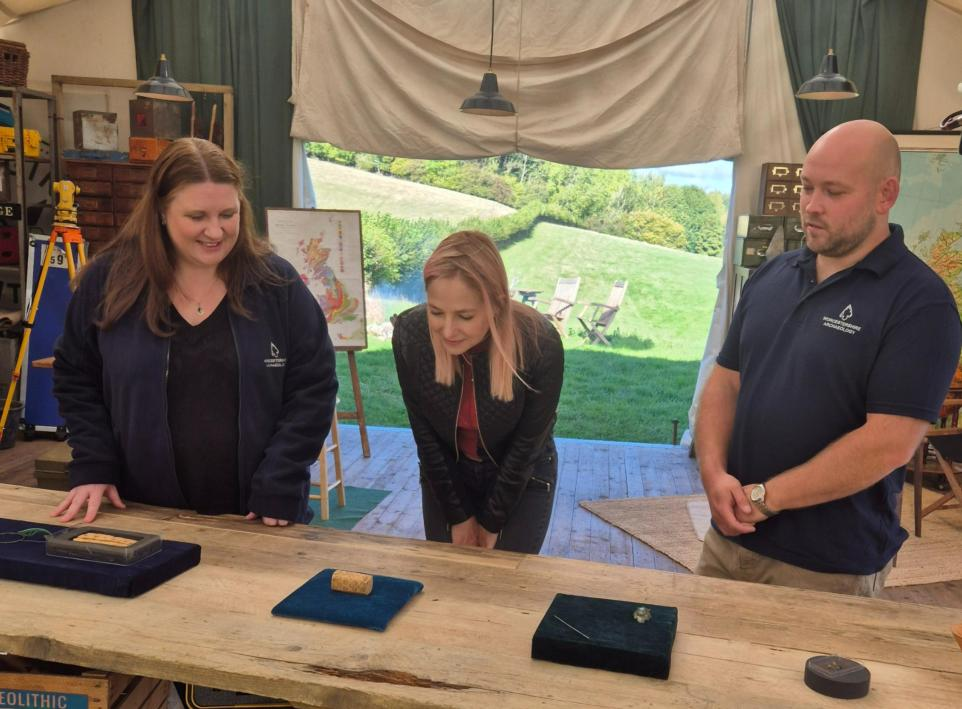
An extraordinary archaeological discovery in Worcestershire is set to feature on television tonight.
Excavations in Broadway, which revealed evidence spanning 8,000 years of human activity, will be shown in the latest episode of BBC Two’s Digging for Britain, airing this evening (January 21).
Among the most striking finds is an intricately carved bone box recovered from the grave of a young woman dating to the late Roman period. The discovery has drawn national attention for both its craftsmanship and its rarity.
The excavation was carried out by Worcestershire Archaeology, commissioned and funded by Wychavon District Council ahead of planned development at the site.
Jamie Wilkins, who led the dig, described the find as exceptional. He said it was remarkable not only for its condition and skilled workmanship, but also for what it reveals about the community that once lived there. He added that he had never encountered an object like it before and immediately recognised its significance.
Cllr Emma Kearsey, Wychavon’s executive board member for planning, infrastructure and urban design, said the excavation at Milestone Ground is transforming understanding of Broadway and Worcestershire’s past. She described the bone box as a particularly compelling object and welcomed its inclusion on Digging for Britain, allowing a wider audience to share in the excitement of the discovery.
She also noted that further secrets remain at the site, and said the council is working with Worcestershire Archaeology and Broadway Museum to share the story locally wherever possible.
A spokesperson for Wychavon District Council explained that the finely decorated box is believed to date to the late Roman period based on its decorative style, a conclusion later confirmed through radiocarbon dating of the burial. Specialists have since identified that the box was made from the bone of a roe deer and may originally have been used to hold ointment.
Its careful placement in the grave suggests it was a valued or sentimental item for both the deceased and those who buried her.
While the bone box is the most eye-catching discovery, archaeologists also uncovered evidence of substantial prehistoric, Roman and Saxon activity at the same location. Together, these finds underline Broadway’s long-standing importance as a settlement along a major route across the Cotswolds escarpment.
A multi-year programme of specialist analysis is now about to begin. Once complete, all finds and records from the excavation will be deposited with the county museum, in line with archaeological best practice.