• MAIN PAGE
  • LATEST NEWS
    • Lost Cities
    • Archaeology's Greatest Finds
    • Underwater Discoveries
    • Greatest Inventions
    • Studies
    • Blog
  • PHILOSOPHY
  • HISTORY
  • RELIGIONS
    • Africa
    • Anatolia
    • Arabian Peninsula
    • Balkan Region
    • China - East Asia
    • Europe
    • Eurasian Steppe
    • Levant
    • Mesopotamia
    • Oceania - SE Asia
    • Pre-Columbian Civilizations of America
    • Iranian Plateau - Central Asia
    • Indus Valley - South Asia
    • Japan
    • The Archaeologist Editor Group
    • Scientific Studies
    • Aegean Prehistory
    • Historical Period
    • Byzantine Middle Ages
    • Predynastic Period
    • Dynastic Period
    • Greco-Roman Egypt
  • Rome
  • PALEONTOLOGY
  • About us
Menu

The Archaeologist

  • MAIN PAGE
  • LATEST NEWS
  • DISCOVERIES
    • Lost Cities
    • Archaeology's Greatest Finds
    • Underwater Discoveries
    • Greatest Inventions
    • Studies
    • Blog
  • PHILOSOPHY
  • HISTORY
  • RELIGIONS
  • World Civilizations
    • Africa
    • Anatolia
    • Arabian Peninsula
    • Balkan Region
    • China - East Asia
    • Europe
    • Eurasian Steppe
    • Levant
    • Mesopotamia
    • Oceania - SE Asia
    • Pre-Columbian Civilizations of America
    • Iranian Plateau - Central Asia
    • Indus Valley - South Asia
    • Japan
    • The Archaeologist Editor Group
    • Scientific Studies
  • GREECE
    • Aegean Prehistory
    • Historical Period
    • Byzantine Middle Ages
  • Egypt
    • Predynastic Period
    • Dynastic Period
    • Greco-Roman Egypt
  • Rome
  • PALEONTOLOGY
  • About us
No results found

Buret Culture: Lake Baikal's Forgotten Ice Age Artists

June 22, 2026

The Buret Culture (often analyzed in lockstep with the Mal'ta archeological horizon) represents a peak of Upper Paleolithic behavioral adaptation and artistic expression in the severe climate of the sub-Baikal interior. Occupying the region during a period of extreme aridity and glacial advance, the artists of Buret proved that the human capacity for complex symbolic behavior was completely uncompromised by severe environmental stress.

[ URBAN INFRASTRUCTURE ] ─────► Interlocking Mammoth and Rhinoceros Bone Foundation
                                           │
                               (The Architectural Matrix)
                                           │
                                           ▼
[ REVEALED PRESTIGE ECONOMY ] ◄── Highly Standardized Decorative Art Plates and Beads

The Architectural Framework of the Studios

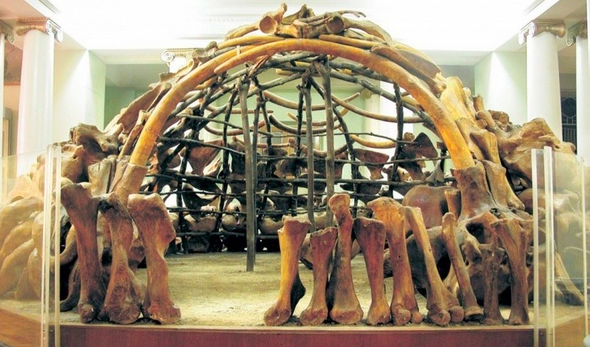
The artists of Buret were restricted by their geography; they lived in a mammoth-steppe landscape completely devoid of large trees. To build their artistic workshops and domestic spaces, they developed an incredible architectural strategy:

  • The Bone Foundations: They used the massive skulls of woolly rhinoceroses (Coelodonta antiquitatis) and mammoths to anchor their subterranean walls.

  • The Interlocking Roofs: The structural framework of the roofs was composed of interlocking reindeer antlers, neatly woven together and packed with river silt, turf, and hide coverings to create completely weatherproof, insulated underground studios.

The Micro-Decorative Plates

Beyond the famous Venus figurines, Buret is the birthplace of a unique, highly standardized micro-decorative plate industry. Artisans shaved down mammoth ivory and antler into flat, uniform rectangular plates measuring just a few centimeters across.

Using sharp micro-lithic engraving points, they covered these plates with precise geometric configurations: concentric circles, nested wavy lines, and spirals of tiny, uniform dots.

These plates feature neat, drilled suspension holes at their corners. Quantitative spatial analysis of these ornaments indicates they functioned as an ancient system of visual communication and prestige display.

Worn prominently on hunting parkas, the specific geometric patterns likely communicated an individual's lineage status, hunting accomplishments, or tribal affiliation, serving as a vital social lubricant to identify allies and structure alliances across the sparsely populated, dangerous Siberian landscape.
← Skhul Cave: Levantine Neanderthal-Human Hybrids?Kebara Cave: Israel's Neanderthal Speech Evidence →
Featured
image_2026-06-21_221906754.png
June 22, 2026
Amud Cave: Japan's Twin Neanderthal Fossils?
June 22, 2026
Read more →
June 22, 2026
image_2026-06-21_221732901.png
June 22, 2026
Kebara Cave: Israel's Neanderthal Speech Evidence
June 22, 2026
Read more →
June 22, 2026
image_2026-06-21_221651426.png
June 22, 2026
Shanidar Cave: Iraq's Flower-Burying Neanderthals
June 22, 2026
Read more →
June 22, 2026
image_2026-06-21_221609462.png
June 22, 2026
Tabun Cave: Mount Carmel's 500,000-Year Acheulean Site
June 22, 2026
Read more →
June 22, 2026
image_2026-06-21_221527430.png
June 22, 2026
Skhul Cave: Levantine Neanderthal-Human Hybrids?
June 22, 2026
Read more →
June 22, 2026
image_2026-06-21_222609156.png
June 22, 2026
Buret Culture: Lake Baikal's Forgotten Ice Age Artists
June 22, 2026
Read more →
June 22, 2026
read more

Powered by The archaeologist