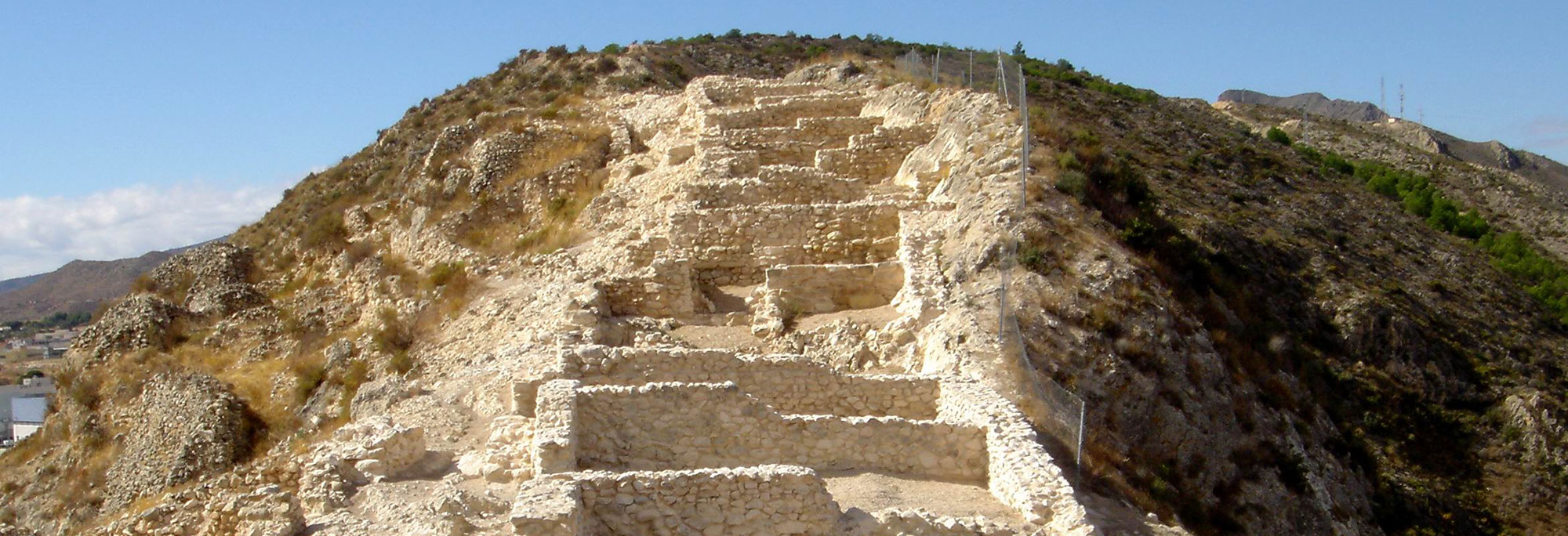
Byzantine Fortified Monastic Settlement Revealed at El Monastil, Spain
Archaeologists working in southeastern Spain have uncovered a rare sixth-century fortified monastic complex at the site of El Monastil, shedding new light on the region’s transformation during the final centuries of the Western Roman world and the expansion of Byzantine influence in the Iberian Peninsula.
The discovery, led by Antonio M. Poveda Navarro of the Urbs Regia Foundation, suggests that the settlement—known in antiquity as Elo or Elum—functioned as both a religious center and a strategically positioned fortified community along the ancient Via Augusta.
A Strategic Site on a Roman Highway
The settlement was located along the Via Augusta, the main arterial route connecting key Roman cities across Hispania.
This position made El Monastil an important hub for:
Military presence
Religious activity
Administrative control
Trade and taxation
Researchers believe it was occupied by a combination of Eastern Roman (Byzantine) soldiers and clergy, reflecting the blending of political and religious authority during this period.
Fortified Monastic Life in the 6th Century
Excavations revealed a fortified religious complex that included a church building of over 900 square feet. The structure featured:
A horseshoe-shaped apse
A baptismal pool
Painted plaster walls
These architectural elements suggest a well-developed Christian community with strong liturgical practices and access to significant resources.
Artifacts of Religion, Power, and Administration
A wide range of objects recovered from the site reveals both spiritual and administrative functions.
Religious Objects
An ivory pyx (container for consecrated wafers)
A ceramic seal marked “Beata Virgo Maria” (Blessed Virgin Mary)
A large dish engraved with six crosses
A pewter spoon and iron host-cutting knife
The pyx is especially notable for its decoration, which depicts Hercules capturing the Ceryneian Hind. This blending of classical mythology and Christian symbolism reflects cultural continuity and adaptation under the rule of Emperor Justinian I.
Administrative and Military Items
Seven bronze weights used for tax collection
Iron armor fragments from a flexible military suit
A bronze key ring likely used for church storage or security
These finds suggest that El Monastil was not only a religious center but also played a role in economic regulation and local governance.
From Byzantine Control to Visigothic Rule
Historical evidence indicates that around A.D. 600, control of the site shifted to a Visigothic bishop, marking a transition from Byzantine to local rule.
Later developments include:
Continued use as a monastic settlement
Abandonment of episcopal authority after approximately 30 years
Conversion into an Islamic religious site following Arab settlement in the early medieval period
This sequence reflects the layered cultural and political changes that shaped Iberia during the early Middle Ages.
A Rare Window Into a Transitional Era
The discoveries at El Monastil provide valuable insight into a period of intense transformation in the western Mediterranean.
They reveal:
The coexistence of military and religious institutions
The blending of classical and Christian symbolism
The administrative role of monastic communities
The rapid succession of cultural influences in post-Roman Spain
A Site Shaped by Empires and Faith
From Byzantine occupation under Justinian I to Visigothic control and later Islamic reuse, El Monastil reflects the fluid identity of early medieval Iberia.
It stands today as a rare archaeological record of how religion, empire, and daily life intersected during one of Europe’s most transformative historical periods.