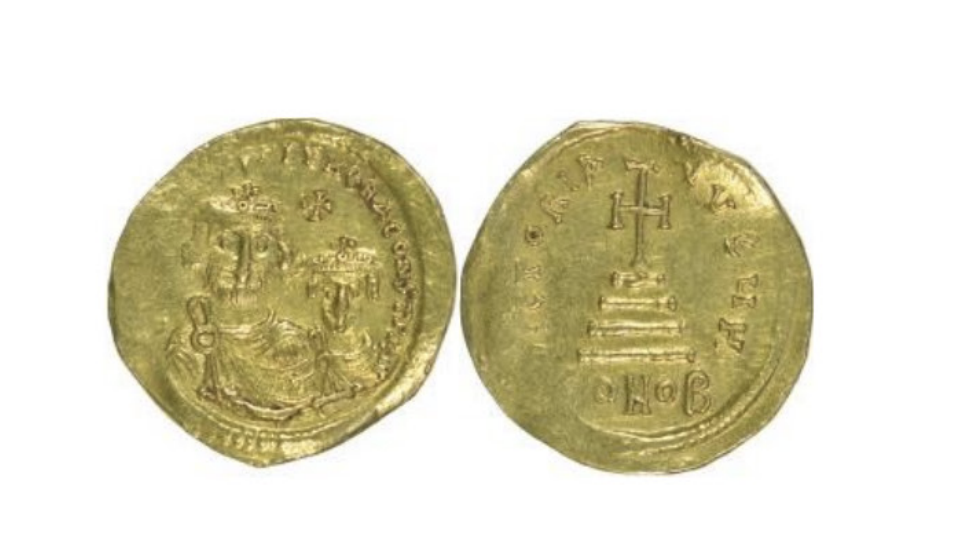
The Sivas Hoard: Byzantine Gold Coins Reveal a Century of Crisis and Change
A remarkable collection of 7th-century Byzantine gold coins, known as the Sivas Hoard, is offering new insight into one of the most unstable periods in early medieval history. Now preserved at the Sivas Archaeological Museum, the hoard provides a rare window into the political and economic turbulence of the Byzantine Empire during the 600s AD.
A Treasure with a Mysterious Origin
The hoard was added to the museum’s collection in 2009 after being confiscated, but its exact discovery location remains unknown. Despite this gap in its archaeological context, experts confirm that the coins form a consistent and meaningful group.
The collection includes:
Gold solidi
A single tremissis
Coins minted between 602 and 668 AD
They were issued during the reigns of emperors Phocas, Heraclius, and Constans II.
Coins as Messages from a Turbulent Empire
The 7th century was a period of profound crisis for the Byzantine world, marked by:
Wars with the Sasanian Empire
Territorial losses
Political instability
Economic strain
In this context, coin hoards like the Sivas collection are often interpreted as emergency savings—wealth buried for protection during uncertain times. Many such hoards were never retrieved, suggesting their owners may have been displaced or killed.
The Solidus: The Empire’s Economic Backbone
At the heart of the hoard is the gold solidus, a coin that helped stabilize the Byzantine economy for centuries. Introduced by Constantine I, it became one of the most trusted currencies in the medieval world.
Key features of the solidus:
Approximately 4.5 grams of high-purity gold
Widely accepted across Europe and the Mediterranean
Remarkably stable in value over time
Because of its reliability, historians often compare it to a “global currency” of the Middle Ages.
Coins as Tools of Imperial Power
Beyond their economic role, these coins also functioned as political messaging tools.
Under Phocas
Coins from his reign show more realistic portraits, marking a shift toward individualized imperial imagery.
Under Heraclius
Coins began featuring multiple figures, including heirs—emphasizing dynastic continuity during unstable times.
Religious Symbolism
Over time, Christian imagery such as crosses became more prominent, replacing older motifs and reinforcing the emperor’s divine authority.
These changes show how coinage was used not just for trade, but to project stability and legitimacy.
Signs of an Economy Under Pressure
Subtle variations within the Sivas Hoard also reveal broader economic trends:
Slight changes in gold weight and purity
Evidence of shifting minting standards
Reduced numbers of coins in later reigns
Centralization of production in Constantinople
These patterns suggest an empire trying to maintain monetary stability while facing growing fiscal stress.
Why People Buried Their Wealth
Coin hoards from this era are often interpreted as reactions to crisis. Individuals likely buried their savings to:
Protect wealth during invasions or war
Hide assets during political instability
Preserve value in times of economic uncertainty
The fact that many hoards were never recovered highlights the human cost of this instability.
A Silent Record of Imperial Decline and Adaptation
Together, the coins from the Sivas Hoard form more than a collection of currency—they represent a condensed historical narrative of the Byzantine Empire in transition.
They reveal:
A state under intense external and internal pressure
A government relying on coinage to project strength
Individuals responding by safeguarding wealth underground
Even without knowing exactly where the hoard was buried, it remains a powerful archaeological testimony to survival during one of Byzantium’s most turbulent centuries.
A Treasure That Still Raises Questions
Despite its importance, key mysteries remain:
Who buried the hoard?
Why was it never retrieved?
Where exactly was it hidden?
These unanswered questions only deepen its historical value, ensuring the Sivas Hoard continues to be a vital source for understanding crisis, adaptation, and resilience in the Byzantine world.