Introduction
Canteen Kopje, located near the Vaal River in South Africa's Northern Cape, is one of the country's most important Earlier Stone Age archaeological sites.
The site is famous for its stone artifacts, particularly Acheulean handaxes and unusual prepared-core technologies.
Its importance is enhanced by the extraordinary chronological depth of the deposits.
The title's reference to "2.9M-Year-Old Tools" should be treated cautiously, however. Controlled excavations have established a very long Early and Middle Pleistocene sequence, but the exact age of individual artifact-bearing levels is more complicated than the title suggests.
The Vaal River
The Vaal River has been a major source of stone artifacts.
Ancient river gravels transported and deposited stones.
Hominins later selected some of these stones as raw materials.
This created an archaeological landscape where geological and human processes overlap.
Diamond Mining
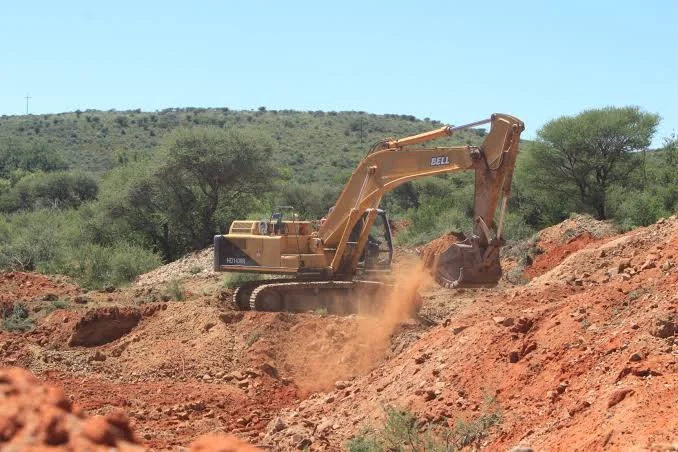
Canteen Kopje is historically significant for another reason: diamond mining.
Industrial mining disturbed many ancient river sediments.
Unfortunately, much archaeological material was collected without controlled excavation.
This damaged archaeological context.
Controlled Excavation
Later researchers conducted controlled excavations.
These investigations revealed stratified archaeological deposits.
This was extremely important because the position of an artifact within a sediment layer provides chronological information.
Without stratigraphy, artifacts become much harder to interpret.
Acheulean Handaxes
Canteen Kopje is famous for handaxes.
These tools demonstrate sophisticated stone reduction.
The maker shaped a stone through repeated controlled strikes.
The final object could have a pointed end and cutting edges.
Victoria West Technology
One of the site's most interesting technological traditions is known as Victoria West.
This involves large prepared cores from which substantial flakes were removed.
Researchers have debated how Victoria West relates to later prepared-core technologies such as Levallois.
A Cambridge study of Canteen Kopje argues that Levallois and Victoria West technologies are rooted in Acheulean technological traditions at the site.
Why Prepared Cores Matter
Prepared-core technology requires planning.
The knapper must shape the core before producing the desired flake.
This means the final flake is not simply an accidental byproduct.
The maker anticipates its shape.
Such technological planning is important evidence for cognitive complexity.
Chronology
Canteen Kopje contains deposits extending across a very long period.
The Cambridge excavation report describes the sequence as extending through the Early and Middle Pleistocene and characterizes it as exceptionally long for South Africa.
This long sequence allows researchers to observe technological change.
Environmental Change
The Vaal River landscape changed over time.
River channels shifted.
Sediments accumulated.
Climate affected vegetation.
Animal communities changed.
Hominins repeatedly returned to the region.
The site therefore preserves interaction between environmental change and technological adaptation.
Raw Material
Stone selection was central.
Hominins selected quartzite and other suitable materials from river gravels.
The ability to identify good stone sources was itself a form of environmental knowledge.
Archaeological Preservation
The site's history also demonstrates the damage that uncontrolled collecting can cause.
Removing artifacts without recording their position destroys information.
A handaxe in a museum is valuable.
A handaxe in a documented archaeological layer is much more valuable because researchers can interpret it within a chronological and behavioral context.
Conclusion
Canteen Kopje is one of South Africa's most important Earlier Stone Age sites.
Its long archaeological sequence, Acheulean handaxes, Victoria West technology, and evidence relevant to prepared-core production provide a detailed record of technological evolution.
The site's story also highlights the importance of archaeological context and the damage caused when artifacts are removed from their original geological setting.