• MAIN PAGE
  • LATEST NEWS
    • Lost Cities
    • Archaeology's Greatest Finds
    • Underwater Discoveries
    • Greatest Inventions
    • Studies
    • Blog
  • PHILOSOPHY
  • HISTORY
  • RELIGIONS
    • Africa
    • Anatolia
    • Arabian Peninsula
    • Balkan Region
    • China - East Asia
    • Europe
    • Eurasian Steppe
    • Levant
    • Mesopotamia
    • Oceania - SE Asia
    • Pre-Columbian Civilizations of America
    • Iranian Plateau - Central Asia
    • Indus Valley - South Asia
    • Japan
    • The Archaeologist Editor Group
    • Scientific Studies
    • Aegean Prehistory
    • Historical Period
    • Byzantine Middle Ages
    • Predynastic Period
    • Dynastic Period
    • Greco-Roman Egypt
  • Rome
  • PALEONTOLOGY
  • About us
Menu

The Archaeologist

  • MAIN PAGE
  • LATEST NEWS
  • DISCOVERIES
    • Lost Cities
    • Archaeology's Greatest Finds
    • Underwater Discoveries
    • Greatest Inventions
    • Studies
    • Blog
  • PHILOSOPHY
  • HISTORY
  • RELIGIONS
  • World Civilizations
    • Africa
    • Anatolia
    • Arabian Peninsula
    • Balkan Region
    • China - East Asia
    • Europe
    • Eurasian Steppe
    • Levant
    • Mesopotamia
    • Oceania - SE Asia
    • Pre-Columbian Civilizations of America
    • Iranian Plateau - Central Asia
    • Indus Valley - South Asia
    • Japan
    • The Archaeologist Editor Group
    • Scientific Studies
  • GREECE
    • Aegean Prehistory
    • Historical Period
    • Byzantine Middle Ages
  • Egypt
    • Predynastic Period
    • Dynastic Period
    • Greco-Roman Egypt
  • Rome
  • PALEONTOLOGY
  • About us

Cave Paintings That Shouldn’t Exist

January 6, 2026

Art Beyond Survival
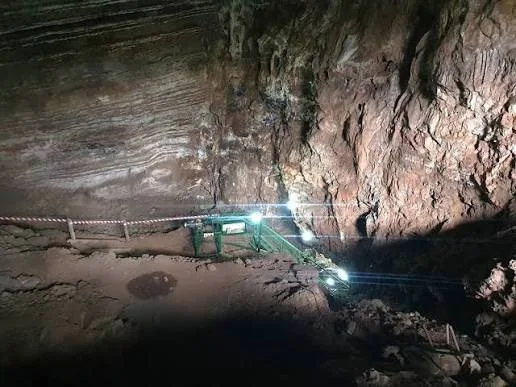
Cave paintings from sites such as Lascaux, Altamira, and Chauvet display astonishing realism, motion, and composition. Created tens of thousands of years ago, these artworks challenge the assumption that early humans were cognitively primitive.

Advanced Techniques and Materials
These artists used shading, perspective, natural contours of rock, and mineral pigments that required chemical knowledge. Some caves show layered paintings created over centuries, indicating long-term cultural continuity.

Symbolism and Spiritual Meaning
Many images depict animals rarely hunted, suggesting ritual or symbolic importance rather than daily life. Handprints, abstract symbols, and repeated motifs imply belief systems that modern scholars still struggle to decode.

Theories of Purpose
Some researchers believe these caves were shamanic spaces, where altered states of consciousness played a role in creation. Others argue they were educational sites, astronomical records, or mythological storytelling spaces.

Why They “Shouldn’t Exist”
The sophistication of these paintings contradicts outdated models of human cognitive evolution. They demonstrate that symbolic thinking, creativity, and complex communication existed far earlier than once believed.
← The Ancient Engineers Who Built Impossible MachinesThe Mysterious Healing Temples of the Ancients →
Featured
image_2026-01-07_205027402.png
Jan 7, 2026
New Fossil Analysis Suggests This Seven-Million-Year-Old Primate Walked on Two Legs, Potentially Making It the Oldest Known Human Ancestor
Jan 7, 2026
Read More →
Jan 7, 2026
image_2026-01-07_204829841.png
Jan 7, 2026
And finally… gilt trip
Jan 7, 2026
Read More →
Jan 7, 2026
image_2026-01-07_204703342.png
Jan 7, 2026
Powick Old Bridge delay over removing driftwood and trees
Jan 7, 2026
Read More →
Jan 7, 2026
image_2026-01-07_203506777.png
Jan 7, 2026
The dinosaur secrets found in the archives of a natural history museum
Jan 7, 2026
Read More →
Jan 7, 2026
image_2026-01-07_202322353.png
Jan 7, 2026
From Mycenaean Frescoes to Hellenistic Sculpture: Women’s Research in the Early Years of the ABSA
Jan 7, 2026
Read More →
Jan 7, 2026
image_2026-01-07_201558549.png
Jan 7, 2026
Decoding the First Farmers: A 12,000-Year-Old DNA Map Emerges from Çayönü in Türkiye
Jan 7, 2026
Read More →
Jan 7, 2026
read more

Powered by The archaeologist