Introduction
Dugway Proving Ground occupies an enormous and highly restricted landscape in western Utah. Established during World War II, it became an important U.S. military testing facility in the development and evaluation of chemical, biological, incendiary, and other weapons and defensive technologies.
The site is historically significant because its physical remains preserve evidence of a less visible side of World War II: the enormous expansion of military research, testing, training, and logistical infrastructure required to fight a global industrial war.
The U.S. Army states that Dugway was established in 1942 after the federal government withdrew more than 126,000 acres for War Department use, with testing beginning that same year.
Why Utah?
The location of Dugway was deliberate.
Military testing required large areas where dangerous experiments could be conducted away from major population centers.
Western Utah provided:
enormous open spaces;
low population density;
varied desert terrain;
controlled access;
proximity to existing military infrastructure.
The desert therefore became a military laboratory.
Establishment in 1942
Dugway Proving Ground was officially activated on March 1, 1942.
The initial mission involved testing chemical warfare defenses and weapons.
Testing began during the first year of operation.
The urgency reflected the global circumstances of World War II.
The United States feared chemical warfare and needed to understand both offensive weapons and defensive measures.
Chemical Warfare
Chemical warfare research involved studying substances capable of incapacitating or killing personnel.
Testing required controlled environments, specialized equipment, protective measures, and carefully monitored experiments.
The history is therefore part of the development of modern military science.
Biological Warfare
Dugway's responsibilities expanded.
In 1943, biological warfare testing facilities were established at the installation.
The existence of these facilities demonstrates the breadth of wartime military research.
Biological weapons posed different scientific and logistical problems from chemical weapons.
They required different methods of containment, testing, dissemination, and detection.
Incendiary Testing
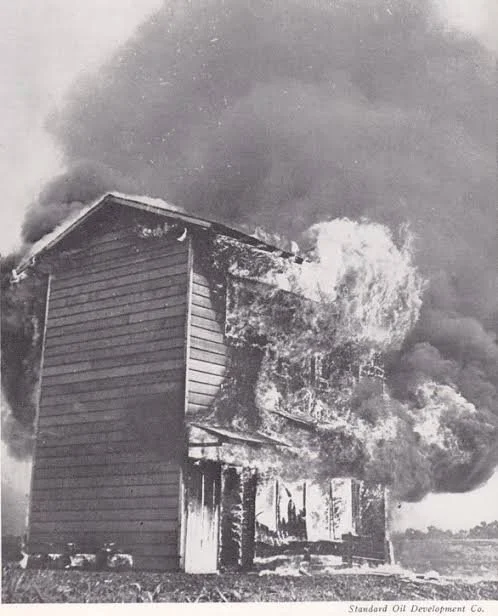
Dugway also tested incendiary bombs.
Such weapons were particularly important in the context of aerial warfare.
Testing helped military planners understand how weapons behaved under different conditions.
The Landscape as Laboratory
The desert environment itself became part of the testing infrastructure.
Open areas could be divided into test ranges.
Observation stations could be positioned at controlled distances.
Roads and communications systems connected test areas to administrative facilities.
Buildings housed laboratories, personnel, equipment, and storage.
The entire landscape functioned as a military-industrial system.
WWII Relics
Historic military remains can include:
barracks;
administrative buildings;
test structures;
roads;
observation facilities;
foundations;
storage areas;
communication infrastructure.
Some evidence is highly visible.
Other remains are subtle.
Because military facilities were frequently designed for secrecy, documentation and archaeological interpretation are particularly important.
Postwar Development
Dugway did not simply disappear after World War II.
The proving ground continued to evolve.
After the war, the facility experienced periods of reduced activity and later reactivation.
During the Cold War, its mission expanded into new areas of military testing.
Ethical and Environmental Questions
Military testing creates difficult historical questions.
Weapons testing can contaminate environments.
Some materials can remain hazardous decades later.
Historical preservation must therefore be balanced against public safety.
Restricted access can also limit archaeological investigation.
Interpreting a Secret Landscape
One of the most interesting aspects of Dugway's history is secrecy.
During wartime, information was intentionally limited.
Workers might understand only part of a project's purpose.
Official records could remain classified for years.
Archaeology and declassified documents can therefore help reconstruct activities that were once hidden.
Conclusion
Dugway Proving Ground represents the transformation of the western desert into a military testing landscape during World War II.
Its surviving infrastructure reflects the enormous scale of wartime scientific research.
The site also raises important questions about secrecy, environmental consequences, technological development, and the responsibilities involved in preserving military heritage.