Introduction
The development of animal husbandry transformed human settlement, food production, and economic organization. As communities began keeping domesticated animals, they needed reliable ways to provide food throughout the year.
Fodder storage became particularly important in environments where pasture availability changed seasonally. Hay, straw, leaves, crop residues, and other plant materials could be collected and stored for later consumption.
Archaeological evidence for early fodder storage yards is not always obvious. Unlike monumental buildings or large storage silos, these areas may leave subtle traces in soil chemistry, sediment layers, plant remains, and animal bones.
Studying these signatures can reveal how communities organized animal feeding and managed livestock before modern agricultural systems developed.
The Importance of Stored Fodder
Animals require food throughout the year, but natural pasture is not equally available in every season.
Cold winters, dry summers, flooding, and changing vegetation can reduce the amount of forage available.
Stored fodder helped communities maintain animals during periods when grazing was limited.
It could also support animals that were kept near settlements for transportation, traction, milk, meat, or wool production.
The ability to store feed may therefore have influenced the size and stability of livestock populations.
What Was Stored?
Early communities could use several forms of fodder.
Hay made from dried grasses was useful because it could be stored for extended periods if kept sufficiently dry.
Straw and other crop residues provided additional feed after grain harvesting.
Leaves, branches, and other gathered vegetation could also be used, particularly in woodland and mountain environments.
Different animals required different feeding strategies. Cattle, sheep, goats, horses, and pigs did not all consume the same plants in the same proportions.
The contents of a storage area would therefore reflect local livestock needs and available vegetation.
Identifying Ancient Fodder Storage Yards
A fodder storage yard may leave several archaeological signatures.
Researchers look for prepared surfaces, postholes, fencing remains, drainage features, and concentrations of plant material.
Some storage areas may have been located near animal enclosures or barns.
Others could have occupied open spaces within or beside settlements.
The identification of a storage yard requires caution because similar features may belong to ordinary courtyards, workshops, rubbish areas, or animal pens.
Sediment Signatures
Sediment analysis is particularly useful when visible structures have disappeared.
Repeated storage and handling of plant material can introduce organic matter into the ground.
Animal activity may add manure, urine, and compacted organic deposits.
These processes can change soil chemistry, texture, and microscopic composition.
Researchers may identify elevated concentrations of phosphorus, nitrogen, or other elements associated with animal occupation and organic waste.
However, chemical enrichment does not independently prove fodder storage. It must be compared with the broader archaeological context.
Archaeobotanical Evidence
Plant remains provide some of the strongest evidence for fodder management.
Seeds, chaff, grass fragments, phytoliths, and pollen can reveal which plants were present.
Carbonized remains may survive when stored vegetation accidentally burns.
Waterlogged deposits can preserve delicate plant tissues.
Researchers compare the botanical composition of suspected storage areas with surrounding soils and natural vegetation.
A concentration of plants commonly used as animal feed may support a fodder interpretation, especially when accompanied by evidence of storage structures.
Animal Diet Reconstruction
Animal bones can reveal aspects of livestock management.
Stable isotope analysis can help reconstruct the types of vegetation animals consumed and the environments in which they grazed.
Carbon isotopes may distinguish between different photosynthetic plant groups, while nitrogen isotopes can provide information about dietary and environmental conditions.
Dental microwear and microscopic examination of tooth surfaces can also contribute to dietary reconstruction.
These methods do not usually identify a specific fodder yard by themselves. Instead, they help determine whether animals were eating plants consistent with managed feeding.
Seasonal Feeding and Livestock Mobility
Fodder storage may indicate a shift toward more controlled livestock management.
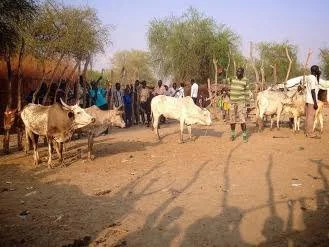
Communities could keep animals close to settlements during difficult seasons rather than relying entirely on open grazing.
This does not mean that stored feeding replaced pastoral mobility.
Many societies combined seasonal movement with supplementary feeding.
A community might move sheep and goats to summer pastures while keeping other animals near the settlement.
The balance between grazing and stored fodder depended on local ecology, animal type, and economic needs.
Social and Economic Organization
Fodder storage required labor.
Plants had to be collected, dried, transported, protected, and distributed.
Large-scale storage could therefore indicate cooperation among households or centralized management.
In some communities, individual families may have maintained their own supplies.
In others, shared storage areas could have supported communal herds or animals used for collective work.
Differences in storage capacity may reveal variations in wealth and access to land.
Preservation and Research Challenges
Plant material rarely survives in ordinary soil for long periods.
Carbonization, waterlogging, desiccation, and mineralization can improve preservation, but each creates a different archaeological record.
Sediment samples must be collected carefully to avoid contamination.
Researchers also need to distinguish between plants stored for human consumption and plants intended for animals.
The same crop residue might have served multiple purposes.
Conclusion
Early fodder storage yards reveal how communities managed livestock beyond the limits of natural grazing.
Their remains may be subtle, but soil chemistry, botanical evidence, animal bones, and structural features can combine to reconstruct ancient feeding systems.
These studies help explain how people adapted animal husbandry to seasonal conditions and organized the labor required to maintain domesticated herds.
Fodder storage was not simply an agricultural convenience. It was part of a wider transformation in settlement planning, food security, and the relationship between humans, animals, and landscapes.