Introduction
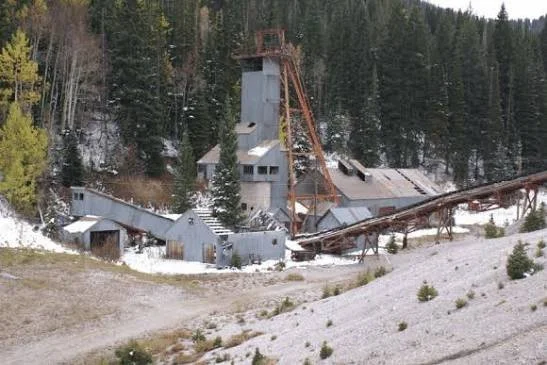
Park City is one of Utah's best-known historic mining landscapes. Today it is internationally recognized as a mountain resort, but beneath and around the modern community lies the physical legacy of a major nineteenth- and twentieth-century silver-mining industry.
The mines surrounding Park City transformed a remote mountain settlement into an important industrial community. They also created a network of tunnels, shafts, mills, railroads, processing facilities, worker housing, and commercial institutions.
Modern Park City therefore exists within a much older mining landscape.
Discovery of Silver
Mining activity in the Park City region accelerated during the late nineteenth century after discoveries of valuable ore.
The Wasatch Mountains contain complex mineral deposits, and prospectors recognized opportunities for silver and associated metals.
Mining companies subsequently developed increasingly extensive underground workings.
The Growth of a Mining Town
Park City expanded rapidly as mines became productive.
The community developed hotels, stores, boardinghouses, restaurants, banks, schools, churches, newspapers, and entertainment establishments.
Mining wages supported local businesses.
Merchants depended upon miners.
Railroads depended upon mining freight.
The town therefore developed as a regional industrial economy.
Underground Park City
The most extensive historical remains are not necessarily visible from the modern streets.
Under the mountains are networks of shafts, tunnels, stopes, and connecting workings.
Mining followed ore bodies rather than neat geometric plans.
As different companies worked adjacent claims, underground workings sometimes created complicated relationships.
This is one reason historic mine maps are so valuable.
Silver Processing
Ore extracted from underground mines required processing.
Depending on the ore, operations could involve crushing, concentration, roasting, and smelting.
Waste material accumulated in tailings and dumps.
These industrial deposits provide archaeologists with evidence about changing mining technology.
Transportation
Railroads played a crucial role.
Before reliable rail connections, transporting heavy ore and industrial equipment over mountain terrain was expensive.
Railroads lowered costs and increased the scale of production.
They also connected Park City to Salt Lake City and wider national markets.
Labor and Immigration
Park City's mining workforce was diverse.
Immigrants and migrants from different regions contributed to the community.
Mining towns often contained ethnic neighborhoods, mutual-aid organizations, religious institutions, and social clubs.
These organizations provided support in environments where workers faced dangerous employment and economic uncertainty.
Labor Organization
Mining also produced labor disputes.
Questions concerning wages, working hours, safety, ownership, and management could generate conflict.
The history of mining labor demonstrates that industrialization involved negotiations over power as well as production.
Environmental Legacy
The mining industry left substantial environmental impacts.
Tailings, waste rock, mine drainage, and processing residues altered mountain landscapes.
Some contaminants remain significant environmental concerns today.
The modern community therefore exists alongside the physical consequences of historic extraction.
Preservation and Adaptive Reuse
Park City's historic buildings demonstrate how industrial heritage can be integrated into a modern city.
Former mining structures, worker residences, commercial buildings, and transportation features contribute to the community's historic identity.
Preservation also creates a challenge: tourism can generate economic value while simultaneously increasing pressure on historic landscapes.
Conclusion
Park City's silver mines were fundamental to the development of the community.
The visible historic district represents only the surface of a much larger industrial system.
The tunnels beneath the mountains, abandoned workings, processing sites, transportation routes, and surviving buildings together preserve the history of Utah's silver boom.
77. Mammoth: Utah's Lead-Zinc Ghost Town
Introduction
Mammoth, located in the Tintic Mining District, represents another chapter in Utah's long history of lead, zinc, silver, and gold extraction.
Like many western mining communities, Mammoth developed because mineral deposits justified the construction of an industrial settlement. Its later decline illustrates how communities dependent on extraction could shrink when mineral production became economically difficult.
The Tintic Context
Mammoth was part of the larger Tintic mining system.
The district contained multiple mineral deposits and numerous independent mining operations.
Rather than functioning as isolated mines, these operations shared transportation networks, labor markets, processing facilities, and commercial infrastructure.
Lead and Zinc
Lead and zinc were important industrial metals.
Lead had applications in ammunition, construction, batteries, pigments, and metallurgy.
Zinc became increasingly valuable for galvanizing iron and steel and for producing brass.
In western mining districts, these metals could occur alongside silver.
This made polymetallic deposits economically attractive.
Mining Technology
Extracting lead-zinc ore required underground mining techniques adapted to the geometry of the ore bodies.
Miners drilled into rock, used explosives, removed broken ore, and transported it toward shafts.
Surface facilities then processed the material.
The technological sophistication of such operations is often underestimated when viewing a ghost town today.
The Town
Mammoth developed the basic infrastructure of a mining settlement.
Housing accommodated workers.
Stores supplied goods.
Businesses provided services.
Industrial facilities processed mineral output.
Transportation routes connected the town with neighboring communities and markets.
The town's physical organization reflected the priorities of industrial production.
Boom and Population
Mining booms could produce rapid population growth.
But this growth was inherently unstable.
A mine could become unprofitable because of falling metal prices, declining ore quality, increasing extraction costs, or technological competition.
When employment declined, residents moved away.
Ghost-Town Archaeology
Mammoth's abandoned structures provide evidence of everyday life.
House foundations can reveal settlement patterns.
Discarded bottles and cans can reveal consumer behavior.
Industrial debris can indicate technological processes.
Mine dumps can preserve fragments of equipment and mineral-processing materials.
Archaeology therefore transforms a seemingly empty landscape into evidence of a once-active community.
Environmental History
Lead and zinc mining left significant environmental residues.
Heavy metals can persist in soil and sediment for long periods.
Historic smelting and milling further contributed to contamination.
Modern environmental investigations are therefore essential to understanding the complete legacy of Mammoth.
Preservation
Historic mining structures are vulnerable.
Wood deteriorates.
Masonry collapses.
Mine openings become unstable.
Weather gradually removes evidence.
Preservation efforts must balance public access, archaeological research, safety, and environmental concerns.
Conclusion
Mammoth is important because it demonstrates how lead-zinc mining shaped the social and industrial landscape of Utah.
Its ghost-town appearance should not obscure the complexity of the community that once existed there.
The remains preserve evidence of mining technology, labor, commerce, environmental transformation, and the economic forces that ultimately produced abandonment.