• MAIN PAGE
  • LATEST NEWS
    • Lost Cities
    • Archaeology's Greatest Finds
    • Underwater Discoveries
    • Greatest Inventions
    • Studies
    • Blog
  • PHILOSOPHY
  • HISTORY
  • RELIGIONS
    • Africa
    • Anatolia
    • Arabian Peninsula
    • Balkan Region
    • China - East Asia
    • Europe
    • Eurasian Steppe
    • Levant
    • Mesopotamia
    • Oceania - SE Asia
    • Pre-Columbian Civilizations of America
    • Iranian Plateau - Central Asia
    • Indus Valley - South Asia
    • Japan
    • The Archaeologist Editor Group
    • Scientific Studies
    • Aegean Prehistory
    • Historical Period
    • Byzantine Middle Ages
    • Predynastic Period
    • Dynastic Period
    • Greco-Roman Egypt
  • Rome
  • PALEONTOLOGY
  • About us
Menu

The Archaeologist

  • MAIN PAGE
  • LATEST NEWS
  • DISCOVERIES
    • Lost Cities
    • Archaeology's Greatest Finds
    • Underwater Discoveries
    • Greatest Inventions
    • Studies
    • Blog
  • PHILOSOPHY
  • HISTORY
  • RELIGIONS
  • World Civilizations
    • Africa
    • Anatolia
    • Arabian Peninsula
    • Balkan Region
    • China - East Asia
    • Europe
    • Eurasian Steppe
    • Levant
    • Mesopotamia
    • Oceania - SE Asia
    • Pre-Columbian Civilizations of America
    • Iranian Plateau - Central Asia
    • Indus Valley - South Asia
    • Japan
    • The Archaeologist Editor Group
    • Scientific Studies
  • GREECE
    • Aegean Prehistory
    • Historical Period
    • Byzantine Middle Ages
  • Egypt
    • Predynastic Period
    • Dynastic Period
    • Greco-Roman Egypt
  • Rome
  • PALEONTOLOGY
  • About us

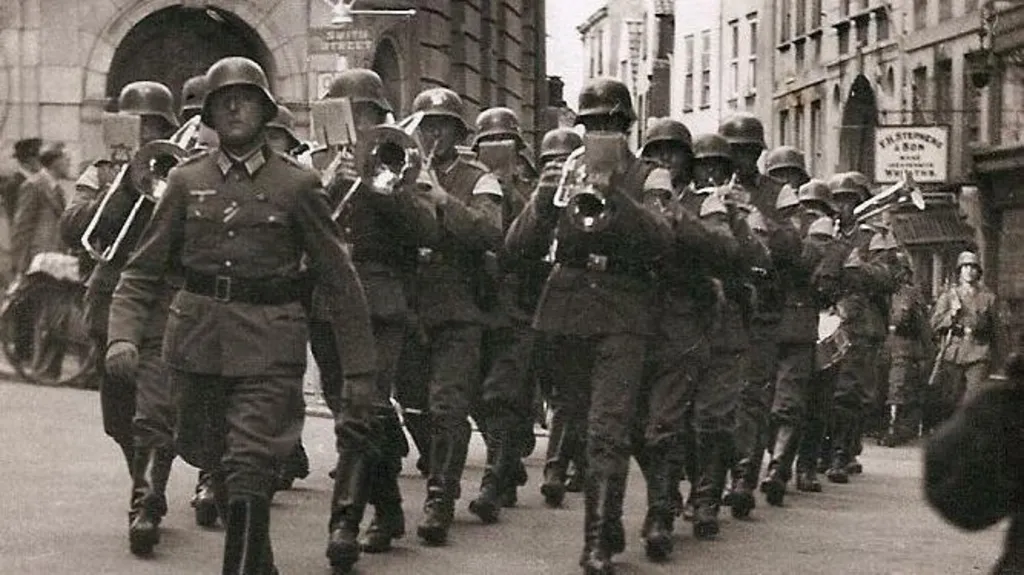
A historical image shows a German band marching s through St Peter Port High Street, Guernsey

Fake content of Occupation is 'not educational'

March 6, 2026

A historian has warned that AI-generated images and videos depicting historical events should always be clearly labelled so they can be distinguished from genuine historical evidence.

Gilly Carr, a professor of conflict archaeology and Holocaust heritage at University of Cambridge, has raised concerns about the growing number of artificial images circulating online that portray events from the German occupation of the Channel Islands during the World War II. According to her, such content is being shared widely on social media, sometimes without any indication that it was created using artificial intelligence.

She argues that presenting AI-generated material without clear labels can mislead viewers, especially those unfamiliar with the historical record. Without context, people may struggle to distinguish between authentic photographs and modern digital reconstructions.

The Channel Islands, including Jersey and Guernsey, were occupied by Nazi Germany for several years during the war before being liberated in 1945. The occupation left a lasting impact on local communities, and many families still have relatives who experienced imprisonment, forced labor, or deportation.

Carr said some relatives of victims have expressed concern that AI creators might use real people’s names or stories to generate fictional images or videos. For families connected to survivors of concentration camps or Nazi prisons, seeing inaccurate or fabricated portrayals can be distressing.

She emphasized that photographs play a crucial role in documenting history. When artificial images circulate without explanation, they risk blurring the line between documented evidence and modern interpretation. Over time, this could complicate how future generations understand past events.

Carr therefore argues that transparency is essential. Clearly marking AI-generated material, she says, would allow people to appreciate digital reconstructions while still recognizing the difference between creative representation and authentic historical records.

According to her, protecting the integrity of historical evidence is vital—not only for education, but also for preserving the memories of those who experienced these events firsthand.
← This Western Bar Was A Hangout For John Wayne And Other Hollywood Stars New DNA Evidence Could Lead Scientists to the Legendary Tomb of Genghis Khan →
Featured
image_2026-03-06_224646711.png
Mar 6, 2026
Conference on the enhancement of the archaeological site of Aruch in Armenia
Mar 6, 2026
Read More →
Mar 6, 2026
image_2026-03-06_222242052.png
Mar 6, 2026
Friday Read: The coming taste of Pompeii
Mar 6, 2026
Read More →
Mar 6, 2026
image_2026-03-06_220318649.png
Mar 6, 2026
Scientists Rebuilt A 3.67-Million-Year-Old Face With a Particle Accelerator. It Doesn’t Look Like Anyone Expected.
Mar 6, 2026
Read More →
Mar 6, 2026
image_2026-03-06_215415209.png
Mar 6, 2026
London’s largest marina confirmed to be redeveloped alongside archeological dig
Mar 6, 2026
Read More →
Mar 6, 2026
image_2026-03-06_214421396.png
Mar 6, 2026
Board game that pre-dates chess discovered in ancient burial mound
Mar 6, 2026
Read More →
Mar 6, 2026
image_2026-03-06_214316122.png
Mar 6, 2026
This Western Bar Was A Hangout For John Wayne And Other Hollywood Stars
Mar 6, 2026
Read More →
Mar 6, 2026
read more

Powered by The archaeologist