Hidden Beneath the Canopy
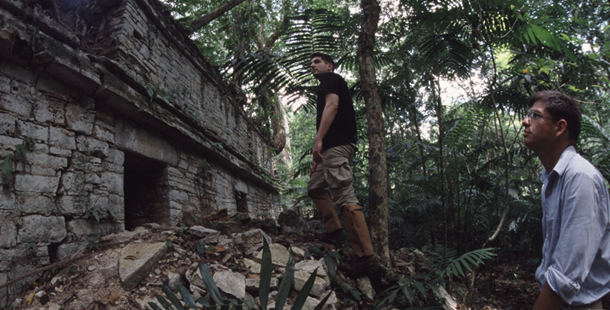
For centuries, dense rainforests were seen as barriers to civilization—wild, untamed regions where large societies could not thrive. However, recent discoveries have completely changed this view. Beneath thick layers of vegetation lie the remains of once-flourishing civilizations, hidden for generations and only now being rediscovered.
Rainforests in regions like South America, Southeast Asia, and Central Africa have preserved traces of cities, roads, and agricultural systems. These discoveries reveal that ancient people were not only capable of surviving in these environments—they built complex and highly organized societies within them.
The Challenge of Discovery
One of the main reasons these civilizations remained hidden for so long is the nature of the rainforest itself. Dense vegetation grows quickly, covering structures and making them nearly invisible from the ground. Over time, buildings collapse and are absorbed into the landscape.
Traditional archaeological methods, which rely on visible remains, struggled to uncover these sites. As a result, many rainforest civilizations were underestimated or entirely overlooked.
LiDAR: A Technological Breakthrough
The use of LiDAR (Light Detection and Ranging) technology has transformed rainforest archaeology. By using laser pulses from aircraft, researchers can map the ground beneath the forest canopy. This allows them to detect structures that are otherwise hidden.
LiDAR has revealed entire cities—complete with roads, terraces, and irrigation systems—spread across vast areas. These findings show that rainforest civilizations were far more extensive and advanced than previously believed.
Urban Planning and Infrastructure
The newly discovered sites reveal sophisticated urban planning. Cities were often connected by networks of roads and pathways, allowing movement and trade. Agricultural terraces and water management systems demonstrate an understanding of environmental challenges.
Rather than simply adapting to the rainforest, these societies actively shaped their surroundings. They created sustainable systems that allowed them to thrive without destroying the environment.
Environmental Adaptation
Rainforest civilizations developed unique ways to survive in challenging conditions. They practiced advanced agriculture, using techniques such as raised fields, crop rotation, and soil enrichment.
They also managed water carefully, controlling flooding and ensuring a steady supply for crops and daily life. These strategies reflect deep knowledge of the environment and long-term planning.
Cultural and Social Complexity
These civilizations were not isolated or primitive. Evidence suggests organized social structures, trade networks, and cultural traditions. Artifacts such as pottery, tools, and ceremonial objects reveal rich cultural lives.
The scale of these societies challenges earlier assumptions that rainforests could only support small, scattered communities.
A Changing Understanding of History
The discovery of rainforest civilizations is reshaping our understanding of human history. It shows that complex societies developed in a wider range of environments than previously thought.
These findings also highlight the importance of preserving rainforests—not just for biodiversity, but for the historical knowledge they contain.
A Hidden Legacy
The forgotten civilizations of the rainforest remind us that history is often hidden in unexpected places. As technology continues to improve, more of these lost worlds may come to light, offering new insights into human resilience, creativity, and adaptability.