Introduction
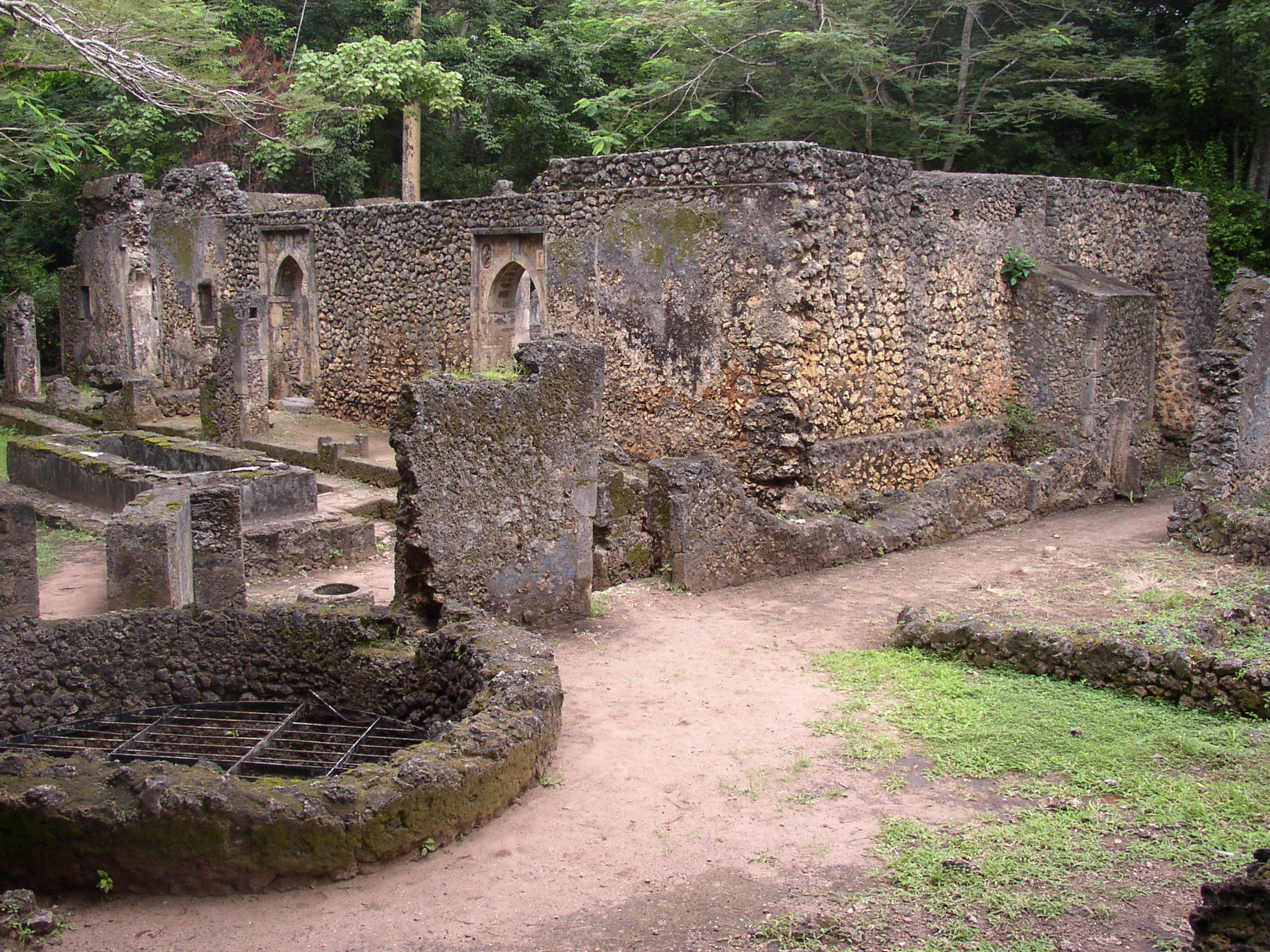
Tucked deep inside the dense, coastal Arabuko Sokoke Forest of Kenya, Gedi is an urban enigma—a highly advanced, stone-built Swahili city that emerged in the late 13th century, flourished during the 15th, and was abruptly abandoned in the early 17th century. Surrounded by two concentric coral-rag walls, Gedi's remarkable preservation offers an incredibly intact look at medieval Swahili town planning and civil engineering. For years, its location hidden away from the immediate coastline puzzled researchers, but modern landscape archaeology has revealed Gedi as a powerful inland mercantile center that controlled the agricultural extraction and trade networks of the immediate Kenyan mainland.
Advanced Civil Planning and Global Material Culture
The sophisticated infrastructure of Gedi has been mapped through the systematic excavation of its coral-stone core. The city features a massive central Palace complex, a spectacular Great Mosque equipped with fine coral-carved mihrabs, and dozens of large, pillar-topped coral tombs. Most striking, however, is Gedi's advanced public sanitation system. The domestic stone houses were engineered with indoor, double-sump pit latrines and overhead flushing systems linked directly to deep, stone-lined freshwater wells that provided clean water to the entire urban population.
The occupational layers of Gedi have yielded an international treasure trove of trade goods, proving its deep connectivity to global markets. Archaeologists have unearhed significant quantities of Chinese celadon and porcelain, Spanish coins, Islamic glazed pottery, and specialized carnelian beads from India. Despite this immense wealth, no contemporary Portuguese or Arabic documents mention Gedi, indicating that it operated as an independent, highly secretive trade node that deliberately utilized its inland forest canopy for defense against oceanic raiders while funneling wealth directly to the coast.
Conclusion
The spatial and material unmasking of Gedi fundamentally alters our understanding of Swahili urbanization, proving that stone-city development extended well beyond isolated island ports into the African mainland. The advanced civil engineering, sophisticated hydraulic sanitation, and global trade goods documented at the site reveal a prosperous, highly organized civic society that enjoyed a remarkable quality of life. Its sudden abandonment remains a vital subject of research, pointing to regional environmental shifts such as drying water tables or political migrations. Today, the grand, forest-enveloped archways of Gedi stand as a powerful monument to precolonial African urban planning.