Introduction
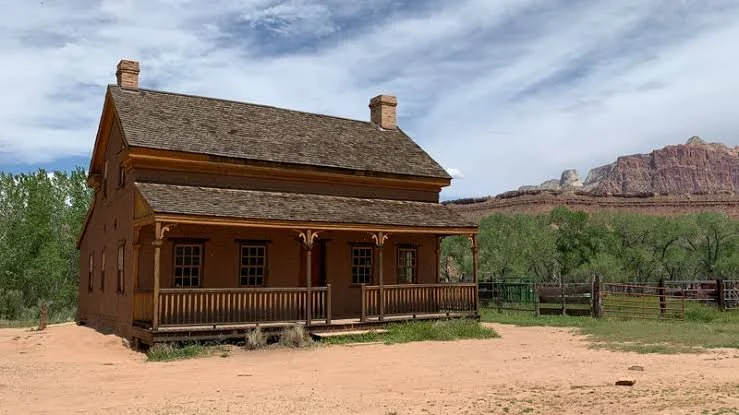
Near the Virgin River in southwestern Utah stands Grafton, one of the best-preserved historic ghost towns associated with the early Mormon settlement period.
Established in the late 1860s, Grafton was part of a larger effort to establish agricultural communities in southern Utah.
The town's surviving buildings provide a rare glimpse into nineteenth-century frontier life.
Unlike many western ghost towns that disappeared almost completely, Grafton retains several structures that allow historians and archaeologists to reconstruct aspects of daily life.
The Mormon Settlement Program
During the nineteenth century, Mormon leaders encouraged settlement across parts of Utah and neighboring territories.
Southern Utah was particularly important for agriculture and regional colonization.
Settlers established communities along rivers and other water sources.
The Virgin River was essential to Grafton's existence.
Establishing Grafton
Grafton was founded in 1866.
The settlers cultivated crops and established homes.
The community remained relatively small.
Agriculture depended on irrigation.
Flooding presented a constant danger.
The Virgin River
The river provided water but also created hazards.
Flash floods could destroy fields and infrastructure.
The settlers therefore had to balance agricultural opportunity against environmental risk.
This pattern was common throughout the American Southwest.
Agriculture
Grafton residents grew crops suited to the climate.
Fruit trees and gardens were important.
Livestock also contributed to household economies.
Agriculture was largely subsistence-oriented, although surplus products could be traded.
The Town's Buildings
Several historic structures survive.
These include:
the schoolhouse
homes
barns
other agricultural buildings
The buildings demonstrate nineteenth-century construction techniques.
Adobe and locally available materials were important.
The Schoolhouse
The Grafton schoolhouse is especially significant.
It was built in 1886 and later served multiple community purposes.
The structure demonstrates that even small settlements invested in education.
Violence and Conflict
The history of Grafton also reflects the wider violence associated with western expansion.
The region experienced conflict among settlers and Indigenous peoples.
In addition, Grafton was affected by tensions and violence associated with the broader period of Mormon settlement.
The story is therefore more complex than the picturesque ghost-town image suggests.
Population Decline
Grafton never developed into a large town.
Several factors contributed to its decline.
Flooding was a recurring problem.
Agricultural limitations reduced economic opportunities.
Other communities became more important.
Residents gradually moved away.
By the early twentieth century, the town was largely abandoned.
Why Grafton Survived
Many western settlements disappeared because buildings were dismantled or reused.
Grafton retained several structures because its isolation limited redevelopment.
As a result, the town became a valuable historic landscape.
Grafton in Film
Grafton's preserved buildings and dramatic surroundings attracted filmmakers.
The town appeared in western productions, including Butch Cassidy and the Sundance Kid.
Its association with Hollywood reinforced its ghost-town identity.
Archaeological Value
Historic archaeology can examine:
ceramics
glass
tools
nails
building materials
household debris
agricultural features
These objects reveal everyday life more effectively than famous events alone.
Preservation
Historic adobe structures are vulnerable.
Rain and flooding can erode walls.
Wind can weaken surfaces.
Vegetation can destabilize foundations.
Preservation requires regular stabilization.
The Cemetery
Grafton's cemetery provides additional evidence.
Gravestones record names, ages, family relationships, and dates.
These records can be compared with census and church documents.
Together, documentary and archaeological evidence reconstruct the community.
Conclusion
Grafton is one of Utah's most evocative ghost towns because its buildings preserve a tangible record of Mormon settlement in the Virgin River region.
The town demonstrates both the possibilities and limitations of frontier agriculture.
Water enabled settlement.
Floods threatened it.
Isolation preserved the buildings after residents left.
Today, Grafton survives as a historic landscape rather than simply a collection of old houses.
Its structures, cemetery, agricultural setting, and surrounding landscape provide evidence of the people who attempted to establish a permanent community in a challenging environment.