Introduction
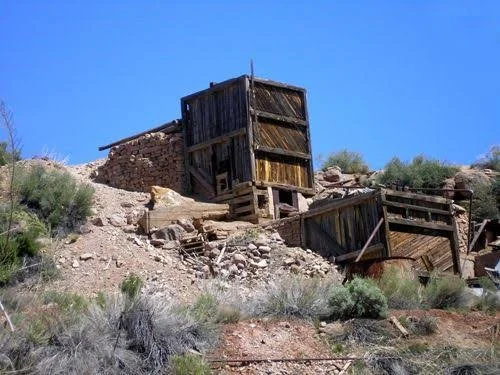
In the red-rock country of southwestern Utah, the remains of Silver Reef preserve the story of one of the most unusual mining towns in the American West.
Founded during the 1870s, Silver Reef became a boomtown after silver deposits were identified in sandstone formations.
Its history is closely connected with the expansion of Mormon settlements, western mining, rail transportation, banking, commerce, and the speculative economy of the nineteenth-century American frontier.
Unlike many Utah settlements founded primarily for agriculture, Silver Reef developed around mineral extraction.
Its rise was rapid.
Its decline was equally dramatic.
The Discovery of Silver
The discovery of silver transformed the area.
Prospectors recognized that mineral-bearing sandstone could contain economically valuable ore.
This was unusual because silver deposits were more commonly associated in popular mining expectations with hard-rock veins.
The Silver Reef deposits became famous precisely because silver occurred within sandstone.
The Boomtown
Silver Reef grew rapidly.
Miners arrived.
Merchants established businesses.
Hotels and restaurants appeared.
Banks opened.
Saloon and entertainment businesses developed.
Newspapers served the growing population.
The town became a commercial center for the surrounding region.
Mormon Settlements
Silver Reef existed within a landscape heavily influenced by Mormon colonization.
Nearby settlements provided agricultural products and labor.
The relationship between mining and Mormon communities was complicated.
Mormon leaders sometimes emphasized agriculture and self-sufficiency, while mining could attract speculation and behaviors that church leaders regarded with concern.
Nevertheless, Mormon settlers participated in the region's economy.
Mining Technology
Mining required substantial infrastructure.
Workers excavated ore.
Mills processed material.
Water was needed for certain processing activities.
Transportation was essential.
Ore had to reach markets.
Supplies had to reach the mines.
The Railroad
Transportation was one of Silver Reef's greatest challenges.
The arrival of the railroad at nearby Leeds helped connect the mining district with broader markets.
Rail transportation reduced some of the costs associated with moving ore and supplies.
Urban Life
Silver Reef developed a surprisingly complex urban environment.
Businesses included:
general stores
hotels
restaurants
banks
newspapers
saloons
blacksmith shops
professional offices
The population was diverse.
Miners, merchants, laborers, entrepreneurs, professionals, and families all contributed to the town.
The Economy
Mining towns depend heavily on mineral prices.
If ore production is profitable, population grows.
If mines decline, businesses suffer.
Silver Reef experienced precisely this vulnerability.
Production eventually declined.
Ore became more difficult or less profitable to extract.
The Decline
By the late 1870s and early 1880s, the boom was fading.
Businesses closed.
Residents moved away.
Buildings were dismantled or abandoned.
Silver Reef became a ghost town.
Archaeological Evidence
The remains provide evidence of everyday life.
Archaeologists can study:
bottles
ceramics
mining tools
building foundations
nails
coins
household debris
These objects reveal what people purchased, ate, drank, used, and discarded.
Architecture
Many buildings were constructed quickly.
Wood was widely used.
Adobe and masonry also appeared.
Some structures were substantial because businesses expected the town to survive.
Others were temporary.
The contrast reveals the uncertainty of boomtown economies.
Chinese and Other Workers
Western mining towns often attracted diverse populations.
Chinese laborers and immigrants participated in many western mining economies.
Other immigrant communities also contributed.
The historical record of Silver Reef should therefore not be reduced to Mormon settlers and white miners alone.
The Environment
Silver Reef existed in a dry landscape.
Water was limited.
This affected mining and domestic life.
Water had to be transported or obtained from available sources.
Agriculture was difficult compared with nearby river valleys.
Preservation
The dry climate has helped preserve archaeological remains.
But erosion, vandalism, artifact collecting, and development can threaten them.
Historic mining landscapes are particularly vulnerable because shafts, tailings, and foundations can be dangerous as well as historically important.
Silver Reef and Western Mythology
The town has become part of the popular mythology of the American West.
Stories of sudden wealth, saloons, gamblers, miners, and abandoned streets create a dramatic image.
But archaeology provides a more detailed picture.
Most people living in mining towns were not wealthy.
They worked long hours.
They faced unstable employment.
Businesses depended on fluctuating demand.
The boomtown economy could disappear rapidly.
Conclusion
Silver Reef represents one of Utah's most fascinating mining histories.
The town emerged rapidly because of silver.
Rail transportation and regional commerce supported its expansion.
Merchants, miners, professionals, and families created a complex community.
But mineral economies are inherently vulnerable.
When production declined, the population followed.
Today, the ruins of Silver Reef preserve evidence of that dramatic cycle.
The town is a reminder that western boomtowns were not simply stories of adventure and wealth.
They were complex communities built around difficult work, uncertain markets, transportation challenges, environmental constraints, and rapidly changing economic fortunes.
Silver Reef survives because its ruins preserve those realities.