UNESCO’s recognition of International Greek Language Day affirms Greek as a living, global vessel of culture, knowledge and civilisation
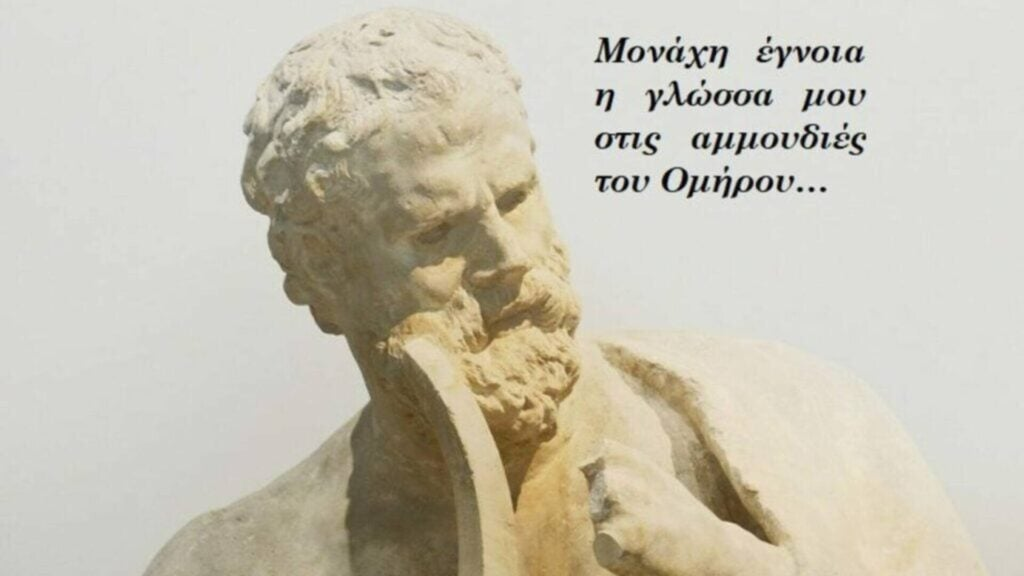
UNESCO's decision to designate 9 February as International Greek Language Day recognises the enduring contribution of Greek to thought, science, and culture.
The Greek language is a singular and foundational system of human communication, with a history stretching back more than 2,500 years. It forms part of humanity’s intangible cultural heritage, enduring, migrating, and evolving across time. Greek serves as a bridge linking centuries, nations, and cultures, and as a repository for philosophy, science, art, and intellectual thought. It acts as a civilisational binding force, connecting the ancient, medieval, and modern worlds.
On November 12, 2025, during its 43rd General Conference in Samarkand, Uzbekistan, UNESCO officially designated February 9 as International Greek Language Day—a decision carrying strong symbolic and educational weight. The Greek language also aligns with UNESCO’s 2003 Convention on Intangible Cultural Heritage, which recognises it as a living cultural practice transmitted across generations and essential to storytelling, poetry, philosophy, politics, and scientific inquiry.
A date rich in meaning
The selected date is highly symbolic. February 9 marks the anniversary of the death of Dionysios Solomos, Greece’s national poet. In fact, Greece had already recognised this date as Greek Language Day since 2017. UNESCO characterises Greek as a “vessel of values and ideas”—a language that connects generations, bridges cultures, and illuminates the development of human thought.
Greek stands out as an almost uninterrupted linguistic system. It has been the framework and driving force of Greek philosophy, from Socrates, Plato, Aristotle, and Epictetus to Philo, and later became the language of the New Testament. With an oral tradition spanning roughly 40 centuries and a written tradition extending over 35 centuries, Greek is the oldest known Indo-European language. Its influence runs deeply through science, medicine, mathematics, literature, and philosophy, shaping the intellectual foundations of the Mediterranean world, Asia Minor, the Middle East, and Western Europe.
Greek and the Diaspora: duty and innovation
UNESCO’s proclamation extends beyond symbolism and serves as a call to action, particularly for Greek-language schools in the Diaspora. The Greek Ministry of Education has proposed a range of educational initiatives designed to revitalise ancient linguistic forms through creative methods. These include vocabulary-based games, myth dramatizations, digital dictionaries, storytelling activities, virtual archaeological tours, and structured debates—approaches intended to transform Greek from a classroom subject into a lived experience.
Schools worldwide are encouraged to take part in the celebrations by submitting digital postcards and short videos under the theme “My favourite Greek word,” reinforcing the idea that language thrives through the voices of children, no matter where they live.
Greek encircling the world once more
A central aim of International Greek Language Day is to ensure its global reach. This will be supported through online discussions with university Chairs of Hellenic Studies, educational video screenings, and digital initiatives that highlight the worldwide impact of Greek. The objective is not only to preserve the language, but to renew and expand it, demonstrating its relevance in the modern world.
International Greek Language Day represents a commitment to continuity—a promise that Greek will endure, as it has for more than two millennia, while continuing to evolve, adapt, and interact with diverse cultures. Across the global Diaspora, Greek will remain a living force, nurturing creativity and sustaining its rich cultural legacy.