Introduction
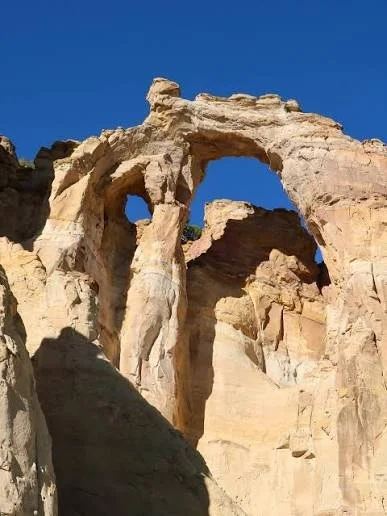
Rising above the desert landscape of southern Utah, Grosvenor Arch is one of the region's most recognizable natural formations.
Its two sandstone spans create a dramatic double-arched structure that appears almost architectural.
But unlike a human-built bridge, Grosvenor Arch was constructed by geological processes operating over millions of years.
Its existence demonstrates the power of erosion, weathering, uplift, and gravity.
Geological Formation
Southern Utah's landscape consists largely of layered sedimentary rocks.
Sandstone formations were deposited in ancient environments.
Over geological time, these layers were buried, compressed, uplifted, fractured, and exposed.
Once exposed, they became vulnerable to erosion.
Erosion
Wind and water gradually remove softer material.
Freeze-thaw cycles can widen cracks.
Rainwater can exploit weaknesses.
Gravity causes blocks to fall.
Over millions of years, these processes carve cliffs and arches.
Grosvenor Arch is the product of this continuing process.
A Double Arch
The formation contains two prominent sandstone spans.
Their shape results from differential erosion.
Some portions of the rock are more resistant than others.
The surrounding material erodes more quickly.
Eventually, an opening forms.
Natural Bridge or Arch?
The distinction between a natural bridge and natural arch is geological.
A natural bridge is generally associated with erosion by flowing water.
An arch can form through other processes.
Grosvenor Arch is commonly described as an arch despite the occasional use of "natural bridge" in popular descriptions.
The Colorado Plateau
Grosvenor Arch belongs to the broader Colorado Plateau landscape.
The plateau contains some of the world's most spectacular concentrations of exposed sedimentary geology.
National parks and monuments such as Bryce Canyon, Capitol Reef, Grand Staircase-Escalante, and Grand Canyon preserve related geological histories.
Human Use of the Landscape
People have occupied the surrounding region for thousands of years.
Indigenous communities traveled through the area.
They hunted.
They gathered plants.
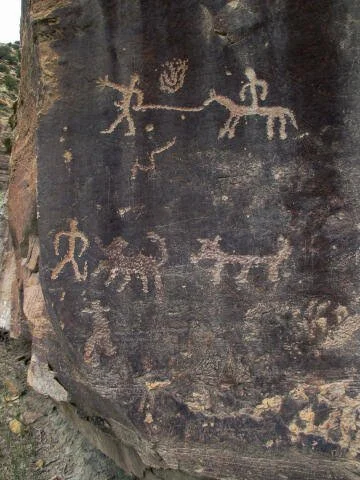
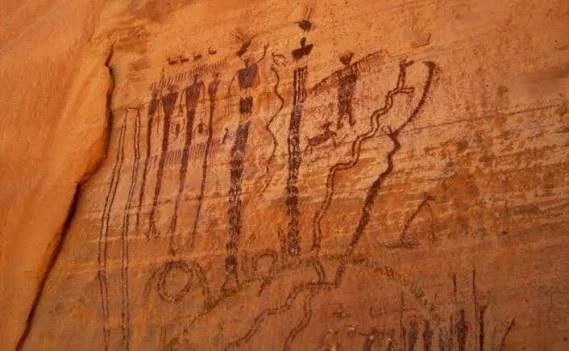
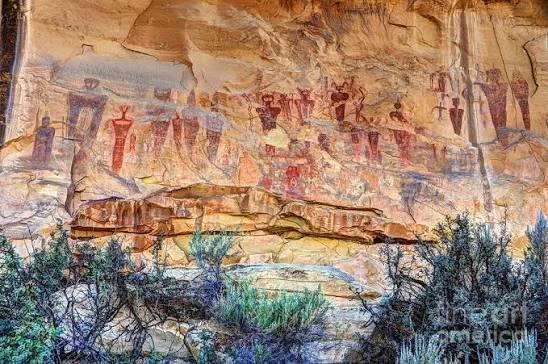
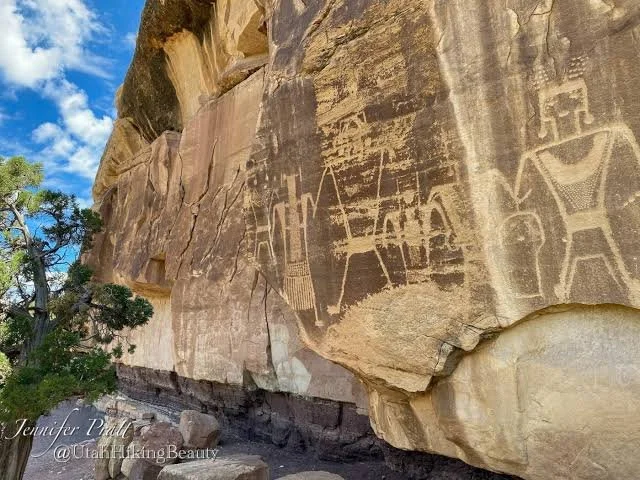
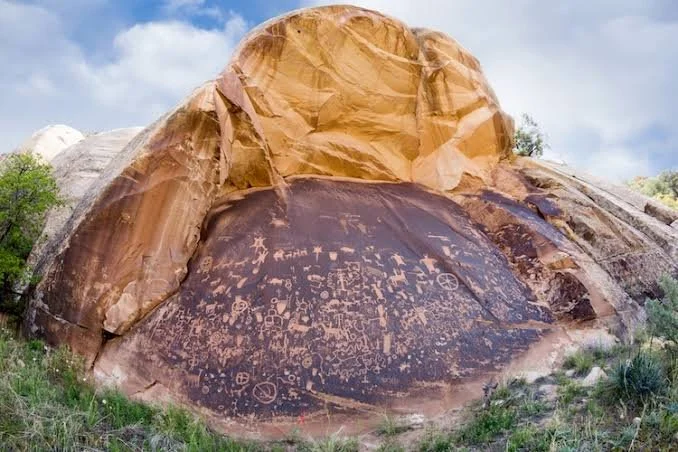
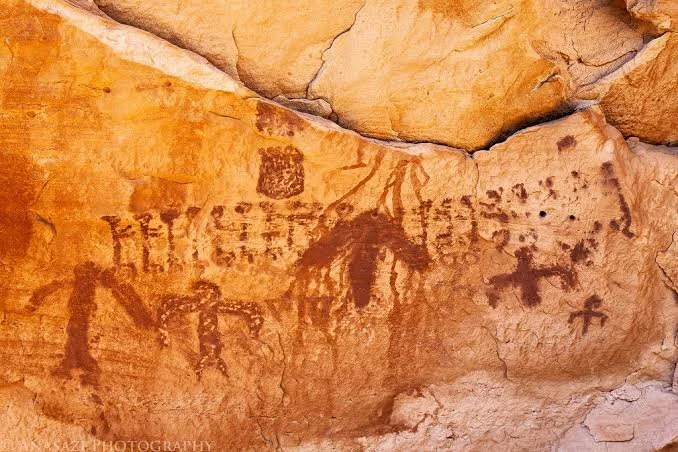
They created rock art.
They established agricultural settlements in suitable locations.
A prominent formation such as Grosvenor Arch could have served as a landmark.
Landscape Navigation
Before modern maps and GPS, prominent geological features were important navigational references.
A distinctive arch could identify a location.
Canyons and mesas could guide travelers.
The geography therefore had practical value in addition to aesthetic value.
Tourism
Grosvenor Arch became increasingly known to modern travelers through improved roads and tourism.
Its dramatic appearance made it attractive to photographers.
The modern trail and viewing areas allow visitors to experience the formation without climbing it.
Preservation
Natural arches are inherently temporary.
The geological forces that created them continue to operate.
Eventually, erosion may cause sections to collapse.
This is a natural process.
Human visitors can accelerate damage indirectly through unauthorized climbing, erosion, and disturbance.
Scientific Importance
The surrounding rock layers preserve geological history.
Sedimentary structures can reveal ancient environments.
The color and grain of sandstone reflect mineral composition and depositional conditions.
Geologists can therefore read the landscape as a record of ancient environments.
Conclusion
Grosvenor Arch demonstrates the extraordinary power of geological time.
The formation looks like architecture, but no human builder created it.
Wind, water, gravity, weathering, and geological uplift shaped the sandstone across immense spans of time.
The arch also exists within a landscape used by Indigenous communities for thousands of years and later transformed by modern tourism.
Its importance therefore combines geology, landscape history, and human experience.