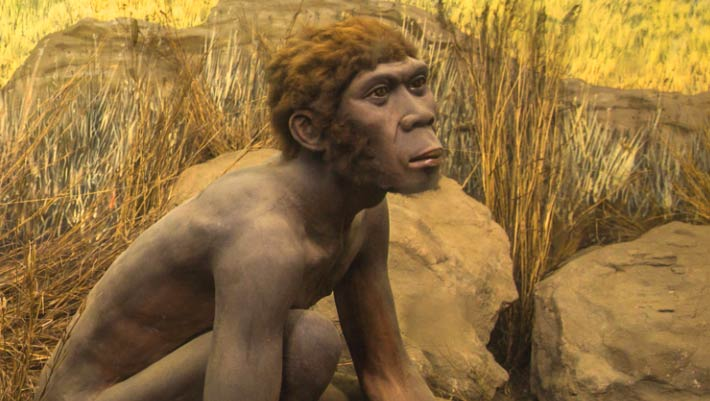
In 2019, an international team of scientists led by Dr. Armand Salvador Mijares made an announcement that permanently shattered the long-held paradigm of Southeast Asian paleoanthropology: the discovery of a completely new species of ancient human named Homo luzonensis.
Unearthed deep within the stratigraphic layers of Callao Cave on the northern island of Luzon in the Philippines, these fossils—dating back between 50,000 and 67,000 years ago—proved that island Southeast Asia was an evolutionary laboratory of endemic, bizarre human experimentation.
[ ARCHITECTURAL LANDSCAPE ] ──► Deep Island Isolation of Luzon (Barred by Deep Water)
                                           │
                               (Endemic Evolutionary Trajectory)
                                           │
                                           ▼
[ MORPHOLOGICAL MOSAIC ] ◄──── Ancient Curved Australopithecus Foot + Modern Human Teeth
The Morphological Mosaic
The discovery of Homo luzonensis was based on a highly specific assemblage of skeletal remains, including hand and foot bones, thigh bone fragments, and a collection of adult teeth representing multiple distinct individuals. When physical anthropologists subjected these tiny bones to high-resolution micro-CT scanning and comparative morphological testing, they discovered a stunning, unprecedented "mosaic" of primitive and derived features:
The Australopithecus Foot: Most shockingly, the third metatarsal (foot bone) of Homo luzonensis is highly curved and morphologically identical to the foot structures of ancient Australopithecus species (like Lucy) who lived in Africa over 3 million years prior. This curved foot bone is an explicit adaptation for arboreal climbing, indicating that this island human spent a significant portion of its life navigating the forest canopies.
The Modern Teeth: In stark contrast to the incredibly primitive foot, the premolar and molar teeth of Homo luzonensis are exceptionally small and compact, sharing highly derived, simplified traits that mimic the dental morphology of modern Homo sapiens.
The Island Laboratory: Insular Dwarfism
How did a hominid possessing 3-million-year-old primitive climbing traits live concurrently alongside modern humans just 50,000 years ago? The answer lies in the intense evolutionary pressure of insular dwarfism:
Luzon has always been an isolated ocean island, completely surrounded by deep-water marine trenches. Even during periods of extreme low sea levels during the last Ice Age, Luzon was never connected to mainland Asia by a dry land bridge.
To arrive on the island, the ancestral lineage of Homo luzonensis—likely a group of adventurous Homo erectus sailors—had to cross deep maritime straits on primitive watercraft or survive an accidental rafting event caused by a tsunami.
Once trapped on the island, the population adapted to limited food resources and a lack of large apex predators. Just like Homo floresiensis (the famous "Hobbit" of Flores Island), Homo luzonensis systematically shrank in size over generations, evolving into a diminutive, small-statured human who re-evolved primitive climbing structures to effectively exploit the vertical ecology of the tropical rainforest canopy, proving that the human evolutionary story is far more diverse and unpredictable than science ever suspected.